

microphone, producing an electrical signal. The converse piezoelectric
effect is also used for the extraordinarily fine and accurate adjustment of
devices such as the needle in a scanning tunneling microscope.
8.2.2 QCM principles
A quartz crystal microbalance operates on the principles of piezoelectricity. As we’ve discussed, a piezoelectric quartz crystal will oscillate at a
specific resonant frequency in response to an AC voltage. (In fact, the
resulting resonant frequency is so reliable that quartz crystals are used
in many precision time-keeping devices.) This resonant frequency is
dependent on the size and mass of the quartz crystal. If the mass of the
quartz crystal is altered (such as when a molecule adsorbs to its surface),
the resonant frequency at which the crystal is oscillating shifts slightly
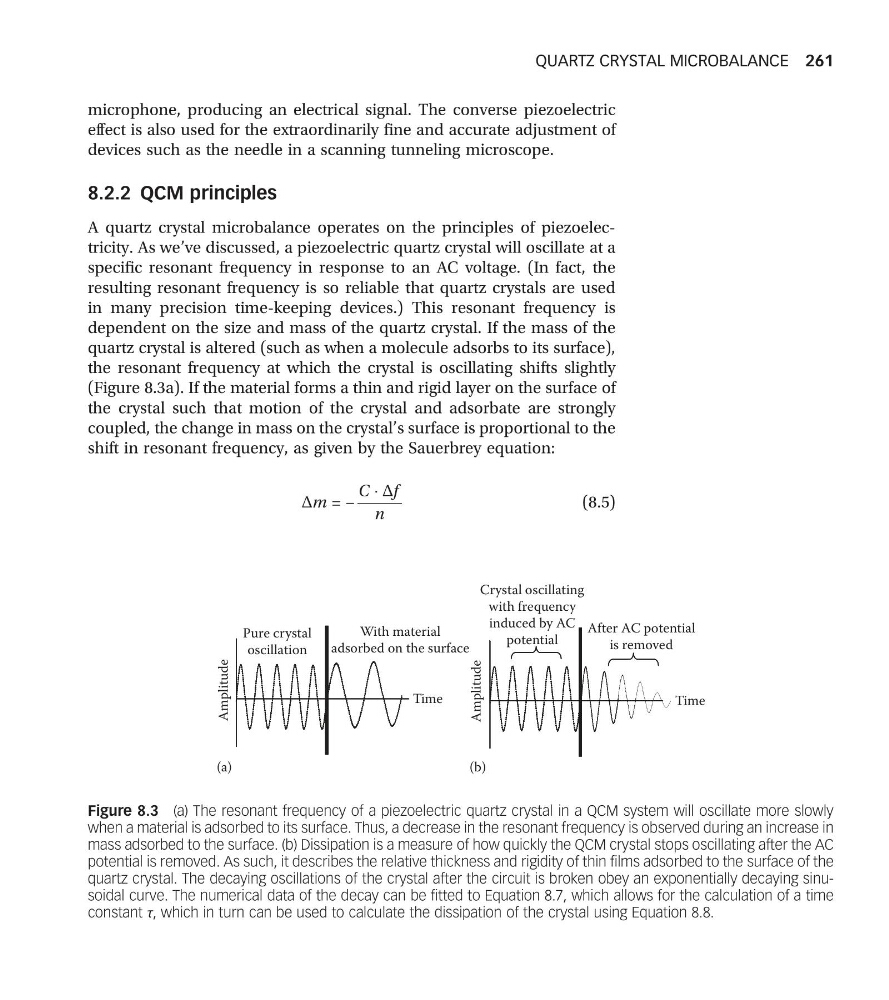
(Figure 8.3a). If the material forms a thin and rigid layer on the surface of
the crystal such that motion of the crystal and adsorbate are strongly
coupled, the change in mass on the crystal’s surface is proportional to the
shift in resonant frequency, as given by the Sauerbrey equation:
Δm = −
C Á Δf
n
(8.5)
Crystal oscillating
with frequency
induced by AC
potential
With material
adsorbed on the surface
Pure crystal
oscillation
After AC potential
is removed
(a)
(b)
Time
Time
Amplitude
Amplitude
Figure 8.3 (a) The resonant frequency of a piezoelectric quartz crystal in a QCM system will oscillate more slowly
when a material is adsorbed to its surface. Thus, a decrease in the resonant frequency is observed during an increase in
mass adsorbed to the surface. (b) Dissipation is a measure of how quickly the QCM crystal stops oscillating after the AC
potential is removed. As such, it describes the relative thickness and rigidity of thin films adsorbed to the surface of the
quartz crystal. The decaying oscillations of the crystal after the circuit is broken obey an exponentially decaying sinusoidal curve. The numerical data of the decay can be fitted to Equation 8.7, which allows for the calculation of a time
constant τ, which in turn can be used to calculate the dissipation of the crystal using Equation 8.8.
QUARTZ CRYSTAL MICROBALANCE 261
effect is also used for the extraordinarily fine and accurate adjustment of
devices such as the needle in a scanning tunneling microscope.
8.2.2 QCM principles
A quartz crystal microbalance operates on the principles of piezoelectricity. As we’ve discussed, a piezoelectric quartz crystal will oscillate at a
specific resonant frequency in response to an AC voltage. (In fact, the
resulting resonant frequency is so reliable that quartz crystals are used
in many precision time-keeping devices.) This resonant frequency is
dependent on the size and mass of the quartz crystal. If the mass of the
quartz crystal is altered (such as when a molecule adsorbs to its surface),
the resonant frequency at which the crystal is oscillating shifts slightly
(Figure 8.3a). If the material forms a thin and rigid layer on the surface of
the crystal such that motion of the crystal and adsorbate are strongly
coupled, the change in mass on the crystal’s surface is proportional to the
shift in resonant frequency, as given by the Sauerbrey equation:
Δm = −
C Á Δf
n
(8.5)
Crystal oscillating
with frequency
induced by AC
potential
With material
adsorbed on the surface
Pure crystal
oscillation
After AC potential
is removed
(a)
(b)
Time
Time
Amplitude
Amplitude
Figure 8.3 (a) The resonant frequency of a piezoelectric quartz crystal in a QCM system will oscillate more slowly
when a material is adsorbed to its surface. Thus, a decrease in the resonant frequency is observed during an increase in
mass adsorbed to the surface. (b) Dissipation is a measure of how quickly the QCM crystal stops oscillating after the AC
potential is removed. As such, it describes the relative thickness and rigidity of thin films adsorbed to the surface of the
quartz crystal. The decaying oscillations of the crystal after the circuit is broken obey an exponentially decaying sinusoidal curve. The numerical data of the decay can be fitted to Equation 8.7, which allows for the calculation of a time
constant τ, which in turn can be used to calculate the dissipation of the crystal using Equation 8.8.
QUARTZ CRYSTAL MICROBALANCE 261