

Surface tension measurements also allow the determination of a quantity
known as surface excess. Consider an aqueous solution containing surfactant molecules. Let’s assume that we can determine the concentration
of molecules in a two-dimensional plane somewhere in the bulk phase
below the air–water interface. We can then compare this bulk phase
concentration to the concentration of molecules on the actual surface of
the solution. Since we are considering a surfactant solution, we expect the
surface concentration of surfactant molecules to be much higher than the
bulk phase concentration. The difference between these two concentrations is known as the surface excess. The value tells us how much extra
surfactant we have on the surface compared to a two-dimensional plane
in the bulk phase. Surface excess is, to a good approximation, a measure
of the concentration of molecules on the surface.
For nonionic amphiphiles, the Gibbs’ adsorption equation relates surface
tension (g) to surface excess (G) at a given temperature (T), and is given by
G = −
1
RT
dg
d ln C
(7.19)
Surface tension
Bulk surfactant concentration
CMC
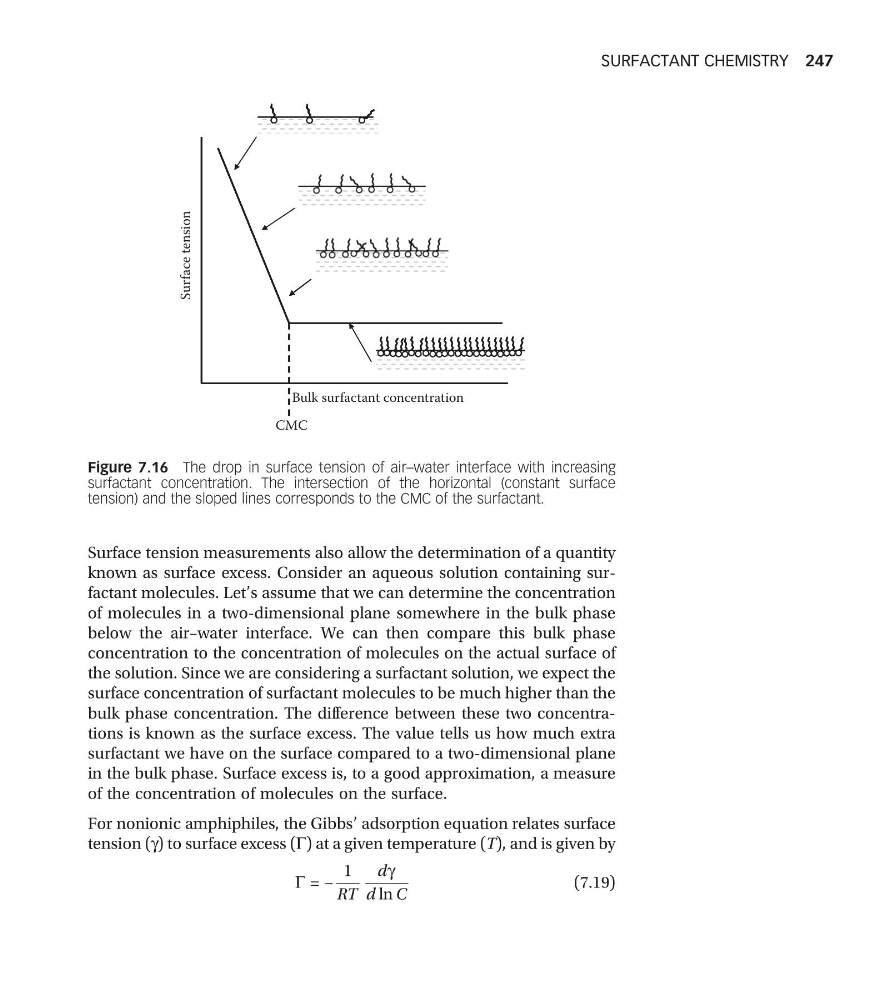
Figure 7.16 The drop in surface tension of air–water interface with increasing
surfactant concentration. The intersection of the horizontal (constant surface
tension) and the sloped lines corresponds to the CMC of the surfactant.
SURFACTANT CHEMISTRY 247
known as surface excess. Consider an aqueous solution containing surfactant molecules. Let’s assume that we can determine the concentration
of molecules in a two-dimensional plane somewhere in the bulk phase
below the air–water interface. We can then compare this bulk phase
concentration to the concentration of molecules on the actual surface of
the solution. Since we are considering a surfactant solution, we expect the
surface concentration of surfactant molecules to be much higher than the
bulk phase concentration. The difference between these two concentrations is known as the surface excess. The value tells us how much extra
surfactant we have on the surface compared to a two-dimensional plane
in the bulk phase. Surface excess is, to a good approximation, a measure
of the concentration of molecules on the surface.
For nonionic amphiphiles, the Gibbs’ adsorption equation relates surface
tension (g) to surface excess (G) at a given temperature (T), and is given by
G = −
1
RT
dg
d ln C
(7.19)
Surface tension
Bulk surfactant concentration
CMC
Figure 7.16 The drop in surface tension of air–water interface with increasing
surfactant concentration. The intersection of the horizontal (constant surface
tension) and the sloped lines corresponds to the CMC of the surfactant.
SURFACTANT CHEMISTRY 247