

552 ◾ Fundamental Food Microbiology
Whole Genome Sequencing 24
It is now possible to sequence the whole genome of a pathogen very rapidly with relatively low cost
because of the revolutionary development in DNA sequencing technology in recent years. A whole
genome sequence allows rapid identification of a pathogen and also provides information related
to its origin, evolution and genetic diversity and the presence of virulence genes. However, for
genome sequencing of microbes, it is necessary to obtain pure isolated cultures from food matrices
before sequencing.
Microarrays and Mass-Spectrometry 14,25
Detection of multiple pathogens in a single assay platform is highly desirable because of its potential for reducing cost for sample analysis and providing total microbiological safety/quality of a
product. In DNA microarray, DNA probes targeting specific genes are first printed on the microarray chip and then exposed to test samples containing DNA. Complementary DNA present in
the sample will hybridize with the probe in a spot, and the unbound or weakly bound DNA is
removed by washing. The hybridized products are then detected and quantified by fluorescence.
5’
5´
5´
5´
5´
5´
5´
5´
5´
5´
5´
5´
5´
5´
5´
5´
5´
5´
3´
3´
3´
3´
3´
3´
3´
3´
3´
3´
3´
3´
Amplification
Probe
Probe
Elongation
Denatured DNA
Primer annealing
Reverse
primer
Forward
primer
Amplified product
R
R
R
R
Q
Q
Q
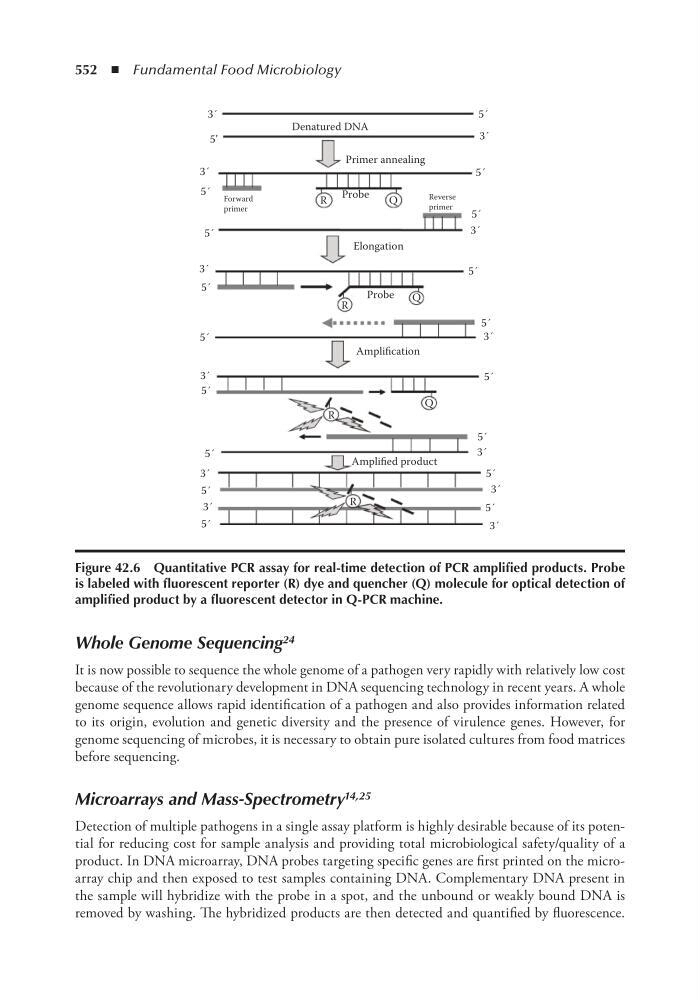
Figure 42.6 Quantitative PCR assay for real-time detection of PCR amplified products. Probe
is labeled with fluorescent reporter (R) dye and quencher (Q) molecule for optical detection of
amplified product by a fluorescent detector in Q-PCR machine.
Whole Genome Sequencing 24
It is now possible to sequence the whole genome of a pathogen very rapidly with relatively low cost
because of the revolutionary development in DNA sequencing technology in recent years. A whole
genome sequence allows rapid identification of a pathogen and also provides information related
to its origin, evolution and genetic diversity and the presence of virulence genes. However, for
genome sequencing of microbes, it is necessary to obtain pure isolated cultures from food matrices
before sequencing.
Microarrays and Mass-Spectrometry 14,25
Detection of multiple pathogens in a single assay platform is highly desirable because of its potential for reducing cost for sample analysis and providing total microbiological safety/quality of a
product. In DNA microarray, DNA probes targeting specific genes are first printed on the microarray chip and then exposed to test samples containing DNA. Complementary DNA present in
the sample will hybridize with the probe in a spot, and the unbound or weakly bound DNA is
removed by washing. The hybridized products are then detected and quantified by fluorescence.
5’
5´
5´
5´
5´
5´
5´
5´
5´
5´
5´
5´
5´
5´
5´
5´
5´
5´
3´
3´
3´
3´
3´
3´
3´
3´
3´
3´
3´
3´
Amplification
Probe
Probe
Elongation
Denatured DNA
Primer annealing
Reverse
primer
Forward
primer
Amplified product
R
R
R
R
Q
Q
Q
Figure 42.6 Quantitative PCR assay for real-time detection of PCR amplified products. Probe
is labeled with fluorescent reporter (R) dye and quencher (Q) molecule for optical detection of
amplified product by a fluorescent detector in Q-PCR machine.