

376 ◾ Fundamental Food Microbiology
many cooking procedures. Bac. cereus is aerobic but can also grow under some degree of anaerobic
environment. The cells can multiply in a temperature range of 4°C–50°C with the optimum at
approximately 35°C–40°C. Other parameters of growth are pH of 4.9–9.3, A W of 0.95 and above,
and NaCl concentration below 10%. Most Bacillus spp. in the Bac. cereus group are motile except
Bac. anthracis, and they form large colonies on agar plates.
Habitat
Spores and cells of Bac. cereus are common in soil and dust and can be readily isolated in small
numbers from many foods, which include both raw and finished products. Intestinal tracts of 10%
of healthy adult humans have Bac. cereus under normal conditions.
Toxins and Toxin Production
Bac. cereus produces multiple toxins, including emetic, diarrheagenic, cytotoxin K, enterotoxin
FM, and enterotoxin T. Among these, emetic and diarrheagenic toxins are thought to be the most
important and are associated with specific types of symptoms. The emetic toxin is responsible for
vomiting. It consists of cyclic peptide and the molecular mass is about 1.2 kDa and is also known
as cereulide. It is highly heat stable and is active at a pH range of 2–11. The diarrheagenic toxin
is 38–43 kDa heat-labile toxin. Diarrheagenic toxin is comprised of hemolytic B and L complex
(HBL) and/or nohemolytic eneterotoxin (NHE). In addition, Enterotoxin T, Enterotoxin FM,
Cytotoxin K, hemolysins, and phospholipases are produced by Bac. cereus. 10 Toxin is produced
during the exponential/stationary phase or in the intestine upon lysis of bacterial cells. They occur
in the intestinal tract but can also occur in foods. Thus, the cases can also be regarded as food
poisoning as in staphylococcal food poisoning.
Disease and Symptoms 7
In general, a large number of cells (10 6 –10 8 /g) need to be ingested to produce gastroenteritis.
As stated above, two types of enterotoxins produce two types of symptoms. Emetic toxin is also
called cereulide and is responsible for severe vomiting resembling staphylococcal food poisoning. The toxin binds to receptor 5-HT 3 in the stomach and stimulates the vagus nerve to initiate
vomiting. The mode of action for the diarrheagenic toxin is not well understood, but it induces
diarrhea by stimulating the cAMP system. As a result, Na + , Cl – , and H 2 O are lost from epithelial
cells, resulting in an electrolyte imbalance. In the diarrheal form, symptoms occur 6–12 hours
(a)
(b)
Endospore
Zone of
hemolysis
Blood agar plate
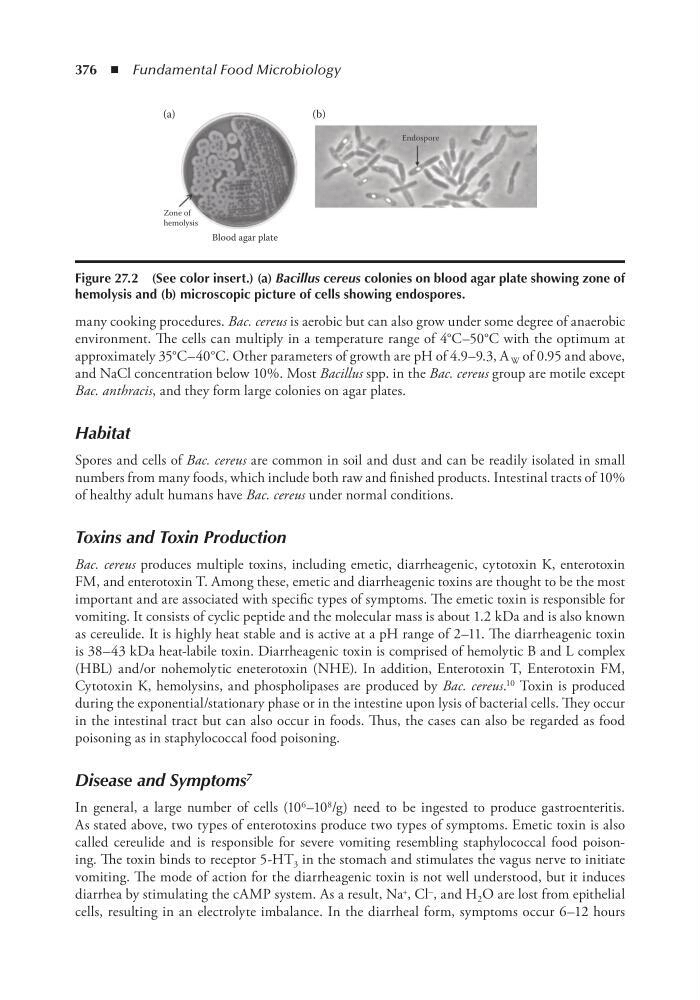
Figure 27.2 (See color insert.) (a) Bacillus cereus colonies on blood agar plate showing zone of
hemolysis and (b) microscopic picture of cells showing endospores.
many cooking procedures. Bac. cereus is aerobic but can also grow under some degree of anaerobic
environment. The cells can multiply in a temperature range of 4°C–50°C with the optimum at
approximately 35°C–40°C. Other parameters of growth are pH of 4.9–9.3, A W of 0.95 and above,
and NaCl concentration below 10%. Most Bacillus spp. in the Bac. cereus group are motile except
Bac. anthracis, and they form large colonies on agar plates.
Habitat
Spores and cells of Bac. cereus are common in soil and dust and can be readily isolated in small
numbers from many foods, which include both raw and finished products. Intestinal tracts of 10%
of healthy adult humans have Bac. cereus under normal conditions.
Toxins and Toxin Production
Bac. cereus produces multiple toxins, including emetic, diarrheagenic, cytotoxin K, enterotoxin
FM, and enterotoxin T. Among these, emetic and diarrheagenic toxins are thought to be the most
important and are associated with specific types of symptoms. The emetic toxin is responsible for
vomiting. It consists of cyclic peptide and the molecular mass is about 1.2 kDa and is also known
as cereulide. It is highly heat stable and is active at a pH range of 2–11. The diarrheagenic toxin
is 38–43 kDa heat-labile toxin. Diarrheagenic toxin is comprised of hemolytic B and L complex
(HBL) and/or nohemolytic eneterotoxin (NHE). In addition, Enterotoxin T, Enterotoxin FM,
Cytotoxin K, hemolysins, and phospholipases are produced by Bac. cereus. 10 Toxin is produced
during the exponential/stationary phase or in the intestine upon lysis of bacterial cells. They occur
in the intestinal tract but can also occur in foods. Thus, the cases can also be regarded as food
poisoning as in staphylococcal food poisoning.
Disease and Symptoms 7
In general, a large number of cells (10 6 –10 8 /g) need to be ingested to produce gastroenteritis.
As stated above, two types of enterotoxins produce two types of symptoms. Emetic toxin is also
called cereulide and is responsible for severe vomiting resembling staphylococcal food poisoning. The toxin binds to receptor 5-HT 3 in the stomach and stimulates the vagus nerve to initiate
vomiting. The mode of action for the diarrheagenic toxin is not well understood, but it induces
diarrhea by stimulating the cAMP system. As a result, Na + , Cl – , and H 2 O are lost from epithelial
cells, resulting in an electrolyte imbalance. In the diarrheal form, symptoms occur 6–12 hours
(a)
(b)
Endospore
Zone of
hemolysis
Blood agar plate
Figure 27.2 (See color insert.) (a) Bacillus cereus colonies on blood agar plate showing zone of
hemolysis and (b) microscopic picture of cells showing endospores.