

Foodborne Intoxications ◾ 327
Prevention (Reduction) of the Disease
The normal occurrence of Sta. aureus in raw food materials, among food handlers, and in many
food environments makes it impossible to produce nonsterile foods that are free of this bacterium.
Thus, a zero tolerance is not economically possible to achieve. One needs to recognize that many
foods can contain Sta. aureus, and consumption of a food containing 100 or 500 cells per gram (or
milliliter) is, in all probability, not going to make a person sick (unless the food has large amounts
of preformed toxin). To reduce the incidence of staphylococcal food poisoning, the aim will be to
reduce the initial load of Sta. aureus in a food by proper selection of the quality of the raw materials and ingredients, sanitation of the food environments, and proper personal hygiene among the
food handlers. 3–5 People with respiratory diseases, acute types of facial acne, skin rashes, boils,
and cuts on their hands should not handle the food. Where possible, the products should be
heat-treated to ensure killing of the live cells. Following heating, recontamination of the products
should be avoided. The most important aim should be that the processed products and ready-toeat foods should be chilled to ≤5°C quickly. Suitable preservatives can also be used to kill or arrest
growth. Care should be taken so that the inside of the food, not just the surface, reaches the chilled
temperature, preferably within one hour. Finally, the food should not be subjected to temperature
abuse and stored for a long period of time at growth temperature prior to eating. One should recognize that once the heat-stable toxins are formed, heating prior to eating will not ensure safety.
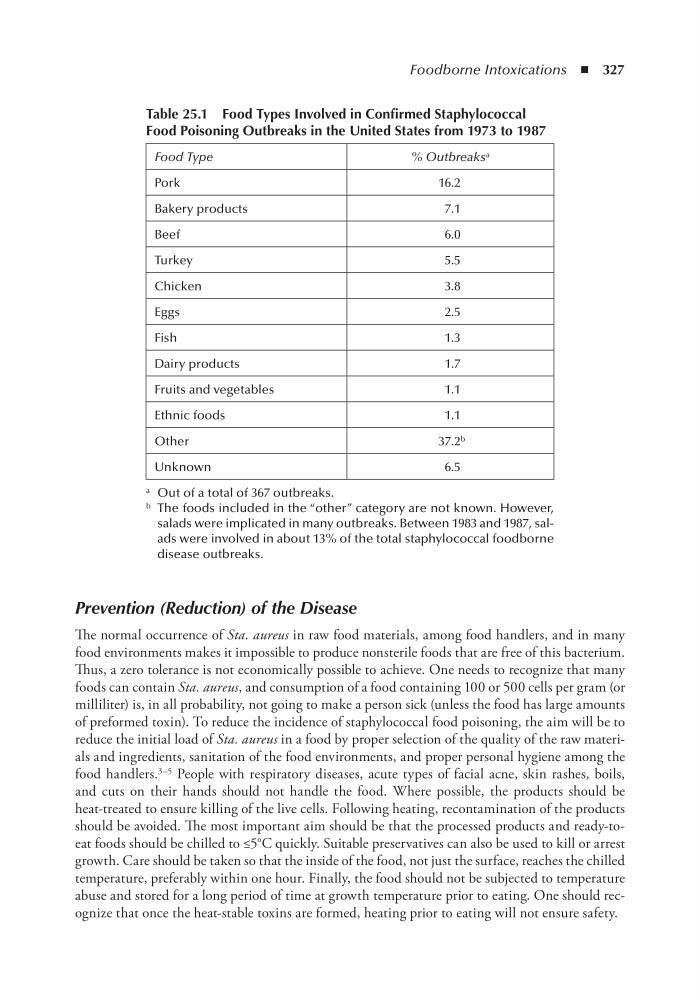
table 25.1 Food types involved in Confirmed Staphylococcal
Food Poisoning outbreaks in the United States from 1973 to 1987
Food Type
% Outbreaks a
Pork
16.2
Bakery products
7.1
Beef
6.0
Turkey
5.5
Chicken
3.8
Eggs
2.5
Fish
1.3
Dairy products
1.7
Fruits and vegetables
1.1
Ethnic foods
1.1
Other
37.2 b
Unknown
6.5
a Out of a total of 367 outbreaks.
b The foods included in the “other” category are not known. However,
salads were implicated in many outbreaks. Between 1983 and 1987, salads were involved in about 13% of the total staphylococcal foodborne
disease outbreaks.
Prevention (Reduction) of the Disease
The normal occurrence of Sta. aureus in raw food materials, among food handlers, and in many
food environments makes it impossible to produce nonsterile foods that are free of this bacterium.
Thus, a zero tolerance is not economically possible to achieve. One needs to recognize that many
foods can contain Sta. aureus, and consumption of a food containing 100 or 500 cells per gram (or
milliliter) is, in all probability, not going to make a person sick (unless the food has large amounts
of preformed toxin). To reduce the incidence of staphylococcal food poisoning, the aim will be to
reduce the initial load of Sta. aureus in a food by proper selection of the quality of the raw materials and ingredients, sanitation of the food environments, and proper personal hygiene among the
food handlers. 3–5 People with respiratory diseases, acute types of facial acne, skin rashes, boils,
and cuts on their hands should not handle the food. Where possible, the products should be
heat-treated to ensure killing of the live cells. Following heating, recontamination of the products
should be avoided. The most important aim should be that the processed products and ready-toeat foods should be chilled to ≤5°C quickly. Suitable preservatives can also be used to kill or arrest
growth. Care should be taken so that the inside of the food, not just the surface, reaches the chilled
temperature, preferably within one hour. Finally, the food should not be subjected to temperature
abuse and stored for a long period of time at growth temperature prior to eating. One should recognize that once the heat-stable toxins are formed, heating prior to eating will not ensure safety.
table 25.1 Food types involved in Confirmed Staphylococcal
Food Poisoning outbreaks in the United States from 1973 to 1987
Food Type
% Outbreaks a
Pork
16.2
Bakery products
7.1
Beef
6.0
Turkey
5.5
Chicken
3.8
Eggs
2.5
Fish
1.3
Dairy products
1.7
Fruits and vegetables
1.1
Ethnic foods
1.1
Other
37.2 b
Unknown
6.5
a Out of a total of 367 outbreaks.
b The foods included in the “other” category are not known. However,
salads were implicated in many outbreaks. Between 1983 and 1987, salads were involved in about 13% of the total staphylococcal foodborne
disease outbreaks.