

326 ◾ Fundamental Food Microbiology
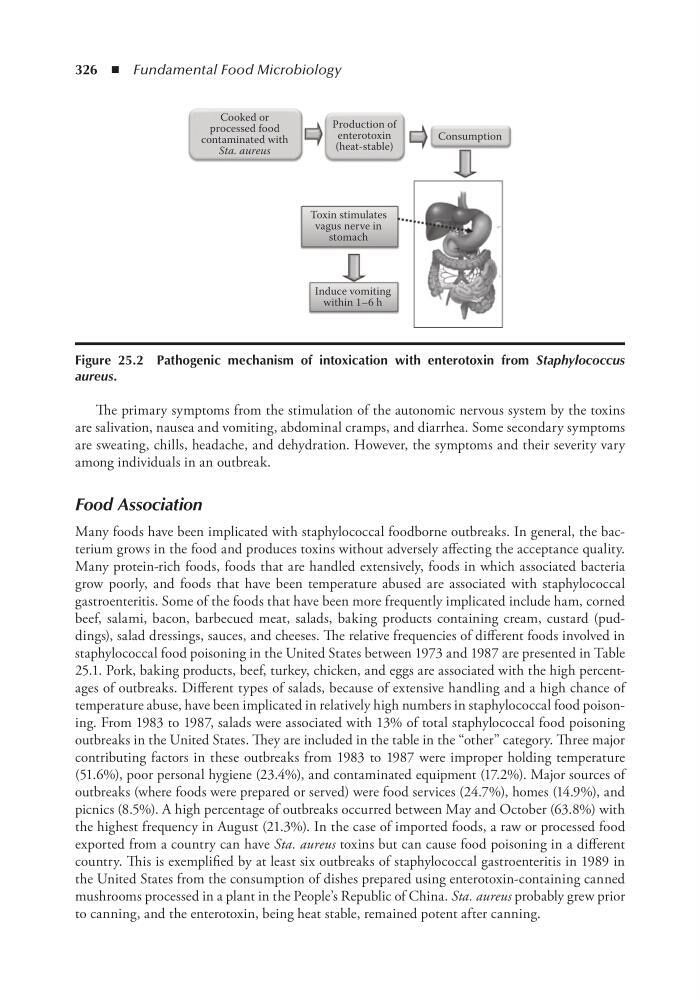
The primary symptoms from the stimulation of the autonomic nervous system by the toxins
are salivation, nausea and vomiting, abdominal cramps, and diarrhea. Some secondary symptoms
are sweating, chills, headache, and dehydration. However, the symptoms and their severity vary
among individuals in an outbreak.
Food Association
Many foods have been implicated with staphylococcal foodborne outbreaks. In general, the bacterium grows in the food and produces toxins without adversely affecting the acceptance quality.
Many protein-rich foods, foods that are handled extensively, foods in which associated bacteria
grow poorly, and foods that have been temperature abused are associated with staphylococcal
gastroenteritis. Some of the foods that have been more frequently implicated include ham, corned
beef, salami, bacon, barbecued meat, salads, baking products containing cream, custard (puddings), salad dressings, sauces, and cheeses. The relative frequencies of different foods involved in
staphylococcal food poisoning in the United States between 1973 and 1987 are presented in Table
25.1. Pork, baking products, beef, turkey, chicken, and eggs are associated with the high percentages of outbreaks. Different types of salads, because of extensive handling and a high chance of
temperature abuse, have been implicated in relatively high numbers in staphylococcal food poisoning. From 1983 to 1987, salads were associated with 13% of total staphylococcal food poisoning
outbreaks in the United States. They are included in the table in the “other” category. Three major
contributing factors in these outbreaks from 1983 to 1987 were improper holding temperature
(51.6%), poor personal hygiene (23.4%), and contaminated equipment (17.2%). Major sources of
outbreaks (where foods were prepared or served) were food services (24.7%), homes (14.9%), and
picnics (8.5%). A high percentage of outbreaks occurred between May and October (63.8%) with
the highest frequency in August (21.3%). In the case of imported foods, a raw or processed food
exported from a country can have Sta. aureus toxins but can cause food poisoning in a different
country. This is exemplified by at least six outbreaks of staphylococcal gastroenteritis in 1989 in
the United States from the consumption of dishes prepared using enterotoxin-containing canned
mushrooms processed in a plant in the People’s Republic of China. Sta. aureus probably grew prior
to canning, and the enterotoxin, being heat stable, remained potent after canning.
Cooked or
processed food
contaminated with
Sta. aureus
Production of
enterotoxin
(heat-stable)
Toxin stimulates
vagus nerve in
stomach
Consumption
Induce vomiting
within 1–6 h
Figure 25.2 Pathogenic mechanism of intoxication with enterotoxin from Staphylococcus
aureus.
The primary symptoms from the stimulation of the autonomic nervous system by the toxins
are salivation, nausea and vomiting, abdominal cramps, and diarrhea. Some secondary symptoms
are sweating, chills, headache, and dehydration. However, the symptoms and their severity vary
among individuals in an outbreak.
Food Association
Many foods have been implicated with staphylococcal foodborne outbreaks. In general, the bacterium grows in the food and produces toxins without adversely affecting the acceptance quality.
Many protein-rich foods, foods that are handled extensively, foods in which associated bacteria
grow poorly, and foods that have been temperature abused are associated with staphylococcal
gastroenteritis. Some of the foods that have been more frequently implicated include ham, corned
beef, salami, bacon, barbecued meat, salads, baking products containing cream, custard (puddings), salad dressings, sauces, and cheeses. The relative frequencies of different foods involved in
staphylococcal food poisoning in the United States between 1973 and 1987 are presented in Table
25.1. Pork, baking products, beef, turkey, chicken, and eggs are associated with the high percentages of outbreaks. Different types of salads, because of extensive handling and a high chance of
temperature abuse, have been implicated in relatively high numbers in staphylococcal food poisoning. From 1983 to 1987, salads were associated with 13% of total staphylococcal food poisoning
outbreaks in the United States. They are included in the table in the “other” category. Three major
contributing factors in these outbreaks from 1983 to 1987 were improper holding temperature
(51.6%), poor personal hygiene (23.4%), and contaminated equipment (17.2%). Major sources of
outbreaks (where foods were prepared or served) were food services (24.7%), homes (14.9%), and
picnics (8.5%). A high percentage of outbreaks occurred between May and October (63.8%) with
the highest frequency in August (21.3%). In the case of imported foods, a raw or processed food
exported from a country can have Sta. aureus toxins but can cause food poisoning in a different
country. This is exemplified by at least six outbreaks of staphylococcal gastroenteritis in 1989 in
the United States from the consumption of dishes prepared using enterotoxin-containing canned
mushrooms processed in a plant in the People’s Republic of China. Sta. aureus probably grew prior
to canning, and the enterotoxin, being heat stable, remained potent after canning.
Cooked or
processed food
contaminated with
Sta. aureus
Production of
enterotoxin
(heat-stable)
Toxin stimulates
vagus nerve in
stomach
Consumption
Induce vomiting
within 1–6 h
Figure 25.2 Pathogenic mechanism of intoxication with enterotoxin from Staphylococcus
aureus.