

306 ◾ Fundamental Food Microbiology
4. Allergy to some normal components of a food. There are individuals who are allergic to gluten in cereals and develop digestive disorders (celiac disease) following consumption of food
containing gluten.
5. Genetic inability to metabolize normal food components. The inability of some individuals to hydrolyze lactose in the small intestine because of the lack of production of enzyme
lactase results in digestive disorders (lactose intolerance).
6. Nutritional disorders, such as rickets from calcium deficiency.
7. Indigestion from overeating or other reasons.
epidemiological Aspects
Investigation of a Foodborne Disease
In general, various regulatory agencies at the local, state, and national levels are empowered with
the responsibility of investigating the cause of a reported foodborne disease (see Appendix B). In
the United States, the regulatory agencies involved in the investigation of a foodborne disease
include local health departments; state health, food, and agriculture departments; the federal
Food and Drug Administration (FDA); U.S. Department of Agriculture (USDA); Centers for
Disease Control and Prevention (CDC); and several others. Initially, a medical doctor, suspecting
a patient or patients to have a foodborne disease, informs the local or state health officials about
the incidence. These agencies, following a preliminary investigation and recognizing the cause to
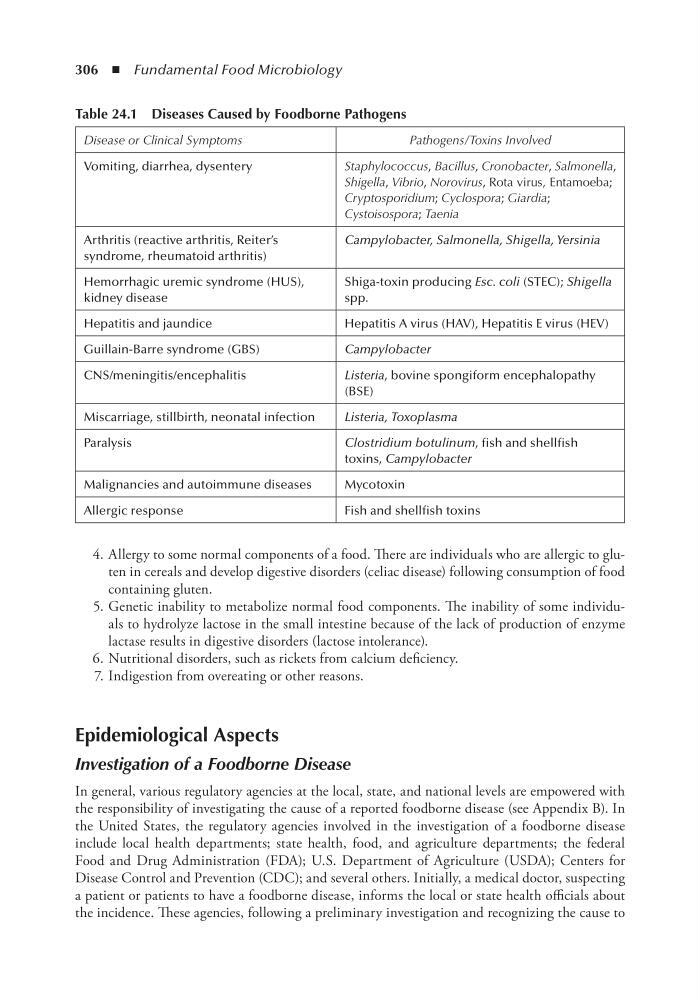
table 24.1 Diseases Caused by Foodborne Pathogens
Disease or Clinical Symptoms
Pathogens/Toxins Involved
Vomiting, diarrhea, dysentery
Staphylococcus, Bacillus, Cronobacter, Salmonella,
Shigella, Vibrio, Norovirus, Rota virus, Entamoeba;
Cryptosporidium; Cyclospora; Giardia;
Cystoisospora; Taenia
Arthritis (reactive arthritis, Reiter’s
syndrome, rheumatoid arthritis)
Campylobacter, Salmonella, Shigella, Yersinia
Hemorrhagic uremic syndrome (HUS),
kidney disease
Shiga-toxin producing Esc. coli (STEC); Shigella
spp.
Hepatitis and jaundice
Hepatitis A virus (HAV), Hepatitis E virus (HEV)
Guillain-Barre syndrome (GBS)
Campylobacter
CNS/meningitis/encephalitis
Listeria, bovine spongiform encephalopathy
(BSE)
Miscarriage, stillbirth, neonatal infection
Listeria, Toxoplasma
Paralysis
Clostridium botulinum, fish and shellfish
toxins, Campylobacter
Malignancies and autoimmune diseases
Mycotoxin
Allergic response
Fish and shellfish toxins
4. Allergy to some normal components of a food. There are individuals who are allergic to gluten in cereals and develop digestive disorders (celiac disease) following consumption of food
containing gluten.
5. Genetic inability to metabolize normal food components. The inability of some individuals to hydrolyze lactose in the small intestine because of the lack of production of enzyme
lactase results in digestive disorders (lactose intolerance).
6. Nutritional disorders, such as rickets from calcium deficiency.
7. Indigestion from overeating or other reasons.
epidemiological Aspects
Investigation of a Foodborne Disease
In general, various regulatory agencies at the local, state, and national levels are empowered with
the responsibility of investigating the cause of a reported foodborne disease (see Appendix B). In
the United States, the regulatory agencies involved in the investigation of a foodborne disease
include local health departments; state health, food, and agriculture departments; the federal
Food and Drug Administration (FDA); U.S. Department of Agriculture (USDA); Centers for
Disease Control and Prevention (CDC); and several others. Initially, a medical doctor, suspecting
a patient or patients to have a foodborne disease, informs the local or state health officials about
the incidence. These agencies, following a preliminary investigation and recognizing the cause to
table 24.1 Diseases Caused by Foodborne Pathogens
Disease or Clinical Symptoms
Pathogens/Toxins Involved
Vomiting, diarrhea, dysentery
Staphylococcus, Bacillus, Cronobacter, Salmonella,
Shigella, Vibrio, Norovirus, Rota virus, Entamoeba;
Cryptosporidium; Cyclospora; Giardia;
Cystoisospora; Taenia
Arthritis (reactive arthritis, Reiter’s
syndrome, rheumatoid arthritis)
Campylobacter, Salmonella, Shigella, Yersinia
Hemorrhagic uremic syndrome (HUS),
kidney disease
Shiga-toxin producing Esc. coli (STEC); Shigella
spp.
Hepatitis and jaundice
Hepatitis A virus (HAV), Hepatitis E virus (HEV)
Guillain-Barre syndrome (GBS)
Campylobacter
CNS/meningitis/encephalitis
Listeria, bovine spongiform encephalopathy
(BSE)
Miscarriage, stillbirth, neonatal infection
Listeria, Toxoplasma
Paralysis
Clostridium botulinum, fish and shellfish
toxins, Campylobacter
Malignancies and autoimmune diseases
Mycotoxin
Allergic response
Fish and shellfish toxins