

Biochemistry of Some Beneficial Traits ◾ 133
before they can be metabolized in the EMP pathway. Thus, fructose is phosphorylated by ATP
to fructose-6-phosphate before being used in the EMP pathway. Galactose is converted first to
galactose-1-phosphate, then to glucose-1-phosphate, and finally to glucose-6-phosphate through
the Leloir pathway before entering the EMP pathway. Galactose-6-phosphate is first converted to
tagatose-6-phosphate, then to tagatose-1,6-diphosphate, and then hydrolyzed to dihydroacetone
phosphate and glyceraldehyde-3-phosphate by the tagatose pathway before entering the EMP
pathway.
Besides being an important component in the production of fermented foods (e.g., yogurt,
cheeses, and fermented sausage and vegetables), lactic acid is used as an ingredient in many foods
(e.g., processed meat products). For this purpose, l(+)-lactic acid is preferred and approved by
regulatory agencies as a food additive (as it is also produced by the muscle). Lactic acid bacteria capable of producing l(+)-lactic acid in large amounts (mainly some Lactobacillus spp.) are
commercially used for this purpose. At present, genetic studies are being conducted to develop
strains by inactivating the d-lactate dehydrogenase system in species that have both the L and
D systems and produce large amounts of a mixture of l(+)- and d(–)-lactic acids. Some of the
species that produce l(+)-lactic acid (>90% or more) are Lactococcus lactis ssp. lactis and cremoris,
Streptococcus thermophilus, Lactobacillus amylovorus, Lab. amylophilus, Lab. casei spp. casei, Lab.
casei spp. rhamnosus, and Lab. divergens. Some of the common species used in food fermentation,
namely Pediococcus acidilactici, Ped. pentosaceus, Lab. delbrueckii spp. bulgaricus and helveticus,
Lab. acidophilus, Lab. reuteri, and Lab. plantarum, produce a mixture of d(–)- and l(+)-lactic acids
with 20%–70% being l(+)-lactic acid. 2
Heterolactic Fermentation of Carbohydrates
Hexoses are metabolized to produce a mixture of lactic acid, CO 2 , and acetate or ethanol by heterofermentative lactic acid bacteria (Table 12.1). Species from genera Leuconostoc and Group III
Lactobacillus lack fructose diphosphoaldolase (of the EMP pathway) but have glucose phosphate
ATP
ATP
(1) Glucose -- --> (1) Glucose-6-phosphate
(1) Fructose-6-phosphate -- --> (1) Fructose-1, 6-diphosphate
ADP
ADP
*
-----> (1) Dihydroacetone phosphate + (1) Glyceraldehyde-3-phosphate
(2) Glyceraldehyde-3-phosphate
2NAD 2 phosphate
2ADP
-- -------------> (2) 1,3-diphosphoglycerate --- --> (2) 3-phosphoglycerate
(2) 2-phosphoglycerate
2NADH
2ATP
2ADP
** 2NADH + 2H
+
(2) Phosphoenolpyruvate --- --> (2) Pyruvate ------ ------> (2) Lactate
2ATP
2NAD
[1 Glucose
2 lactic acid + 2 ATP]
* Fructose diphosphate aldolase, ** L, D or DL-lactate dehydrogenase
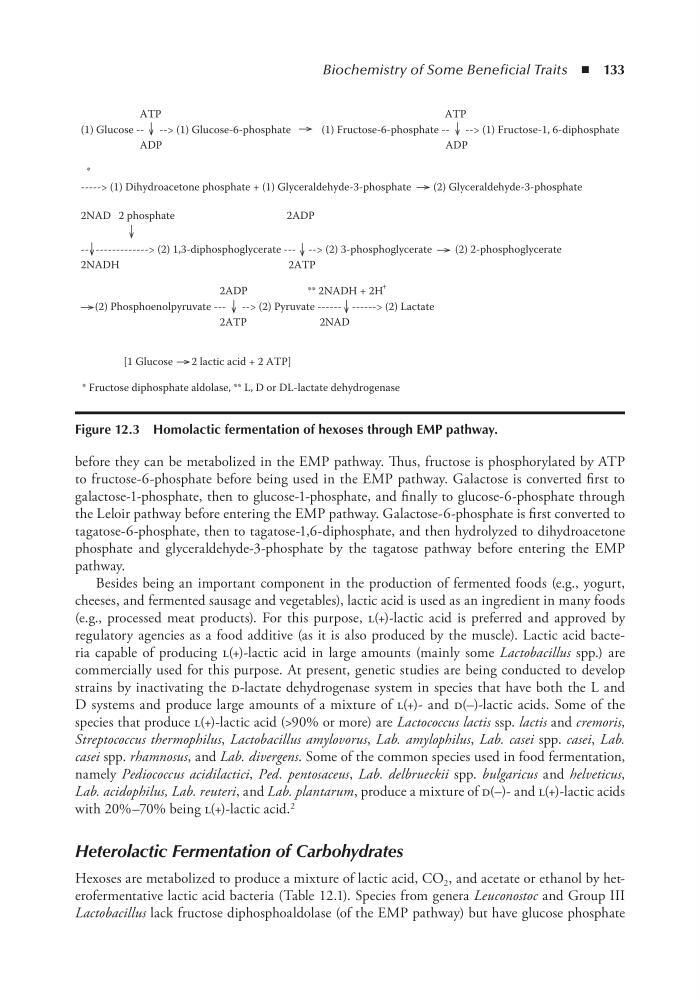
Figure 12.3 Homolactic fermentation of hexoses through eMP pathway.
before they can be metabolized in the EMP pathway. Thus, fructose is phosphorylated by ATP
to fructose-6-phosphate before being used in the EMP pathway. Galactose is converted first to
galactose-1-phosphate, then to glucose-1-phosphate, and finally to glucose-6-phosphate through
the Leloir pathway before entering the EMP pathway. Galactose-6-phosphate is first converted to
tagatose-6-phosphate, then to tagatose-1,6-diphosphate, and then hydrolyzed to dihydroacetone
phosphate and glyceraldehyde-3-phosphate by the tagatose pathway before entering the EMP
pathway.
Besides being an important component in the production of fermented foods (e.g., yogurt,
cheeses, and fermented sausage and vegetables), lactic acid is used as an ingredient in many foods
(e.g., processed meat products). For this purpose, l(+)-lactic acid is preferred and approved by
regulatory agencies as a food additive (as it is also produced by the muscle). Lactic acid bacteria capable of producing l(+)-lactic acid in large amounts (mainly some Lactobacillus spp.) are
commercially used for this purpose. At present, genetic studies are being conducted to develop
strains by inactivating the d-lactate dehydrogenase system in species that have both the L and
D systems and produce large amounts of a mixture of l(+)- and d(–)-lactic acids. Some of the
species that produce l(+)-lactic acid (>90% or more) are Lactococcus lactis ssp. lactis and cremoris,
Streptococcus thermophilus, Lactobacillus amylovorus, Lab. amylophilus, Lab. casei spp. casei, Lab.
casei spp. rhamnosus, and Lab. divergens. Some of the common species used in food fermentation,
namely Pediococcus acidilactici, Ped. pentosaceus, Lab. delbrueckii spp. bulgaricus and helveticus,
Lab. acidophilus, Lab. reuteri, and Lab. plantarum, produce a mixture of d(–)- and l(+)-lactic acids
with 20%–70% being l(+)-lactic acid. 2
Heterolactic Fermentation of Carbohydrates
Hexoses are metabolized to produce a mixture of lactic acid, CO 2 , and acetate or ethanol by heterofermentative lactic acid bacteria (Table 12.1). Species from genera Leuconostoc and Group III
Lactobacillus lack fructose diphosphoaldolase (of the EMP pathway) but have glucose phosphate
ATP
ATP
(1) Glucose -- --> (1) Glucose-6-phosphate
(1) Fructose-6-phosphate -- --> (1) Fructose-1, 6-diphosphate
ADP
ADP
*
-----> (1) Dihydroacetone phosphate + (1) Glyceraldehyde-3-phosphate
(2) Glyceraldehyde-3-phosphate
2NAD 2 phosphate
2ADP
-- -------------> (2) 1,3-diphosphoglycerate --- --> (2) 3-phosphoglycerate
(2) 2-phosphoglycerate
2NADH
2ATP
2ADP
** 2NADH + 2H
+
(2) Phosphoenolpyruvate --- --> (2) Pyruvate ------ ------> (2) Lactate
2ATP
2NAD
[1 Glucose
2 lactic acid + 2 ATP]
* Fructose diphosphate aldolase, ** L, D or DL-lactate dehydrogenase
Figure 12.3 Homolactic fermentation of hexoses through eMP pathway.