

77
nanocrystals resulting from the disruption of amorphous domains from semicrystalline granules by acid hydrolysis and (2) starch nanoparticles produced from gelatinized starch. The starch nanoparticles with particle sizes in the range of 10–1000 nm
have been extensively studied as controlled release nanocarriers. For instance, propyl starch nanoparticles loaded with different types of drug (flufenamic acid, testosterone, and caffeine) showed enhanced effectiveness upon permeation studies on
human skin (Santander-Ortega et al. 2010). Dialdehyde starch nanoparticles
(DASNPs) conjugated with 5-fluorouracil (5-Fu) were found to have enhanced
breast cancer cell (MF-7) inhibition in vitro as compared to free 5-Fu (Xiao et al.
2012). The nanoparticles encapsulated lipophilic bioactive compounds can provide
physiological benefits in combating diet-related non-communicable diseases,
including heart diseases, obesity, hypertension, cancer, and bone health (Gallocchio
et al. 2015). Targeted release and protection of bioactive compounds is possible by
incorporating them into nanoparticles which can improve their bioavailability.
Previous studies have reported that nanoparticles, as delivery systems for polyphenols, can hinder oxidation/degradation, thus improving the stability and bioaccessibility of the phenolic phytochemicals and controlling the release rate of the active
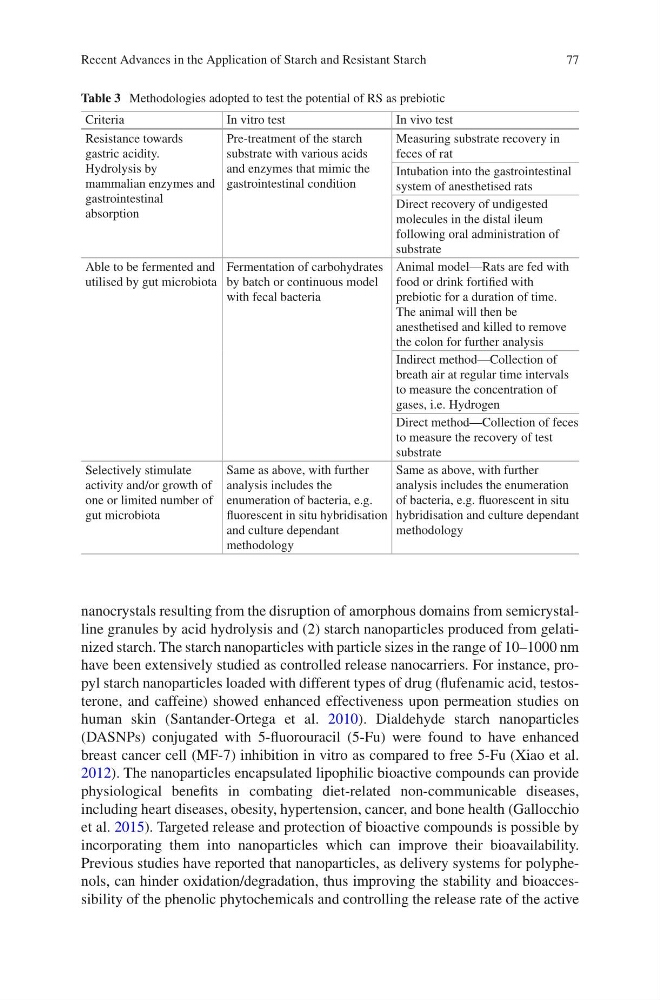
Table 3 Methodologies adopted to test the potential of RS as prebiotic
Criteria
In vitro test
In vivo test
Resistance towards
gastric acidity.
Hydrolysis by
mammalian enzymes and
gastrointestinal
absorption
Pre-treatment of the starch
substrate with various acids
and enzymes that mimic the
gastrointestinal condition
Measuring substrate recovery in
feces of rat
Intubation into the gastrointestinal
system of anesthetised rats
Direct recovery of undigested
molecules in the distal ileum
following oral administration of
substrate
Able to be fermented and
utilised by gut microbiota
Fermentation of carbohydrates
by batch or continuous model
with fecal bacteria
Animal model—Rats are fed with
food or drink fortified with
prebiotic for a duration of time.
The animal will then be
anesthetised and killed to remove
the colon for further analysis
Indirect method—Collection of
breath air at regular time intervals
to measure the concentration of
gases, i.e. Hydrogen
Direct method—Collection of feces
to measure the recovery of test
substrate
Selectively stimulate
activity and/or growth of
one or limited number of
gut microbiota
Same as above, with further
analysis includes the
enumeration of bacteria, e.g.
fluorescent in situ hybridisation
and culture dependant
methodology
Same as above, with further
analysis includes the enumeration
of bacteria, e.g. fluorescent in situ
hybridisation and culture dependant
methodology
Recent Advances in the Application of Starch and Resistant Starch
nanocrystals resulting from the disruption of amorphous domains from semicrystalline granules by acid hydrolysis and (2) starch nanoparticles produced from gelatinized starch. The starch nanoparticles with particle sizes in the range of 10–1000 nm
have been extensively studied as controlled release nanocarriers. For instance, propyl starch nanoparticles loaded with different types of drug (flufenamic acid, testosterone, and caffeine) showed enhanced effectiveness upon permeation studies on
human skin (Santander-Ortega et al. 2010). Dialdehyde starch nanoparticles
(DASNPs) conjugated with 5-fluorouracil (5-Fu) were found to have enhanced
breast cancer cell (MF-7) inhibition in vitro as compared to free 5-Fu (Xiao et al.
2012). The nanoparticles encapsulated lipophilic bioactive compounds can provide
physiological benefits in combating diet-related non-communicable diseases,
including heart diseases, obesity, hypertension, cancer, and bone health (Gallocchio
et al. 2015). Targeted release and protection of bioactive compounds is possible by
incorporating them into nanoparticles which can improve their bioavailability.
Previous studies have reported that nanoparticles, as delivery systems for polyphenols, can hinder oxidation/degradation, thus improving the stability and bioaccessibility of the phenolic phytochemicals and controlling the release rate of the active
Table 3 Methodologies adopted to test the potential of RS as prebiotic
Criteria
In vitro test
In vivo test
Resistance towards
gastric acidity.
Hydrolysis by
mammalian enzymes and
gastrointestinal
absorption
Pre-treatment of the starch
substrate with various acids
and enzymes that mimic the
gastrointestinal condition
Measuring substrate recovery in
feces of rat
Intubation into the gastrointestinal
system of anesthetised rats
Direct recovery of undigested
molecules in the distal ileum
following oral administration of
substrate
Able to be fermented and
utilised by gut microbiota
Fermentation of carbohydrates
by batch or continuous model
with fecal bacteria
Animal model—Rats are fed with
food or drink fortified with
prebiotic for a duration of time.
The animal will then be
anesthetised and killed to remove
the colon for further analysis
Indirect method—Collection of
breath air at regular time intervals
to measure the concentration of
gases, i.e. Hydrogen
Direct method—Collection of feces
to measure the recovery of test
substrate
Selectively stimulate
activity and/or growth of
one or limited number of
gut microbiota
Same as above, with further
analysis includes the
enumeration of bacteria, e.g.
fluorescent in situ hybridisation
and culture dependant
methodology
Same as above, with further
analysis includes the enumeration
of bacteria, e.g. fluorescent in situ
hybridisation and culture dependant
methodology
Recent Advances in the Application of Starch and Resistant Starch