

258
places where opioid peptides can be found are the nervous, endocrine and immune
systems of mammals (Mohanty et al. 2016). These peptides may exert an agonist or
antagonist effect when they interact with receptors in the human body (FernándezTomé et al. 2016).
Opioid agonist peptides which are endogenously produced can modulate the
function and growth of cells in the central nervous system (Calvo et al. 2000). In
contrast, exogenous opioid agonist peptides like β-casomorphins interact with
opiate receptors present in intestinal epithelium and show similar pharmacological properties to morphine and naloxone like modulating social behavior, inducing analgesia, stimulating insulin and somatostatin secretion and exerting an
antidiarrheal effect (Meisel and Schlimme 1990). β-casomorphin studies in rats
suggest that they may play a significant role in regulating dietary fat intake, with
β-casomorphin 1–7 suppressing high carbohydrate diet intake and stimulating
high fat diet intake in satiated rats (Lin et al. 1998). Moreover, depressive effects
on the central respiratory system by bovine β-casomorphins have been reported in
rats and rabbits (Hedner and Hedner 1987). Other important examples of opioid
agonist peptides are serorphin from bovine serum albumin and lactorphins from
bovine whey protein.
Opioid antagonists have also been identified from bovine κ-casein. Bovine
casoxins A and B are reported to have low antagonist potency (Meisel 1998),
whereas casoxin C is a potent opioid antagonist peptide of κ-casein, with greatest
biological potency (Xu 1998). These peptides are known to suppress enkephalin’s
agonist activity and have affinity for the μ- and κ-type of opioid receptors (Clare and
Swaisgood 2000). Both endo- and exogenously produced opioid peptides share a
common feature—tyrosine at the N-terminus and phenylalanine or tyrosine in the
third or fourth position—which allows for a better fit within the active site of the
opioid receptor (Clare and Swaisgood 2000). Other protein sources of opioid peptides include rice, gluten or soy from plant proteins (Yoshikawa 2015).
Opioid-like sequences are present in bovine whey protein’s primary structure,
namely α-lactalbumin f50–53 and β-lactoglobulin f102–105 (Antila et al. 1991).
These tetrapeptides are known as α- and β-lactorphins and can be released via proteolytic enzymes in vitro (Nagpal et al. 2011). The biological functions of both
lactorphins vary vastly even though structurally, they differ from each other by only
one amino acid (Rutherfurd-Markwick 2012). In vitro, α-lactorphin shows an
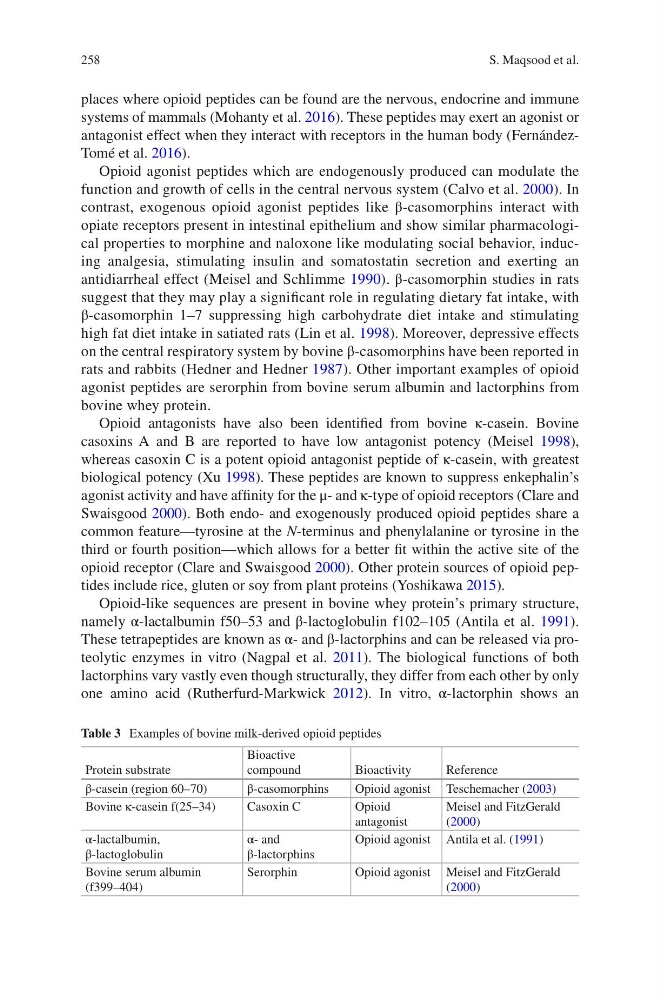
Table 3 Examples of bovine milk-derived opioid peptides
Protein substrate
Bioactive
compound
Bioactivity
Reference
β-casein (region 60–70)
β-casomorphins
Opioid agonist Teschemacher (2003)
Bovine κ-casein f(25–34)
Casoxin C
Opioid
antagonist
Meisel and FitzGerald
(2000)
α-lactalbumin,
β-lactoglobulin
α- and
β-lactorphins
Opioid agonist Antila et al. (1991)
Bovine serum albumin
(f399–404)
Serorphin
Opioid agonist Meisel and FitzGerald
(2000)
S. Maqsood et al.
places where opioid peptides can be found are the nervous, endocrine and immune
systems of mammals (Mohanty et al. 2016). These peptides may exert an agonist or
antagonist effect when they interact with receptors in the human body (FernándezTomé et al. 2016).
Opioid agonist peptides which are endogenously produced can modulate the
function and growth of cells in the central nervous system (Calvo et al. 2000). In
contrast, exogenous opioid agonist peptides like β-casomorphins interact with
opiate receptors present in intestinal epithelium and show similar pharmacological properties to morphine and naloxone like modulating social behavior, inducing analgesia, stimulating insulin and somatostatin secretion and exerting an
antidiarrheal effect (Meisel and Schlimme 1990). β-casomorphin studies in rats
suggest that they may play a significant role in regulating dietary fat intake, with
β-casomorphin 1–7 suppressing high carbohydrate diet intake and stimulating
high fat diet intake in satiated rats (Lin et al. 1998). Moreover, depressive effects
on the central respiratory system by bovine β-casomorphins have been reported in
rats and rabbits (Hedner and Hedner 1987). Other important examples of opioid
agonist peptides are serorphin from bovine serum albumin and lactorphins from
bovine whey protein.
Opioid antagonists have also been identified from bovine κ-casein. Bovine
casoxins A and B are reported to have low antagonist potency (Meisel 1998),
whereas casoxin C is a potent opioid antagonist peptide of κ-casein, with greatest
biological potency (Xu 1998). These peptides are known to suppress enkephalin’s
agonist activity and have affinity for the μ- and κ-type of opioid receptors (Clare and
Swaisgood 2000). Both endo- and exogenously produced opioid peptides share a
common feature—tyrosine at the N-terminus and phenylalanine or tyrosine in the
third or fourth position—which allows for a better fit within the active site of the
opioid receptor (Clare and Swaisgood 2000). Other protein sources of opioid peptides include rice, gluten or soy from plant proteins (Yoshikawa 2015).
Opioid-like sequences are present in bovine whey protein’s primary structure,
namely α-lactalbumin f50–53 and β-lactoglobulin f102–105 (Antila et al. 1991).
These tetrapeptides are known as α- and β-lactorphins and can be released via proteolytic enzymes in vitro (Nagpal et al. 2011). The biological functions of both
lactorphins vary vastly even though structurally, they differ from each other by only
one amino acid (Rutherfurd-Markwick 2012). In vitro, α-lactorphin shows an
Table 3 Examples of bovine milk-derived opioid peptides
Protein substrate
Bioactive
compound
Bioactivity
Reference
β-casein (region 60–70)
β-casomorphins
Opioid agonist Teschemacher (2003)
Bovine κ-casein f(25–34)
Casoxin C
Opioid
antagonist
Meisel and FitzGerald
(2000)
α-lactalbumin,
β-lactoglobulin
α- and
β-lactorphins
Opioid agonist Antila et al. (1991)
Bovine serum albumin
(f399–404)
Serorphin
Opioid agonist Meisel and FitzGerald
(2000)
S. Maqsood et al.