

11
Recent developments in biotechnology have provided means for the modification of starch during the growth of the plant. Different amylose levels, amylopectin
structure, and phosphorus contents from various plant sources can be produced
using antisense reduction of enzyme activity of single or multiple enzymes (Jobling
et al. 1999). Modifications can be achieved through transgenic means by introducing genes for new enzymes into a desired plant from other plants or novel mutations
for enhanced carbohydrates.
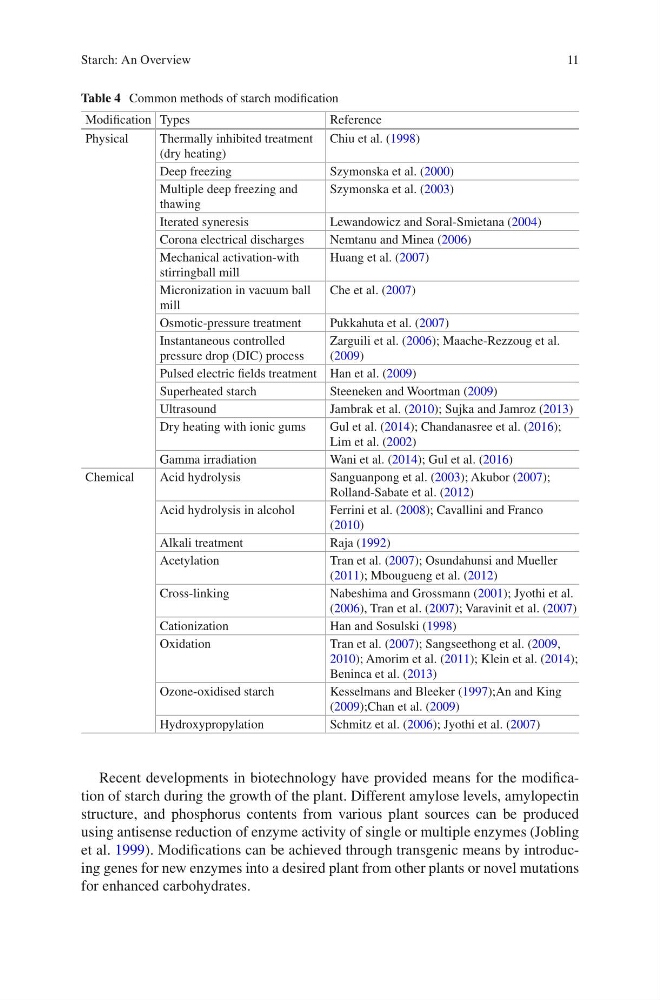
Table 4 Common methods of starch modification
Modification Types
Reference
Physical
Thermally inhibited treatment
(dry heating)
Chiu et al. (1998)
Deep freezing
Szymonska et al. (2000)
Multiple deep freezing and
thawing
Szymonska et al. (2003)
Iterated syneresis
Lewandowicz and Soral-Smietana (2004)
Corona electrical discharges
Nemtanu and Minea (2006)
Mechanical activation-with
stirringball mill
Huang et al. (2007)
Micronization in vacuum ball
mill
Che et al. (2007)
Osmotic-pressure treatment
Pukkahuta et al. (2007)
Instantaneous controlled
pressure drop (DIC) process
Zarguili et al. (2006); Maache-Rezzoug et al.
(2009)
Pulsed electric fields treatment Han et al. (2009)
Superheated starch
Steeneken and Woortman (2009)
Ultrasound
Jambrak et al. (2010); Sujka and Jamroz (2013)
Dry heating with ionic gums
Gul et al. (2014); Chandanasree et al. (2016);
Lim et al. (2002)
Gamma irradiation
Wani et al. (2014); Gul et al. (2016)
Chemical
Acid hydrolysis
Sanguanpong et al. (2003); Akubor (2007);
Rolland-Sabate et al. (2012)
Acid hydrolysis in alcohol
Ferrini et al. (2008); Cavallini and Franco
(2010)
Alkali treatment
Raja (1992)
Acetylation
Tran et al. (2007); Osundahunsi and Mueller
(2011); Mbougueng et al. (2012)
Cross-linking
Nabeshima and Grossmann (2001); Jyothi et al.
(2006), Tran et al. (2007); Varavinit et al. (2007)
Cationization
Han and Sosulski (1998)
Oxidation
Tran et al. (2007); Sangseethong et al. (2009,
2010); Amorim et al. (2011); Klein et al. (2014);
Beninca et al. (2013)
Ozone-oxidised starch
Kesselmans and Bleeker (1997);An and King
(2009);Chan et al. (2009)
Hydroxypropylation
Schmitz et al. (2006); Jyothi et al. (2007)
Starch: An Overview
Recent developments in biotechnology have provided means for the modification of starch during the growth of the plant. Different amylose levels, amylopectin
structure, and phosphorus contents from various plant sources can be produced
using antisense reduction of enzyme activity of single or multiple enzymes (Jobling
et al. 1999). Modifications can be achieved through transgenic means by introducing genes for new enzymes into a desired plant from other plants or novel mutations
for enhanced carbohydrates.
Table 4 Common methods of starch modification
Modification Types
Reference
Physical
Thermally inhibited treatment
(dry heating)
Chiu et al. (1998)
Deep freezing
Szymonska et al. (2000)
Multiple deep freezing and
thawing
Szymonska et al. (2003)
Iterated syneresis
Lewandowicz and Soral-Smietana (2004)
Corona electrical discharges
Nemtanu and Minea (2006)
Mechanical activation-with
stirringball mill
Huang et al. (2007)
Micronization in vacuum ball
mill
Che et al. (2007)
Osmotic-pressure treatment
Pukkahuta et al. (2007)
Instantaneous controlled
pressure drop (DIC) process
Zarguili et al. (2006); Maache-Rezzoug et al.
(2009)
Pulsed electric fields treatment Han et al. (2009)
Superheated starch
Steeneken and Woortman (2009)
Ultrasound
Jambrak et al. (2010); Sujka and Jamroz (2013)
Dry heating with ionic gums
Gul et al. (2014); Chandanasree et al. (2016);
Lim et al. (2002)
Gamma irradiation
Wani et al. (2014); Gul et al. (2016)
Chemical
Acid hydrolysis
Sanguanpong et al. (2003); Akubor (2007);
Rolland-Sabate et al. (2012)
Acid hydrolysis in alcohol
Ferrini et al. (2008); Cavallini and Franco
(2010)
Alkali treatment
Raja (1992)
Acetylation
Tran et al. (2007); Osundahunsi and Mueller
(2011); Mbougueng et al. (2012)
Cross-linking
Nabeshima and Grossmann (2001); Jyothi et al.
(2006), Tran et al. (2007); Varavinit et al. (2007)
Cationization
Han and Sosulski (1998)
Oxidation
Tran et al. (2007); Sangseethong et al. (2009,
2010); Amorim et al. (2011); Klein et al. (2014);
Beninca et al. (2013)
Ozone-oxidised starch
Kesselmans and Bleeker (1997);An and King
(2009);Chan et al. (2009)
Hydroxypropylation
Schmitz et al. (2006); Jyothi et al. (2007)
Starch: An Overview