

143
High Methoxy Pectin (HMP)
High methoxy gel pectins are formed at low pH in the presence of a high sucrose
concentration or similar co-solute. The conditions of low pH results in protonation
of carboxylate which reduces the electrostatic repulsion. Further the high concentration of sucrose reduces the water activity that triggers the interchain reactions as
compared to chain-solvent interaction (Thibault and Ralet 2003). X-ray diffraction
(XRD) studies have revealed that intermolecular hydrogen bonds and hydrophobic
bonding between methyl esters are the main forces behind the stabilization of the
HMP gels (Walkinshaw and Arnott 1981). The conformation of the adjacent GalA
0.01
0.1
1
10
0.1
1
Shear rate (s -1 )
Shear stress (Pa)
Apparent viscosity (Pa.s)
10
100
1000
0.01
0.001
0.01
0.1
1
10
100
1000
0.1
1
Shear rate (s -1 )
10
100
1000
8%
5%
3%
8%
5%
3%
i
ii
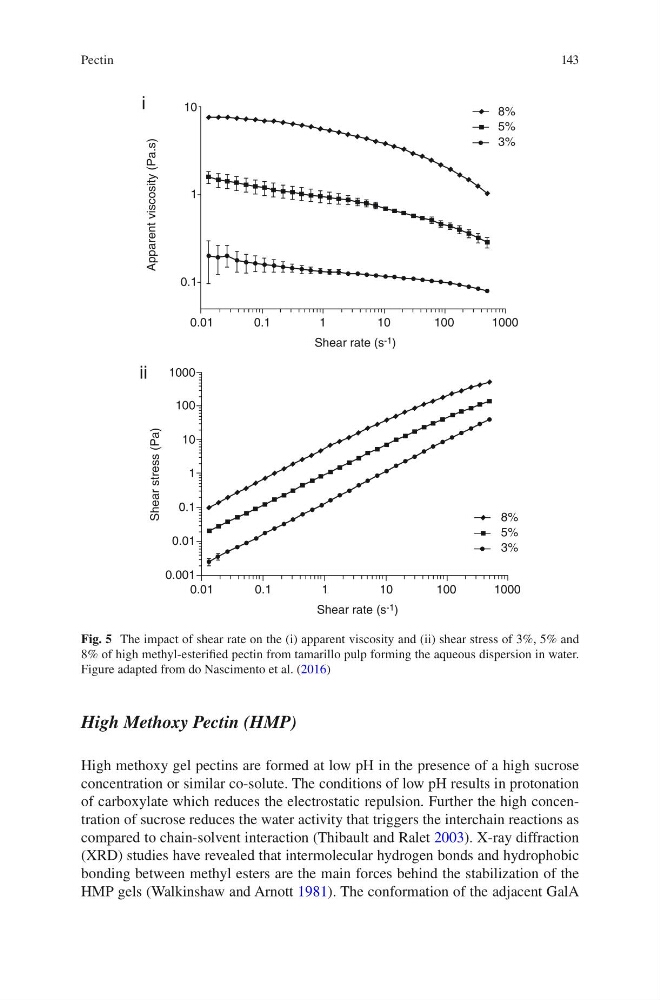
Fig. 5 The impact of shear rate on the (i) apparent viscosity and (ii) shear stress of 3%, 5% and
8% of high methyl-esterified pectin from tamarillo pulp forming the aqueous dispersion in water.
Figure adapted from do Nascimento et al. (2016)
Pectin
High Methoxy Pectin (HMP)
High methoxy gel pectins are formed at low pH in the presence of a high sucrose
concentration or similar co-solute. The conditions of low pH results in protonation
of carboxylate which reduces the electrostatic repulsion. Further the high concentration of sucrose reduces the water activity that triggers the interchain reactions as
compared to chain-solvent interaction (Thibault and Ralet 2003). X-ray diffraction
(XRD) studies have revealed that intermolecular hydrogen bonds and hydrophobic
bonding between methyl esters are the main forces behind the stabilization of the
HMP gels (Walkinshaw and Arnott 1981). The conformation of the adjacent GalA
0.01
0.1
1
10
0.1
1
Shear rate (s -1 )
Shear stress (Pa)
Apparent viscosity (Pa.s)
10
100
1000
0.01
0.001
0.01
0.1
1
10
100
1000
0.1
1
Shear rate (s -1 )
10
100
1000
8%
5%
3%
8%
5%
3%
i
ii
Fig. 5 The impact of shear rate on the (i) apparent viscosity and (ii) shear stress of 3%, 5% and
8% of high methyl-esterified pectin from tamarillo pulp forming the aqueous dispersion in water.
Figure adapted from do Nascimento et al. (2016)
Pectin