

13 A Critical Intertemporal Analysis of Uganda’s Fiscal Regime …
423
US $69.42, US $64.16 and US $63.10 for the EA1A 2012, EA3A 2004
and EA1 2004 PSAs; while the R-factor regime generated a BEP of US
$44.11. These results were observed due to the activation of higher profit
oil split percentages in the DROP PSAs ranging from 60 to 65% due to
the high field productivity. The R-factor regime was cited for building up
the profitability of the project slower as the initial revenues were utilized
to recover project costs.
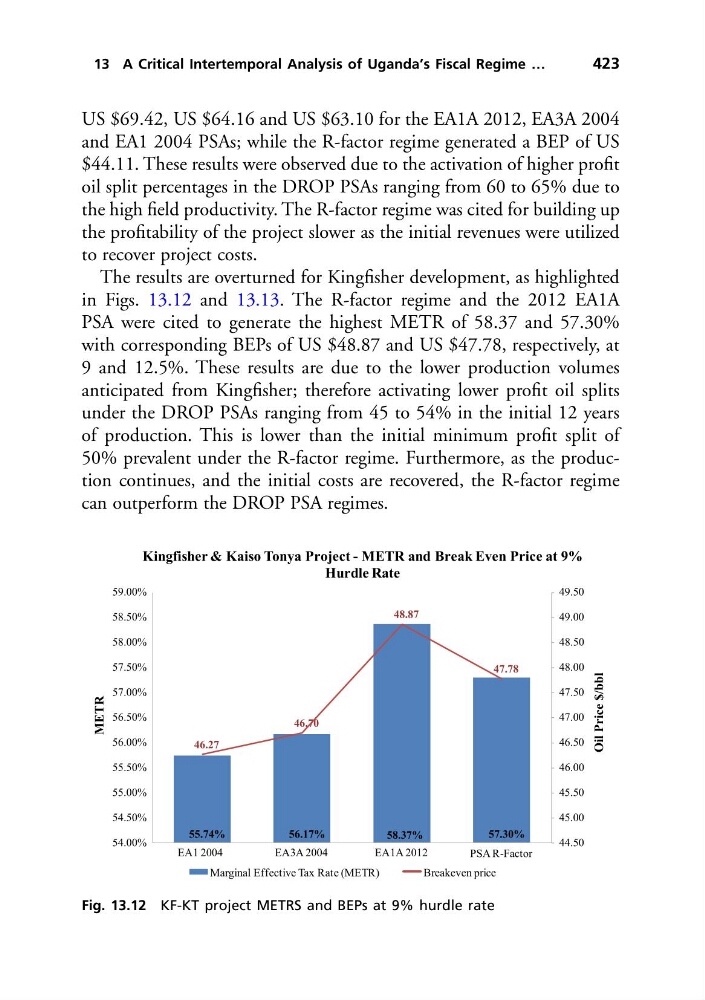
The results are overturned for Kingfisher development, as highlighted
in Figs. 13.12 and 13.13. The R-factor regime and the 2012 EA1A
PSA were cited to generate the highest METR of 58.37 and 57.30%
with corresponding BEPs of US $48.87 and US $47.78, respectively, at
9 and 12.5%. These results are due to the lower production volumes
anticipated from Kingfisher; therefore activating lower profit oil splits
under the DROP PSAs ranging from 45 to 54% in the initial 12 years
of production. This is lower than the initial minimum profit split of
50% prevalent under the R-factor regime. Furthermore, as the production continues, and the initial costs are recovered, the R-factor regime
can outperform the DROP PSA regimes.
55.74%
56.17%
58.37%
57.30%
46.27
46.70
48.87
47.78
44.50
45.00
45.50
46.00
46.50
47.00
47.50
48.00
48.50
49.00
49.50
54.00%
54.50%
55.00%
55.50%
56.00%
56.50%
57.00%
57.50%
58.00%
58.50%
59.00%
EA1 2004
EA3A 2004
EA1A 2012
PSA R-Factor
Oil Price $/bbl
METR
Kingfisher & Kaiso Tonya Project - METR and Break Even Price at 9%
Hurdle Rate
Marginal Effective Tax Rate (METR)
Breakeven price
Fig. 13.12 KF-KT project METRS and BEPs at 9% hurdle rate
423
US $69.42, US $64.16 and US $63.10 for the EA1A 2012, EA3A 2004
and EA1 2004 PSAs; while the R-factor regime generated a BEP of US
$44.11. These results were observed due to the activation of higher profit
oil split percentages in the DROP PSAs ranging from 60 to 65% due to
the high field productivity. The R-factor regime was cited for building up
the profitability of the project slower as the initial revenues were utilized
to recover project costs.
The results are overturned for Kingfisher development, as highlighted
in Figs. 13.12 and 13.13. The R-factor regime and the 2012 EA1A
PSA were cited to generate the highest METR of 58.37 and 57.30%
with corresponding BEPs of US $48.87 and US $47.78, respectively, at
9 and 12.5%. These results are due to the lower production volumes
anticipated from Kingfisher; therefore activating lower profit oil splits
under the DROP PSAs ranging from 45 to 54% in the initial 12 years
of production. This is lower than the initial minimum profit split of
50% prevalent under the R-factor regime. Furthermore, as the production continues, and the initial costs are recovered, the R-factor regime
can outperform the DROP PSA regimes.
55.74%
56.17%
58.37%
57.30%
46.27
46.70
48.87
47.78
44.50
45.00
45.50
46.00
46.50
47.00
47.50
48.00
48.50
49.00
49.50
54.00%
54.50%
55.00%
55.50%
56.00%
56.50%
57.00%
57.50%
58.00%
58.50%
59.00%
EA1 2004
EA3A 2004
EA1A 2012
PSA R-Factor
Oil Price $/bbl
METR
Kingfisher & Kaiso Tonya Project - METR and Break Even Price at 9%
Hurdle Rate
Marginal Effective Tax Rate (METR)
Breakeven price
Fig. 13.12 KF-KT project METRS and BEPs at 9% hurdle rate