

13 A Critical Intertemporal Analysis of Uganda’s Fiscal Regime …
421
42
48
54
60
66
72
78
84
90
96
102 108
114 120 126 132 138 144 150
70%
72%
74%
76%
78%
80%
82%
84%
86%
88%
18% 21% 24% 26% 29% 31% 33% 35% 37% 38% 40% 41% 43% 44% 46% 47% 48% 50% 51%
Oil Price $/bbl
Government Share of Total Beneffits, Real terms
Project Pre-Tax IRR
Kingfisher and Kaiso Tonya Project
R-factor
EA1A 2012
EA-1 2004
EA3A 2004
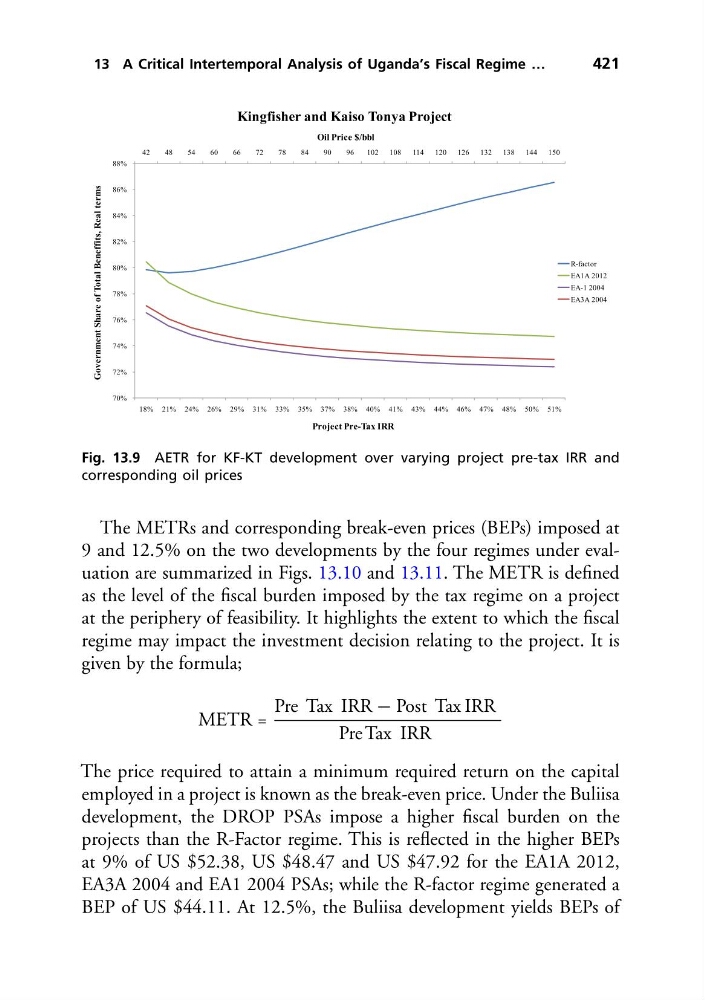
Fig. 13.9 AETR for KF-KT development over varying project pre-tax IRR and
corresponding oil prices
The METRs and corresponding break-even prices (BEPs) imposed at
9 and 12.5% on the two developments by the four regimes under evaluation are summarized in Figs. 13.10 and 13.11. The METR is defined
as the level of the fiscal burden imposed by the tax regime on a project
at the periphery of feasibility. It highlights the extent to which the fiscal
regime may impact the investment decision relating to the project. It is
given by the formula;
METR =
Pre Tax IRR − Post Tax IRR
Pre Tax IRR
The price required to attain a minimum required return on the capital
employed in a project is known as the break-even price. Under the Buliisa
development, the DROP PSAs impose a higher fiscal burden on the
projects than the R-Factor regime. This is reflected in the higher BEPs
at 9% of US $52.38, US $48.47 and US $47.92 for the EA1A 2012,
EA3A 2004 and EA1 2004 PSAs; while the R-factor regime generated a
BEP of US $44.11. At 12.5%, the Buliisa development yields BEPs of
421
42
48
54
60
66
72
78
84
90
96
102 108
114 120 126 132 138 144 150
70%
72%
74%
76%
78%
80%
82%
84%
86%
88%
18% 21% 24% 26% 29% 31% 33% 35% 37% 38% 40% 41% 43% 44% 46% 47% 48% 50% 51%
Oil Price $/bbl
Government Share of Total Beneffits, Real terms
Project Pre-Tax IRR
Kingfisher and Kaiso Tonya Project
R-factor
EA1A 2012
EA-1 2004
EA3A 2004
Fig. 13.9 AETR for KF-KT development over varying project pre-tax IRR and
corresponding oil prices
The METRs and corresponding break-even prices (BEPs) imposed at
9 and 12.5% on the two developments by the four regimes under evaluation are summarized in Figs. 13.10 and 13.11. The METR is defined
as the level of the fiscal burden imposed by the tax regime on a project
at the periphery of feasibility. It highlights the extent to which the fiscal
regime may impact the investment decision relating to the project. It is
given by the formula;
METR =
Pre Tax IRR − Post Tax IRR
Pre Tax IRR
The price required to attain a minimum required return on the capital
employed in a project is known as the break-even price. Under the Buliisa
development, the DROP PSAs impose a higher fiscal burden on the
projects than the R-Factor regime. This is reflected in the higher BEPs
at 9% of US $52.38, US $48.47 and US $47.92 for the EA1A 2012,
EA3A 2004 and EA1 2004 PSAs; while the R-factor regime generated a
BEP of US $44.11. At 12.5%, the Buliisa development yields BEPs of