

40
3 Effects of the Introduction of Superconductivity into Electromagnetism
solenoidal, i.e., these are flux lines with no divergence (∇ · D = ∇ · B = 0). Thus,
although there is no similarity between the most important variables, E and B, in the
E-B analogy, these are quite analogous to the second most important variables, H
and D, respectively. The comparison between the electric and magnetic materials in
Fig. 3.9 makes it clear that only the magnetic material does not shield the external
field. In the case of a dielectric material, the polarization charge shields the inside
imperfectly and the inner electric field is weaker than the external field.
The analogy between the electric and magnetic phenomena shown here may be
more deeply understood with the statement in Sect. 3.1. Although there is a difference based on the different natures of the fields, this shows the validity of the E-B
analogy. If the superconductor is removed from the frame shown in Fig. 3.9, it will
be understandable that the analogy becomes extremely weak.
(2) Example 2 of progress on the E-Banalogy
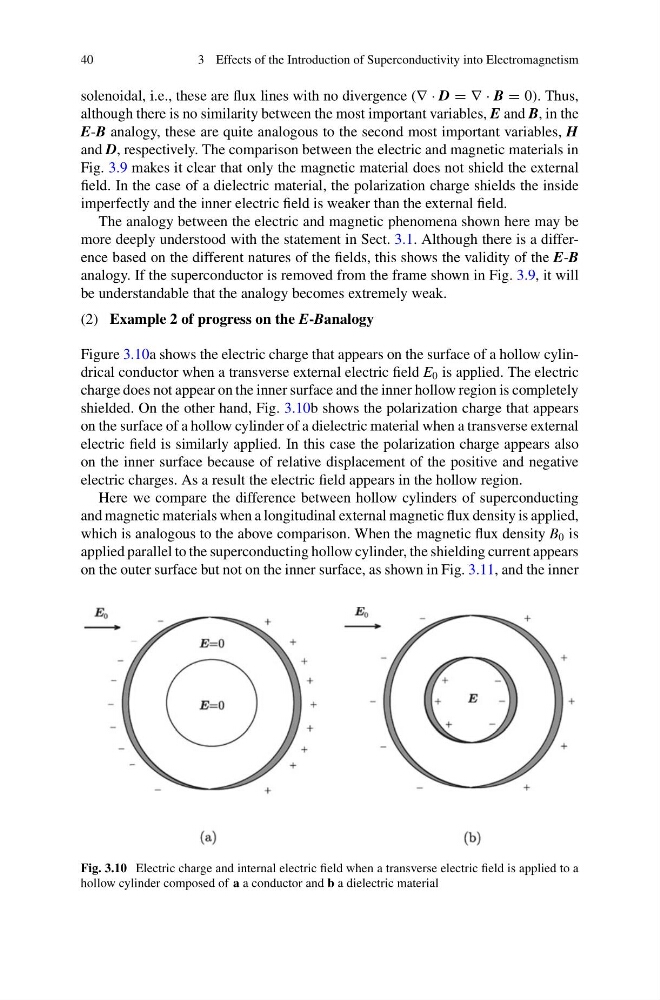
Figure 3.10a shows the electric charge that appears on the surface of a hollow cylindrical conductor when a transverse external electric field E 0 is applied. The electric
charge does not appear on the inner surface and the inner hollow region is completely
shielded. On the other hand, Fig. 3.10b shows the polarization charge that appears
on the surface of a hollow cylinder of a dielectric material when a transverse external
electric field is similarly applied. In this case the polarization charge appears also
on the inner surface because of relative displacement of the positive and negative
electric charges. As a result the electric field appears in the hollow region.
Here we compare the difference between hollow cylinders of superconducting
and magnetic materials when a longitudinal external magnetic flux density is applied,
which is analogous to the above comparison. When the magnetic flux density B 0 is
applied parallel to the superconducting hollow cylinder, the shielding current appears
on the outer surface but not on the inner surface, as shown in Fig. 3.11, and the inner
Fig. 3.10 Electric charge and internal electric field when a transverse electric field is applied to a
hollow cylinder composed of a a conductor and b a dielectric material
3 Effects of the Introduction of Superconductivity into Electromagnetism
solenoidal, i.e., these are flux lines with no divergence (∇ · D = ∇ · B = 0). Thus,
although there is no similarity between the most important variables, E and B, in the
E-B analogy, these are quite analogous to the second most important variables, H
and D, respectively. The comparison between the electric and magnetic materials in
Fig. 3.9 makes it clear that only the magnetic material does not shield the external
field. In the case of a dielectric material, the polarization charge shields the inside
imperfectly and the inner electric field is weaker than the external field.
The analogy between the electric and magnetic phenomena shown here may be
more deeply understood with the statement in Sect. 3.1. Although there is a difference based on the different natures of the fields, this shows the validity of the E-B
analogy. If the superconductor is removed from the frame shown in Fig. 3.9, it will
be understandable that the analogy becomes extremely weak.
(2) Example 2 of progress on the E-Banalogy
Figure 3.10a shows the electric charge that appears on the surface of a hollow cylindrical conductor when a transverse external electric field E 0 is applied. The electric
charge does not appear on the inner surface and the inner hollow region is completely
shielded. On the other hand, Fig. 3.10b shows the polarization charge that appears
on the surface of a hollow cylinder of a dielectric material when a transverse external
electric field is similarly applied. In this case the polarization charge appears also
on the inner surface because of relative displacement of the positive and negative
electric charges. As a result the electric field appears in the hollow region.
Here we compare the difference between hollow cylinders of superconducting
and magnetic materials when a longitudinal external magnetic flux density is applied,
which is analogous to the above comparison. When the magnetic flux density B 0 is
applied parallel to the superconducting hollow cylinder, the shielding current appears
on the outer surface but not on the inner surface, as shown in Fig. 3.11, and the inner
Fig. 3.10 Electric charge and internal electric field when a transverse electric field is applied to a
hollow cylinder composed of a a conductor and b a dielectric material