

The Role of Total Synthesis in Structure …
13
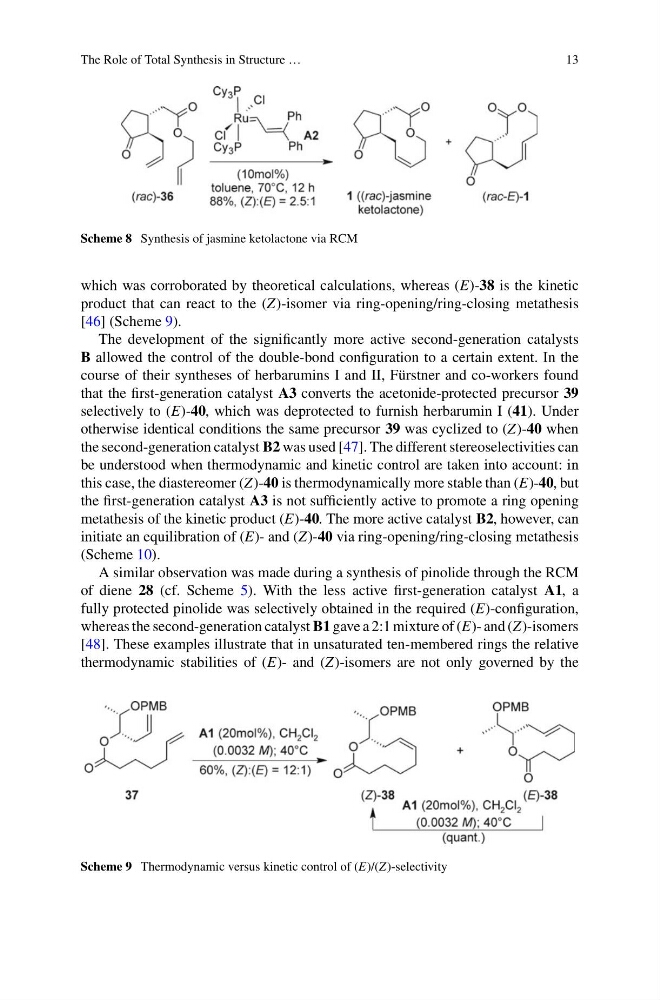
Scheme 8 Synthesis of jasmine ketolactone via RCM
which was corroborated by theoretical calculations, whereas (E)-38 is the kinetic
product that can react to the (Z)-isomer via ring-opening/ring-closing metathesis
[46] (Scheme 9).
The development of the significantly more active second-generation catalysts
B allowed the control of the double-bond configuration to a certain extent. In the
course of their syntheses of herbarumins I and II, Fürstner and co-workers found
that the first-generation catalyst A3 converts the acetonide-protected precursor 39
selectively to (E)-40, which was deprotected to furnish herbarumin I (41). Under
otherwise identical conditions the same precursor 39 was cyclized to (Z)-40 when
the second-generation catalyst B2 was used [47]. The different stereoselectivities can
be understood when thermodynamic and kinetic control are taken into account: in
this case, the diastereomer (Z)-40 is thermodynamically more stable than (E)-40, but
the first-generation catalyst A3 is not sufficiently active to promote a ring opening
metathesis of the kinetic product (E)-40. The more active catalyst B2, however, can
initiate an equilibration of (E)- and (Z)-40 via ring-opening/ring-closing metathesis
(Scheme 10).
A similar observation was made during a synthesis of pinolide through the RCM
of diene 28 (cf. Scheme 5). With the less active first-generation catalyst A1, a
fully protected pinolide was selectively obtained in the required (E)-configuration,
whereas the second-generation catalyst B1 gave a 2:1 mixture of (E)- and (Z)-isomers
[48]. These examples illustrate that in unsaturated ten-membered rings the relative
thermodynamic stabilities of (E)- and (Z)-isomers are not only governed by the
Scheme 9 Thermodynamic versus kinetic control of (E)/(Z)-selectivity
13
Scheme 8 Synthesis of jasmine ketolactone via RCM
which was corroborated by theoretical calculations, whereas (E)-38 is the kinetic
product that can react to the (Z)-isomer via ring-opening/ring-closing metathesis
[46] (Scheme 9).
The development of the significantly more active second-generation catalysts
B allowed the control of the double-bond configuration to a certain extent. In the
course of their syntheses of herbarumins I and II, Fürstner and co-workers found
that the first-generation catalyst A3 converts the acetonide-protected precursor 39
selectively to (E)-40, which was deprotected to furnish herbarumin I (41). Under
otherwise identical conditions the same precursor 39 was cyclized to (Z)-40 when
the second-generation catalyst B2 was used [47]. The different stereoselectivities can
be understood when thermodynamic and kinetic control are taken into account: in
this case, the diastereomer (Z)-40 is thermodynamically more stable than (E)-40, but
the first-generation catalyst A3 is not sufficiently active to promote a ring opening
metathesis of the kinetic product (E)-40. The more active catalyst B2, however, can
initiate an equilibration of (E)- and (Z)-40 via ring-opening/ring-closing metathesis
(Scheme 10).
A similar observation was made during a synthesis of pinolide through the RCM
of diene 28 (cf. Scheme 5). With the less active first-generation catalyst A1, a
fully protected pinolide was selectively obtained in the required (E)-configuration,
whereas the second-generation catalyst B1 gave a 2:1 mixture of (E)- and (Z)-isomers
[48]. These examples illustrate that in unsaturated ten-membered rings the relative
thermodynamic stabilities of (E)- and (Z)-isomers are not only governed by the
Scheme 9 Thermodynamic versus kinetic control of (E)/(Z)-selectivity