

Antileishmanial Activity of Lignans, Neolignans …
157
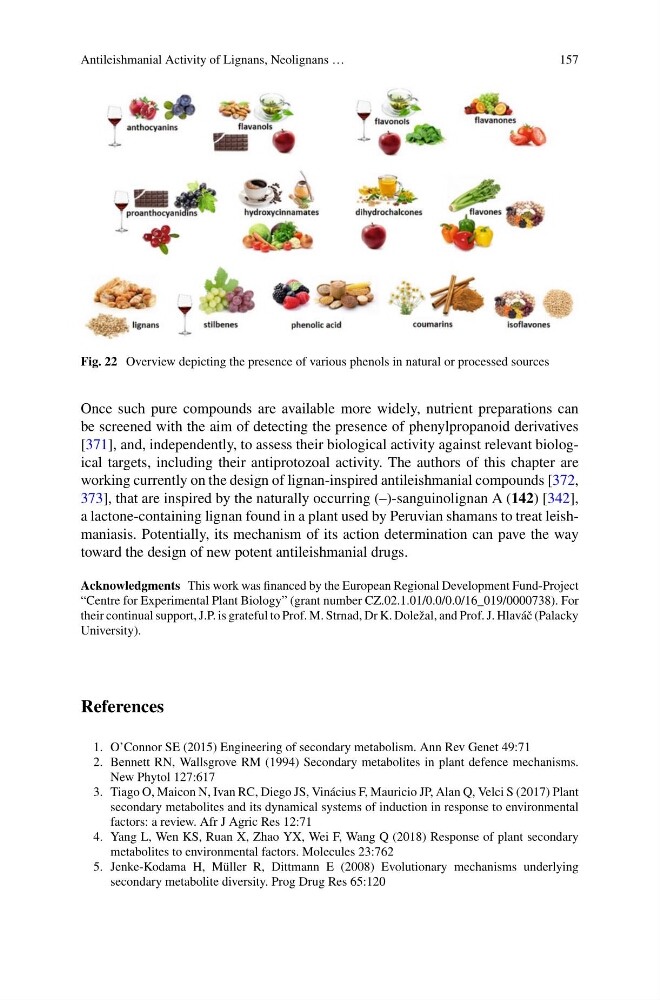
Fig. 22 Overview depicting the presence of various phenols in natural or processed sources
Once such pure compounds are available more widely, nutrient preparations can
be screened with the aim of detecting the presence of phenylpropanoid derivatives
[371], and, independently, to assess their biological activity against relevant biological targets, including their antiprotozoal activity. The authors of this chapter are
working currently on the design of lignan-inspired antileishmanial compounds [372,
373], that are inspired by the naturally occurring (–)-sanguinolignan A (142) [342],
a lactone-containing lignan found in a plant used by Peruvian shamans to treat leishmaniasis. Potentially, its mechanism of its action determination can pave the way
toward the design of new potent antileishmanial drugs.
Acknowledgments This work was financed by the European Regional Development Fund-Project
“Centre for Experimental Plant Biology” (grant number CZ.02.1.01/0.0/0.0/16_019/0000738). For
their continual support, J.P. is grateful to Prof. M. Strnad, Dr K. Doležal, and Prof. J. Hlavᡠc (Palacky
University).
References
1. O’Connor SE (2015) Engineering of secondary metabolism. Ann Rev Genet 49:71
2. Bennett RN, Wallsgrove RM (1994) Secondary metabolites in plant defence mechanisms.
New Phytol 127:617
3. Tiago O, Maicon N, Ivan RC, Diego JS, Vinácius F, Mauricio JP, Alan Q, Velci S (2017) Plant
secondary metabolites and its dynamical systems of induction in response to environmental
factors: a review. Afr J Agric Res 12:71
4. Yang L, Wen KS, Ruan X, Zhao YX, Wei F, Wang Q (2018) Response of plant secondary
metabolites to environmental factors. Molecules 23:762
5. Jenke-Kodama H, Müller R, Dittmann E (2008) Evolutionary mechanisms underlying
secondary metabolite diversity. Prog Drug Res 65:120
157
Fig. 22 Overview depicting the presence of various phenols in natural or processed sources
Once such pure compounds are available more widely, nutrient preparations can
be screened with the aim of detecting the presence of phenylpropanoid derivatives
[371], and, independently, to assess their biological activity against relevant biological targets, including their antiprotozoal activity. The authors of this chapter are
working currently on the design of lignan-inspired antileishmanial compounds [372,
373], that are inspired by the naturally occurring (–)-sanguinolignan A (142) [342],
a lactone-containing lignan found in a plant used by Peruvian shamans to treat leishmaniasis. Potentially, its mechanism of its action determination can pave the way
toward the design of new potent antileishmanial drugs.
Acknowledgments This work was financed by the European Regional Development Fund-Project
“Centre for Experimental Plant Biology” (grant number CZ.02.1.01/0.0/0.0/16_019/0000738). For
their continual support, J.P. is grateful to Prof. M. Strnad, Dr K. Doležal, and Prof. J. Hlavᡠc (Palacky
University).
References
1. O’Connor SE (2015) Engineering of secondary metabolism. Ann Rev Genet 49:71
2. Bennett RN, Wallsgrove RM (1994) Secondary metabolites in plant defence mechanisms.
New Phytol 127:617
3. Tiago O, Maicon N, Ivan RC, Diego JS, Vinácius F, Mauricio JP, Alan Q, Velci S (2017) Plant
secondary metabolites and its dynamical systems of induction in response to environmental
factors: a review. Afr J Agric Res 12:71
4. Yang L, Wen KS, Ruan X, Zhao YX, Wei F, Wang Q (2018) Response of plant secondary
metabolites to environmental factors. Molecules 23:762
5. Jenke-Kodama H, Müller R, Dittmann E (2008) Evolutionary mechanisms underlying
secondary metabolite diversity. Prog Drug Res 65:120