

146
J. Pospíšil et al.
and decreases glucose levels in circulating blood [301]. Resveratrol (31) regulates signaling molecules and key adipogenic genes (PPARy2, C/EBPα, leptin) in
epididymal adipose tissues in mice [302]. In addition to such diverse antiobesityrelated effects, resveratrol, like other plant phenolic compounds, demonstrates multitarget activity and interferes with signaling pathways related to other diseases. For
example, compound 31 has been investigated for its effects on various cancer lines
(pancreatic, colorectal, lymphoma, breast, prostate, and leukemia), in terms of its
ability to inhibit cell proliferation, cell cycle progression, and to increase apoptosis.
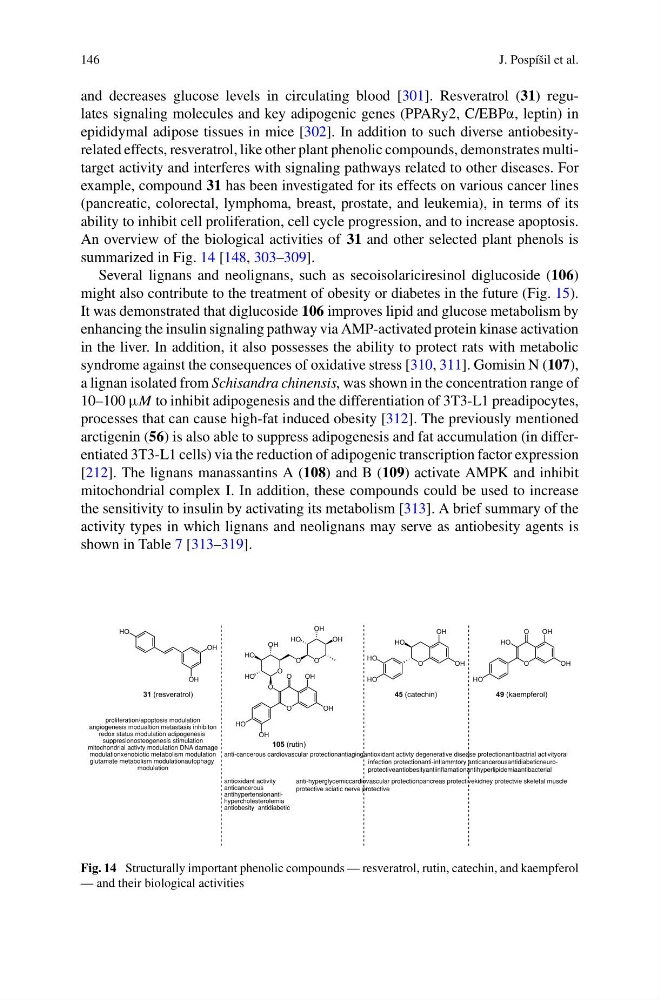
An overview of the biological activities of 31 and other selected plant phenols is
summarized in Fig. 14 [148, 303–309].
Several lignans and neolignans, such as secoisolariciresinol diglucoside (106)
might also contribute to the treatment of obesity or diabetes in the future (Fig. 15).
It was demonstrated that diglucoside 106 improves lipid and glucose metabolism by
enhancing the insulin signaling pathway via AMP-activated protein kinase activation
in the liver. In addition, it also possesses the ability to protect rats with metabolic
syndrome against the consequences of oxidative stress [310, 311]. Gomisin N (107),
a lignan isolated from Schisandra chinensis, was shown in the concentration range of
10–100 μM to inhibit adipogenesis and the differentiation of 3T3-L1 preadipocytes,
processes that can cause high-fat induced obesity [312]. The previously mentioned
arctigenin (56) is also able to suppress adipogenesis and fat accumulation (in differentiated 3T3-L1 cells) via the reduction of adipogenic transcription factor expression
[212]. The lignans manassantins A (108) and B (109) activate AMPK and inhibit
mitochondrial complex I. In addition, these compounds could be used to increase
the sensitivity to insulin by activating its metabolism [313]. A brief summary of the
activity types in which lignans and neolignans may serve as antiobesity agents is
shown in Table 7 [313–319].
proliferation/apoptosis modulation
angiogenesis modualtion metastasis inhibiton
redox status modulation adipogenesis
suppresionosteogenesis stimulation
mitochondrial activty modulation DNA damage
modulationxenobiotic metabolism modulation anti-cancerous cardiovascular protectionantiagingantioxidant activty degenerative disease protectionantibactrial activityoral
infection protectionanti-inflammtory anticancerousantidiabeticneuroprotectiveantiobesityantiinflamationantihyperlipidemiaantibacterial
glutamate metabolism modulationautophagy
modulation
antioxidant activity
anticancerous
antihypertensionantihypercholesterolemia
antiobesity antidiabetic
OH
OH
HO
O
OH
OH
O
HO
OH
O
O
O
OH
OH
HO
OH
HO
HO
O
OH
OH
HO
HO
HO
O
OH
O
OH
HO
HO
49 (kaempferol)
45 (catechin)
105 (rutin)
31 (resveratrol)
O
anti-hyperglycemiccardiovascular protectionpancreas protectivekidney protectvie skeletal muscle
protective sciatic nerve protective
Fig. 14 Structurally important phenolic compounds — resveratrol, rutin, catechin, and kaempferol
— and their biological activities
J. Pospíšil et al.
and decreases glucose levels in circulating blood [301]. Resveratrol (31) regulates signaling molecules and key adipogenic genes (PPARy2, C/EBPα, leptin) in
epididymal adipose tissues in mice [302]. In addition to such diverse antiobesityrelated effects, resveratrol, like other plant phenolic compounds, demonstrates multitarget activity and interferes with signaling pathways related to other diseases. For
example, compound 31 has been investigated for its effects on various cancer lines
(pancreatic, colorectal, lymphoma, breast, prostate, and leukemia), in terms of its
ability to inhibit cell proliferation, cell cycle progression, and to increase apoptosis.
An overview of the biological activities of 31 and other selected plant phenols is
summarized in Fig. 14 [148, 303–309].
Several lignans and neolignans, such as secoisolariciresinol diglucoside (106)
might also contribute to the treatment of obesity or diabetes in the future (Fig. 15).
It was demonstrated that diglucoside 106 improves lipid and glucose metabolism by
enhancing the insulin signaling pathway via AMP-activated protein kinase activation
in the liver. In addition, it also possesses the ability to protect rats with metabolic
syndrome against the consequences of oxidative stress [310, 311]. Gomisin N (107),
a lignan isolated from Schisandra chinensis, was shown in the concentration range of
10–100 μM to inhibit adipogenesis and the differentiation of 3T3-L1 preadipocytes,
processes that can cause high-fat induced obesity [312]. The previously mentioned
arctigenin (56) is also able to suppress adipogenesis and fat accumulation (in differentiated 3T3-L1 cells) via the reduction of adipogenic transcription factor expression
[212]. The lignans manassantins A (108) and B (109) activate AMPK and inhibit
mitochondrial complex I. In addition, these compounds could be used to increase
the sensitivity to insulin by activating its metabolism [313]. A brief summary of the
activity types in which lignans and neolignans may serve as antiobesity agents is
shown in Table 7 [313–319].
proliferation/apoptosis modulation
angiogenesis modualtion metastasis inhibiton
redox status modulation adipogenesis
suppresionosteogenesis stimulation
mitochondrial activty modulation DNA damage
modulationxenobiotic metabolism modulation anti-cancerous cardiovascular protectionantiagingantioxidant activty degenerative disease protectionantibactrial activityoral
infection protectionanti-inflammtory anticancerousantidiabeticneuroprotectiveantiobesityantiinflamationantihyperlipidemiaantibacterial
glutamate metabolism modulationautophagy
modulation
antioxidant activity
anticancerous
antihypertensionantihypercholesterolemia
antiobesity antidiabetic
OH
OH
HO
O
OH
OH
O
HO
OH
O
O
O
OH
OH
HO
OH
HO
HO
O
OH
OH
HO
HO
HO
O
OH
O
OH
HO
HO
49 (kaempferol)
45 (catechin)
105 (rutin)
31 (resveratrol)
O
anti-hyperglycemiccardiovascular protectionpancreas protectivekidney protectvie skeletal muscle
protective sciatic nerve protective
Fig. 14 Structurally important phenolic compounds — resveratrol, rutin, catechin, and kaempferol
— and their biological activities