

Antileishmanial Activity of Lignans, Neolignans …
129
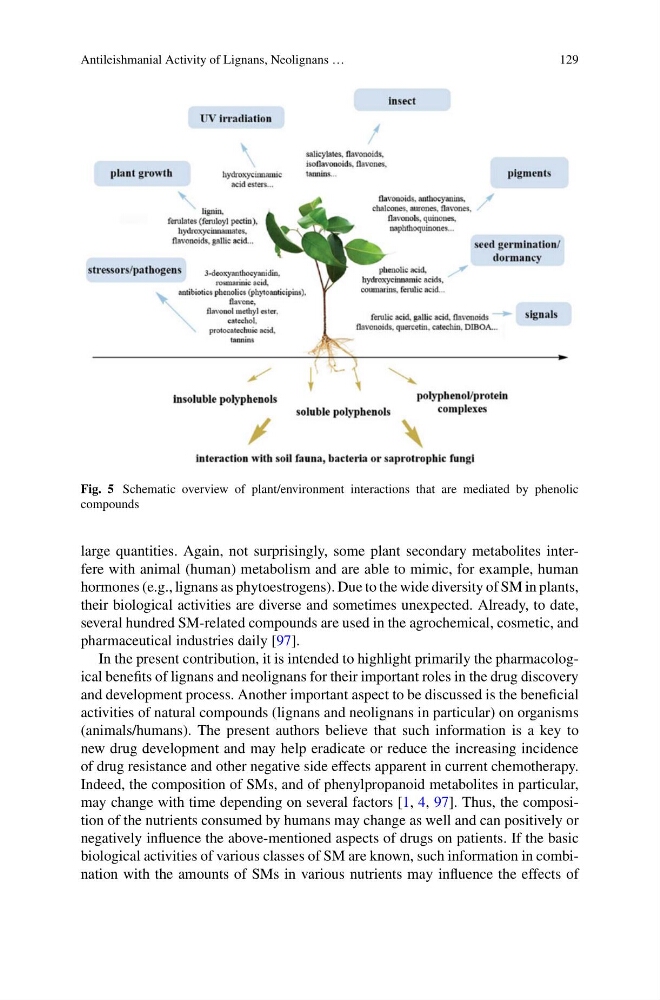
Fig. 5 Schematic overview of plant/environment interactions that are mediated by phenolic
compounds
large quantities. Again, not surprisingly, some plant secondary metabolites interfere with animal (human) metabolism and are able to mimic, for example, human
hormones (e.g., lignans as phytoestrogens). Due to the wide diversity of SM in plants,
their biological activities are diverse and sometimes unexpected. Already, to date,
several hundred SM-related compounds are used in the agrochemical, cosmetic, and
pharmaceutical industries daily [97].
In the present contribution, it is intended to highlight primarily the pharmacological benefits of lignans and neolignans for their important roles in the drug discovery
and development process. Another important aspect to be discussed is the beneficial
activities of natural compounds (lignans and neolignans in particular) on organisms
(animals/humans). The present authors believe that such information is a key to
new drug development and may help eradicate or reduce the increasing incidence
of drug resistance and other negative side effects apparent in current chemotherapy.
Indeed, the composition of SMs, and of phenylpropanoid metabolites in particular,
may change with time depending on several factors [1, 4, 97]. Thus, the composition of the nutrients consumed by humans may change as well and can positively or
negatively influence the above-mentioned aspects of drugs on patients. If the basic
biological activities of various classes of SM are known, such information in combination with the amounts of SMs in various nutrients may influence the effects of
129
Fig. 5 Schematic overview of plant/environment interactions that are mediated by phenolic
compounds
large quantities. Again, not surprisingly, some plant secondary metabolites interfere with animal (human) metabolism and are able to mimic, for example, human
hormones (e.g., lignans as phytoestrogens). Due to the wide diversity of SM in plants,
their biological activities are diverse and sometimes unexpected. Already, to date,
several hundred SM-related compounds are used in the agrochemical, cosmetic, and
pharmaceutical industries daily [97].
In the present contribution, it is intended to highlight primarily the pharmacological benefits of lignans and neolignans for their important roles in the drug discovery
and development process. Another important aspect to be discussed is the beneficial
activities of natural compounds (lignans and neolignans in particular) on organisms
(animals/humans). The present authors believe that such information is a key to
new drug development and may help eradicate or reduce the increasing incidence
of drug resistance and other negative side effects apparent in current chemotherapy.
Indeed, the composition of SMs, and of phenylpropanoid metabolites in particular,
may change with time depending on several factors [1, 4, 97]. Thus, the composition of the nutrients consumed by humans may change as well and can positively or
negatively influence the above-mentioned aspects of drugs on patients. If the basic
biological activities of various classes of SM are known, such information in combination with the amounts of SMs in various nutrients may influence the effects of