

128
J. Pospíšil et al.
OH
C 6
simple phenols
benzoquinones
C 6 -C 1
phenolic acids
C 6 -C 2
acetophenones
phenylacetic acids
C 6 -C 3
hydroxycinnamic acids
coumarins,
phenylpropenes
chromones
C 6 -C 4
naphthoquinones
C 6 -C 1 -C 6
xanthones
C 6 -C 2 -C 6
stilbenes
anthraquinones
C 6 -C 3 -C 6
flavonoids
isoflavonoids
(C 6 -C 3 -C 6 ) 2
biflavonoids
(C 6 -C 3 ) n
lignins
(C 6 -C 1 ) 2
hydrolyzable tannins
(C 6 -C 3 ) 2
lignans
neolignans
(C 6 ) n
catechol melanins
(C 6 -C 3 -C 6 ) n
condensed tannins
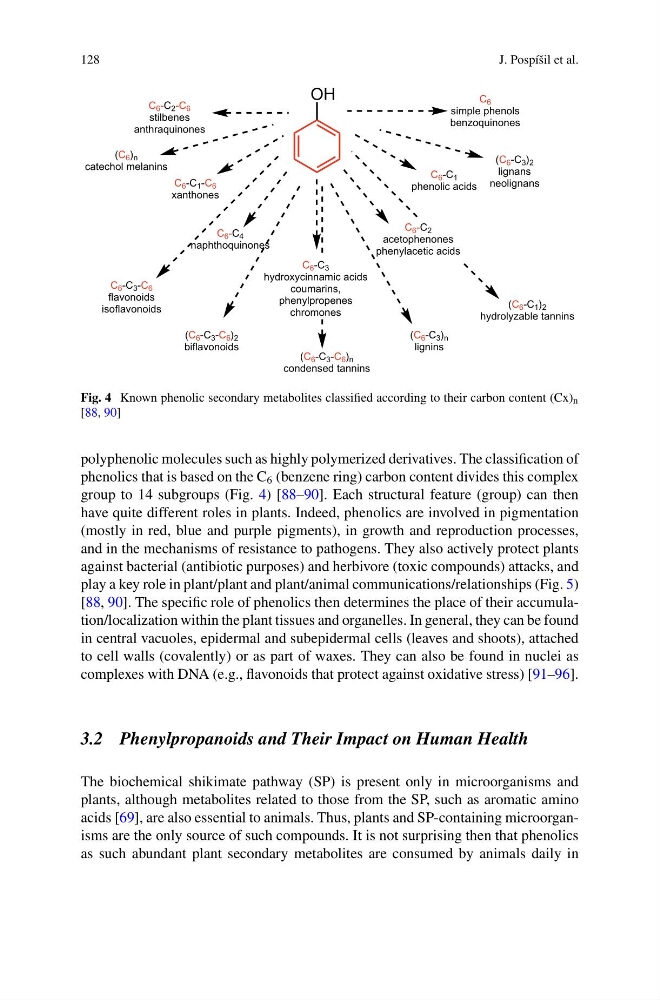
Fig. 4 Known phenolic secondary metabolites classified according to their carbon content (Cx) n
[88, 90]
polyphenolic molecules such as highly polymerized derivatives. The classification of
phenolics that is based on the C 6 (benzene ring) carbon content divides this complex
group to 14 subgroups (Fig. 4) [88–90]. Each structural feature (group) can then
have quite different roles in plants. Indeed, phenolics are involved in pigmentation
(mostly in red, blue and purple pigments), in growth and reproduction processes,
and in the mechanisms of resistance to pathogens. They also actively protect plants
against bacterial (antibiotic purposes) and herbivore (toxic compounds) attacks, and
play a key role in plant/plant and plant/animal communications/relationships (Fig. 5)
[88, 90]. The specific role of phenolics then determines the place of their accumulation/localization within the plant tissues and organelles. In general, they can be found
in central vacuoles, epidermal and subepidermal cells (leaves and shoots), attached
to cell walls (covalently) or as part of waxes. They can also be found in nuclei as
complexes with DNA (e.g., flavonoids that protect against oxidative stress) [91–96].
3.2 Phenylpropanoids and Their Impact on Human Health
The biochemical shikimate pathway (SP) is present only in microorganisms and
plants, although metabolites related to those from the SP, such as aromatic amino
acids [69], are also essential to animals. Thus, plants and SP-containing microorganisms are the only source of such compounds. It is not surprising then that phenolics
as such abundant plant secondary metabolites are consumed by animals daily in
J. Pospíšil et al.
OH
C 6
simple phenols
benzoquinones
C 6 -C 1
phenolic acids
C 6 -C 2
acetophenones
phenylacetic acids
C 6 -C 3
hydroxycinnamic acids
coumarins,
phenylpropenes
chromones
C 6 -C 4
naphthoquinones
C 6 -C 1 -C 6
xanthones
C 6 -C 2 -C 6
stilbenes
anthraquinones
C 6 -C 3 -C 6
flavonoids
isoflavonoids
(C 6 -C 3 -C 6 ) 2
biflavonoids
(C 6 -C 3 ) n
lignins
(C 6 -C 1 ) 2
hydrolyzable tannins
(C 6 -C 3 ) 2
lignans
neolignans
(C 6 ) n
catechol melanins
(C 6 -C 3 -C 6 ) n
condensed tannins
Fig. 4 Known phenolic secondary metabolites classified according to their carbon content (Cx) n
[88, 90]
polyphenolic molecules such as highly polymerized derivatives. The classification of
phenolics that is based on the C 6 (benzene ring) carbon content divides this complex
group to 14 subgroups (Fig. 4) [88–90]. Each structural feature (group) can then
have quite different roles in plants. Indeed, phenolics are involved in pigmentation
(mostly in red, blue and purple pigments), in growth and reproduction processes,
and in the mechanisms of resistance to pathogens. They also actively protect plants
against bacterial (antibiotic purposes) and herbivore (toxic compounds) attacks, and
play a key role in plant/plant and plant/animal communications/relationships (Fig. 5)
[88, 90]. The specific role of phenolics then determines the place of their accumulation/localization within the plant tissues and organelles. In general, they can be found
in central vacuoles, epidermal and subepidermal cells (leaves and shoots), attached
to cell walls (covalently) or as part of waxes. They can also be found in nuclei as
complexes with DNA (e.g., flavonoids that protect against oxidative stress) [91–96].
3.2 Phenylpropanoids and Their Impact on Human Health
The biochemical shikimate pathway (SP) is present only in microorganisms and
plants, although metabolites related to those from the SP, such as aromatic amino
acids [69], are also essential to animals. Thus, plants and SP-containing microorganisms are the only source of such compounds. It is not surprising then that phenolics
as such abundant plant secondary metabolites are consumed by animals daily in