

4.1 Fundamental Considerations 41
To understand the probability of the collision of particles with different diameters, it is necessary to estimate the probability to find two particles during a short
time interval in the same volume element. The size of this volume element is
assumed to be equal to the volume passed by the particles within this time interval.
The probability to find this volume element at a special location within a given
volume, for example, of the experimental arrangement, is the quotient of these
two volumes. To find the probability for collision of two particles, one has to calculate the probability that the volume passed by these two particles is found in the
time interval at the same spot. This combined probability is the product of the two
probabilities for the two particles under consideration. This estimation process is
valid if the particles are significantly smaller than the free path length of these
particles in their surrounding gas atmosphere. In fact, the calculations show that
this presumption is fulfilled in any experimental situation that may be used for
gas-phase synthesis.
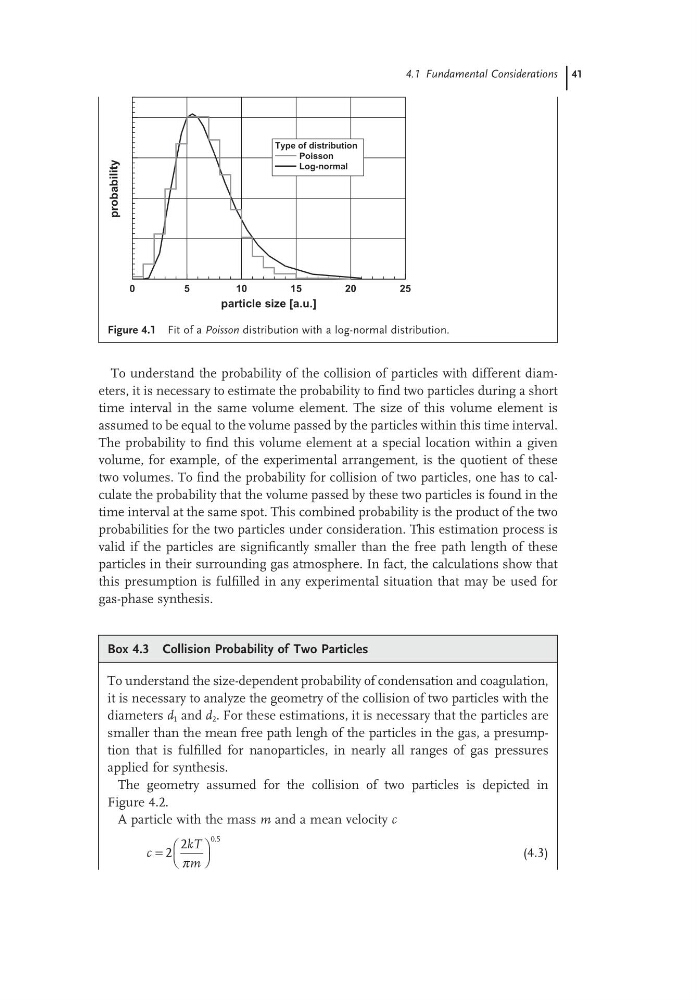
Figure 4.1 Fit of a Poisson distribution with a log-normal distribution.
0
5
10
15
20
25
particle size [a.u.]
0
4
8
12
16
probability
Type of distribution
Poisson
Log-normal
Box 4.3 Collision Probability of Two Particles
To understand the size-dependent probability of condensation and coagulation,
it is necessary to analyze the geometry of the collision of two particles with the
diameters d 1 and d 2 . For these estimations, it is necessary that the particles are
smaller than the mean free path lengh of the particles in the gas, a presumption that is fulfilled for nanoparticles, in nearly all ranges of gas pressures
applied for synthesis.
The geometry assumed for the collision of two particles is depicted in
Figure 4.2.
A particle with the mass m and a mean velocity c
c
kT
m
=
2
2
0 5
π
.
(4.3)
To understand the probability of the collision of particles with different diameters, it is necessary to estimate the probability to find two particles during a short
time interval in the same volume element. The size of this volume element is
assumed to be equal to the volume passed by the particles within this time interval.
The probability to find this volume element at a special location within a given
volume, for example, of the experimental arrangement, is the quotient of these
two volumes. To find the probability for collision of two particles, one has to calculate the probability that the volume passed by these two particles is found in the
time interval at the same spot. This combined probability is the product of the two
probabilities for the two particles under consideration. This estimation process is
valid if the particles are significantly smaller than the free path length of these
particles in their surrounding gas atmosphere. In fact, the calculations show that
this presumption is fulfilled in any experimental situation that may be used for
gas-phase synthesis.
Figure 4.1 Fit of a Poisson distribution with a log-normal distribution.
0
5
10
15
20
25
particle size [a.u.]
0
4
8
12
16
probability
Type of distribution
Poisson
Log-normal
Box 4.3 Collision Probability of Two Particles
To understand the size-dependent probability of condensation and coagulation,
it is necessary to analyze the geometry of the collision of two particles with the
diameters d 1 and d 2 . For these estimations, it is necessary that the particles are
smaller than the mean free path lengh of the particles in the gas, a presumption that is fulfilled for nanoparticles, in nearly all ranges of gas pressures
applied for synthesis.
The geometry assumed for the collision of two particles is depicted in
Figure 4.2.
A particle with the mass m and a mean velocity c
c
kT
m
=
2
2
0 5
π
.
(4.3)