

3.3 Vapor Pressure of Small Particles 31
with surface energy and particle size. In view of the interpretation of experimental
results, it is of importance that the Kelvin equation is valid for convex and concave
surfaces. Mathematically, in the case of a convex surface, the curvature (=inverse
radius of the largest inscribed sphere with the same tangent plane as the surface
in question) is positive, whereas, in the other case, the concave surface, the curvature is negative.
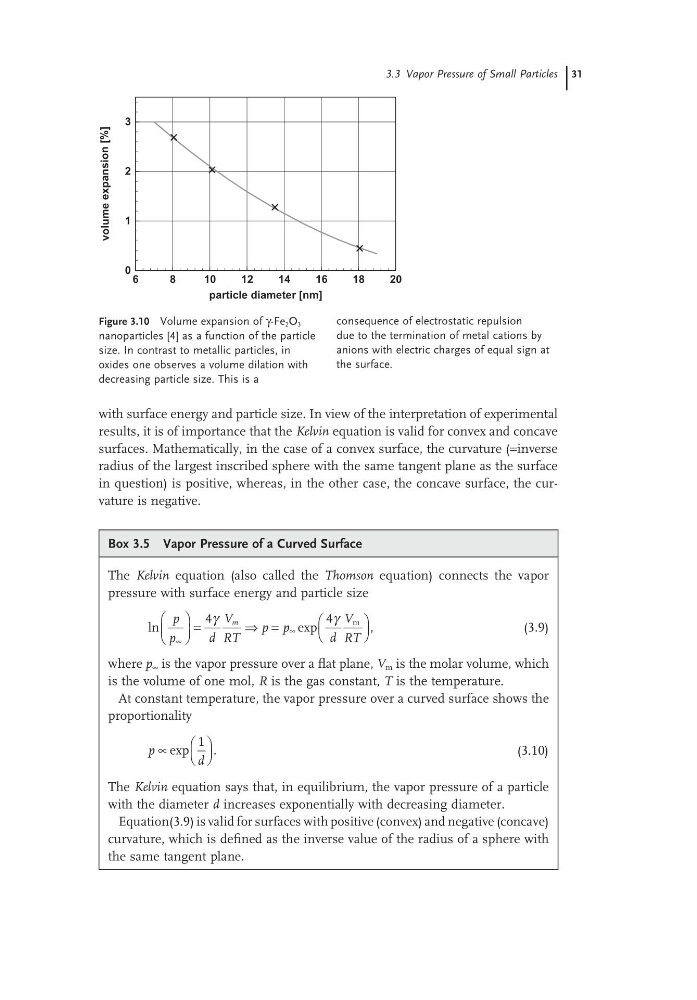
Figure 3.10 Volume expansion of γ-Fe 2 O 3
nanoparticles [4] as a function of the particle
size. In contrast to metallic particles, in
oxides one observes a volume dilation with
decreasing particle size. This is a
consequence of electrostatic repulsion
due to the termination of metal cations by
anions with electric charges of equal sign at
the surface.
6
8
10
12
14
16
18
20
particle diameter [nm]
0
1
2
3
volume
expansion
[%]
Box 3.5 Vapor Pressure of a Curved Surface
The Kelvin equation (also called the Thomson equation) connects the vapor
pressure with surface energy and particle size
ln
exp
,
p
p
d
V
RT
p p
d
V
RT
m
∞
∞
=
⇒ =
4
4
γ
γ m
(3.9)
where p ∞ is the vapor pressure over a flat plane, V m is the molar volume, which
is the volume of one mol, R is the gas constant, T is the temperature.
At constant temperature, the vapor pressure over a curved surface shows the
proportionality
p
d
∝
exp
.
1
(3.10)
The Kelvin equation says that, in equilibrium, the vapor pressure of a particle
with the diameter d increases exponentially with decreasing diameter.
Equation(3.9) is valid for surfaces with positive (convex) and negative (concave)
curvature, which is defined as the inverse value of the radius of a sphere with
the same tangent plane.
with surface energy and particle size. In view of the interpretation of experimental
results, it is of importance that the Kelvin equation is valid for convex and concave
surfaces. Mathematically, in the case of a convex surface, the curvature (=inverse
radius of the largest inscribed sphere with the same tangent plane as the surface
in question) is positive, whereas, in the other case, the concave surface, the curvature is negative.
Figure 3.10 Volume expansion of γ-Fe 2 O 3
nanoparticles [4] as a function of the particle
size. In contrast to metallic particles, in
oxides one observes a volume dilation with
decreasing particle size. This is a
consequence of electrostatic repulsion
due to the termination of metal cations by
anions with electric charges of equal sign at
the surface.
6
8
10
12
14
16
18
20
particle diameter [nm]
0
1
2
3
volume
expansion
[%]
Box 3.5 Vapor Pressure of a Curved Surface
The Kelvin equation (also called the Thomson equation) connects the vapor
pressure with surface energy and particle size
ln
exp
,
p
p
d
V
RT
p p
d
V
RT
m
∞
∞
=
⇒ =
4
4
γ
γ m
(3.9)
where p ∞ is the vapor pressure over a flat plane, V m is the molar volume, which
is the volume of one mol, R is the gas constant, T is the temperature.
At constant temperature, the vapor pressure over a curved surface shows the
proportionality
p
d
∝
exp
.
1
(3.10)
The Kelvin equation says that, in equilibrium, the vapor pressure of a particle
with the diameter d increases exponentially with decreasing diameter.
Equation(3.9) is valid for surfaces with positive (convex) and negative (concave)
curvature, which is defined as the inverse value of the radius of a sphere with
the same tangent plane.