

28 3 Surfaces in Nanomaterials
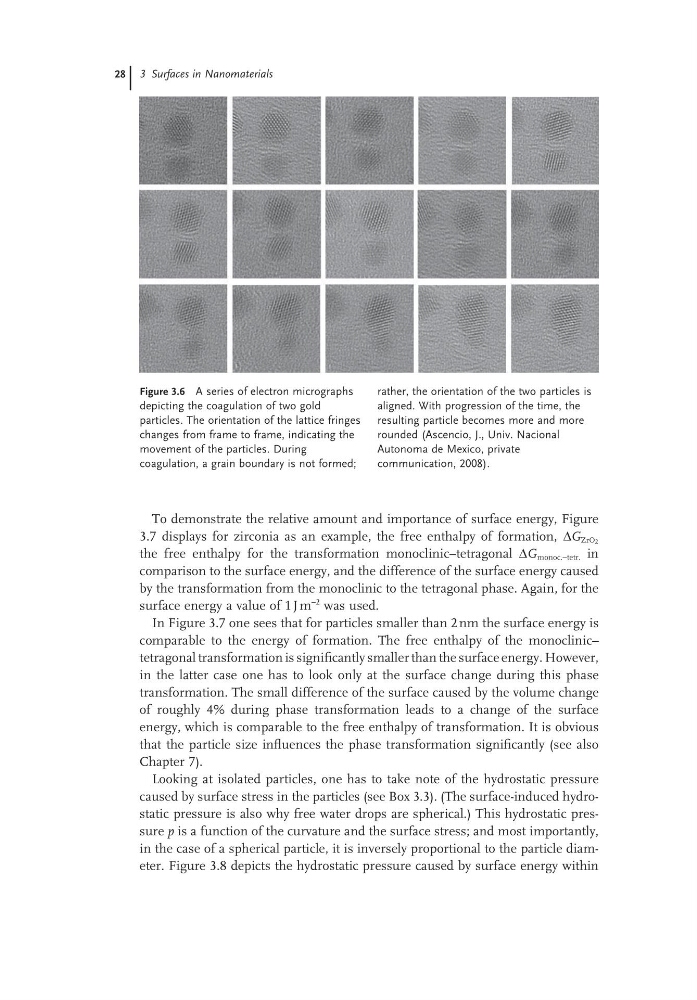
Figure 3.6 A series of electron micrographs
depicting the coagulation of two gold
particles. The orientation of the lattice fringes
changes from frame to frame, indicating the
movement of the particles. During
coagulation, a grain boundary is not formed;
rather, the orientation of the two particles is
aligned. With progression of the time, the
resulting particle becomes more and more
rounded (Ascencio, J., Univ. Nacional
Autonoma de Mexico, private
communication, 2008).
To demonstrate the relative amount and importance of surface energy, Figure
3.7 displays for zirconia as an example, the free enthalpy of formation, ∆G ZrO2
the free enthalpy for the transformation monoclinic–tetragonal ΔG monoc.−tetr. in
comparison to the surface energy, and the difference of the surface energy caused
by the transformation from the monoclinic to the tetragonal phase. Again, for the
surface energy a value of 1 J m
−2 was used.
In Figure 3.7 one sees that for particles smaller than 2 nm the surface energy is
comparable to the energy of formation. The free enthalpy of the monoclinic–
tetragonal transformation is significantly smaller than the surface energy. However,
in the latter case one has to look only at the surface change during this phase
transformation. The small difference of the surface caused by the volume change
of roughly 4% during phase transformation leads to a change of the surface
energy, which is comparable to the free enthalpy of transformation. It is obvious
that the particle size influences the phase transformation significantly (see also
Chapter 7).
Looking at isolated particles, one has to take note of the hydrostatic pressure
caused by surface stress in the particles (see Box 3.3). (The surface-induced hydrostatic pressure is also why free water drops are spherical.) This hydrostatic pressure p is a function of the curvature and the surface stress; and most importantly,
in the case of a spherical particle, it is inversely proportional to the particle diameter. Figure 3.8 depicts the hydrostatic pressure caused by surface energy within
Figure 3.6 A series of electron micrographs
depicting the coagulation of two gold
particles. The orientation of the lattice fringes
changes from frame to frame, indicating the
movement of the particles. During
coagulation, a grain boundary is not formed;
rather, the orientation of the two particles is
aligned. With progression of the time, the
resulting particle becomes more and more
rounded (Ascencio, J., Univ. Nacional
Autonoma de Mexico, private
communication, 2008).
To demonstrate the relative amount and importance of surface energy, Figure
3.7 displays for zirconia as an example, the free enthalpy of formation, ∆G ZrO2
the free enthalpy for the transformation monoclinic–tetragonal ΔG monoc.−tetr. in
comparison to the surface energy, and the difference of the surface energy caused
by the transformation from the monoclinic to the tetragonal phase. Again, for the
surface energy a value of 1 J m
−2 was used.
In Figure 3.7 one sees that for particles smaller than 2 nm the surface energy is
comparable to the energy of formation. The free enthalpy of the monoclinic–
tetragonal transformation is significantly smaller than the surface energy. However,
in the latter case one has to look only at the surface change during this phase
transformation. The small difference of the surface caused by the volume change
of roughly 4% during phase transformation leads to a change of the surface
energy, which is comparable to the free enthalpy of transformation. It is obvious
that the particle size influences the phase transformation significantly (see also
Chapter 7).
Looking at isolated particles, one has to take note of the hydrostatic pressure
caused by surface stress in the particles (see Box 3.3). (The surface-induced hydrostatic pressure is also why free water drops are spherical.) This hydrostatic pressure p is a function of the curvature and the surface stress; and most importantly,
in the case of a spherical particle, it is inversely proportional to the particle diameter. Figure 3.8 depicts the hydrostatic pressure caused by surface energy within