

4 Notes
1. PBS should not be used to CaCl 2 solution as precipitation of
later is often observed.
2. Coaxial nozzle consists of feed tube, outer tube, and inner
tube. Create a hole with the same outer diameter as the feed
tube in the barrel of the outer tube to attach the feed tube.
Remove the luer lock hub on the barrel of the outer tube using
a lathe and grind the tip to ensure the inner and the outer
dispensing tips were even. Align the inner and outer tubes
concentrically using a stainless steel fixture manufactured by
micro-milling, and assemble using laser welding.
3. In order to prevent nozzle clogging caused by alginate, which
may crosslink and accumulate at the tip of the nozzle, operator
could turn on the syringe pump to keep the CaCl 2 running
prior to cell-loaded alginate.
4. Occasionally, the alginate solution may form a big droplet at
the nozzle tip without generating continuous conduit. Operator could use a sterilized tweezer to draw the alginate droplet
to initiate conduit extrusion.
5. Supernatant should be removed as much as possible. Operators
could use 1 mL, 200 mL, and 10 mL pipettes to remove the
supernatant sequentially.
6. Cell pellet should be aspirated as slow as possible to avoid
bubbles inside the syringe unit.
7. Aspirated cell pellet can be kept in the syringe unit for up to half
an hour to settle down by gravity, in case of bubble generation.
Keep the entire cell-loaded syringe unit in the incubator.
8. Inject cell pellet as slowly as possible to prevent leakage of cells
from the alginate capsule.
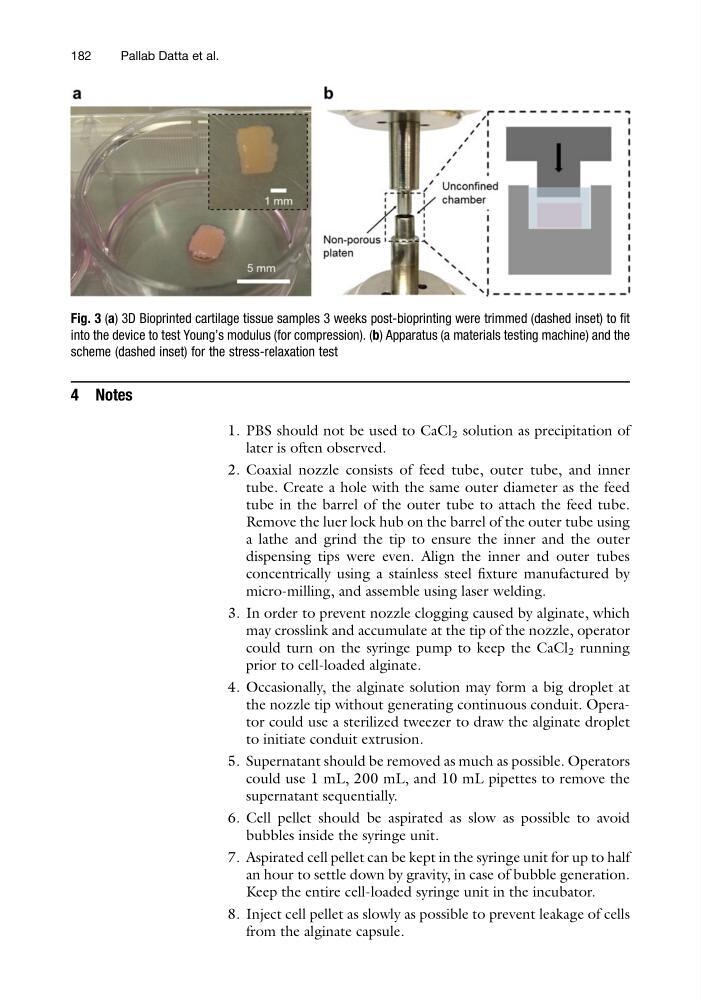
Fig. 3 (a) 3D Bioprinted cartilage tissue samples 3 weeks post-bioprinting were trimmed (dashed inset) to fit
into the device to test Young’s modulus (for compression). (b) Apparatus (a materials testing machine) and the
scheme (dashed inset) for the stress-relaxation test
182
Pallab Datta et al.
1. PBS should not be used to CaCl 2 solution as precipitation of
later is often observed.
2. Coaxial nozzle consists of feed tube, outer tube, and inner
tube. Create a hole with the same outer diameter as the feed
tube in the barrel of the outer tube to attach the feed tube.
Remove the luer lock hub on the barrel of the outer tube using
a lathe and grind the tip to ensure the inner and the outer
dispensing tips were even. Align the inner and outer tubes
concentrically using a stainless steel fixture manufactured by
micro-milling, and assemble using laser welding.
3. In order to prevent nozzle clogging caused by alginate, which
may crosslink and accumulate at the tip of the nozzle, operator
could turn on the syringe pump to keep the CaCl 2 running
prior to cell-loaded alginate.
4. Occasionally, the alginate solution may form a big droplet at
the nozzle tip without generating continuous conduit. Operator could use a sterilized tweezer to draw the alginate droplet
to initiate conduit extrusion.
5. Supernatant should be removed as much as possible. Operators
could use 1 mL, 200 mL, and 10 mL pipettes to remove the
supernatant sequentially.
6. Cell pellet should be aspirated as slow as possible to avoid
bubbles inside the syringe unit.
7. Aspirated cell pellet can be kept in the syringe unit for up to half
an hour to settle down by gravity, in case of bubble generation.
Keep the entire cell-loaded syringe unit in the incubator.
8. Inject cell pellet as slowly as possible to prevent leakage of cells
from the alginate capsule.
Fig. 3 (a) 3D Bioprinted cartilage tissue samples 3 weeks post-bioprinting were trimmed (dashed inset) to fit
into the device to test Young’s modulus (for compression). (b) Apparatus (a materials testing machine) and the
scheme (dashed inset) for the stress-relaxation test
182
Pallab Datta et al.