

manufacturing techniques. Firstly, it is solvent-free and avoids the
use of volatile and toxic solvents. Secondly, the precise placement of
MEW fibers produces defined, highly porous structures by leaving
spaces between the deposited fibers. These two points contrast with
the closely related technique of solution electrospinning which is
widely researched for the same application and typically results in
two-dimensional mats of randomly deposited ultrafine fibers. These
solution electrospun meshes essentially have barrier-like properties
for anything greater than a few microns in size, as it is difficult to
control fiber placement. The high porosity, controlled deposition,
and fibrous nature of MEW have made it an attractive technique for
preparing tissue engineering scaffolds. Additionally, the scaffolds
are ready to use immediately, and the absence of solvent complies
with regulatory pathways required to translate a research material
into a clinical product [8, 9].
MEW scaffolds can be up to several millimeters thick, thus
creating a high surface area, three-dimensional fibrous environment
for cells [10]. The seeding of cells can be achieved by simply
pipetting a concentrated cell suspension onto the scaffold and
allowing the cells to attach. This method has been used to successfully make scaffold-cell constructs using fibroblasts [10], osteoblasts (primary human derived and mouse derived) [11, 12],
mesothelial cells [12], cardiac progenitor cells [13], T-cells [14],
primary human mesenchymal stromal cells from the breast [15],
and trabecular bone [16]. So far, MEW has been used to fabricate
either flat [10, 17] or tubular [12, 18] scaffolds (Fig. 2). There has
Z-axis
X-axis
Y-axis
Heater
Collector
Baseplate
Body
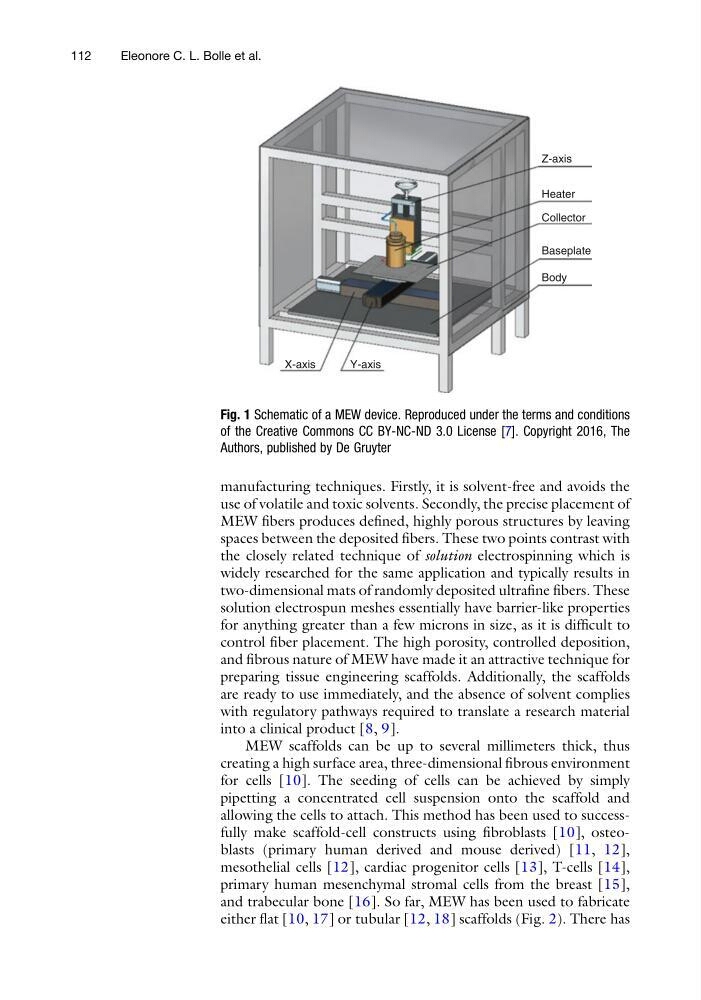
Fig. 1 Schematic of a MEW device. Reproduced under the terms and conditions
of the Creative Commons CC BY-NC-ND 3.0 License [7]. Copyright 2016, The
Authors, published by De Gruyter
112
Eleonore C. L. Bolle et al.
use of volatile and toxic solvents. Secondly, the precise placement of
MEW fibers produces defined, highly porous structures by leaving
spaces between the deposited fibers. These two points contrast with
the closely related technique of solution electrospinning which is
widely researched for the same application and typically results in
two-dimensional mats of randomly deposited ultrafine fibers. These
solution electrospun meshes essentially have barrier-like properties
for anything greater than a few microns in size, as it is difficult to
control fiber placement. The high porosity, controlled deposition,
and fibrous nature of MEW have made it an attractive technique for
preparing tissue engineering scaffolds. Additionally, the scaffolds
are ready to use immediately, and the absence of solvent complies
with regulatory pathways required to translate a research material
into a clinical product [8, 9].
MEW scaffolds can be up to several millimeters thick, thus
creating a high surface area, three-dimensional fibrous environment
for cells [10]. The seeding of cells can be achieved by simply
pipetting a concentrated cell suspension onto the scaffold and
allowing the cells to attach. This method has been used to successfully make scaffold-cell constructs using fibroblasts [10], osteoblasts (primary human derived and mouse derived) [11, 12],
mesothelial cells [12], cardiac progenitor cells [13], T-cells [14],
primary human mesenchymal stromal cells from the breast [15],
and trabecular bone [16]. So far, MEW has been used to fabricate
either flat [10, 17] or tubular [12, 18] scaffolds (Fig. 2). There has
Z-axis
X-axis
Y-axis
Heater
Collector
Baseplate
Body
Fig. 1 Schematic of a MEW device. Reproduced under the terms and conditions
of the Creative Commons CC BY-NC-ND 3.0 License [7]. Copyright 2016, The
Authors, published by De Gruyter
112
Eleonore C. L. Bolle et al.