

490
L. V. Karabanova et al.
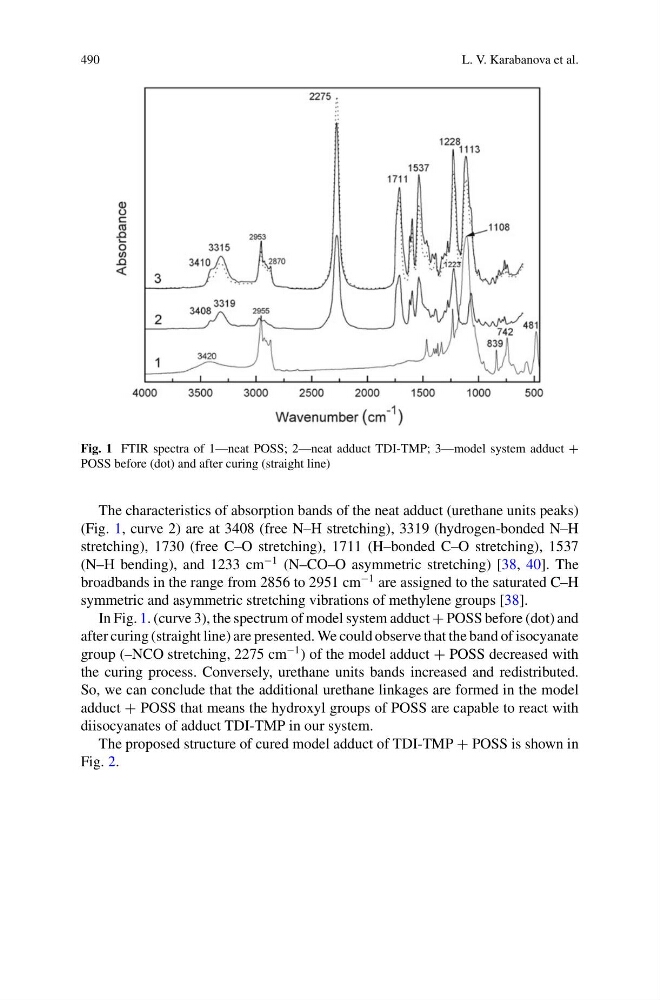
Fig. 1 FTIR spectra of 1—neat POSS; 2—neat adduct TDI-TMP; 3—model system adduct +
POSS before (dot) and after curing (straight line)
The characteristics of absorption bands of the neat adduct (urethane units peaks)
(Fig. 1, curve 2) are at 3408 (free N–H stretching), 3319 (hydrogen-bonded N–H
stretching), 1730 (free C–O stretching), 1711 (H–bonded C–O stretching), 1537
(N–H bending), and 1233 cm
−1 (N–CO–O asymmetric stretching) [38, 40]. The
broadbands in the range from 2856 to 2951 cm
−1 are assigned to the saturated C–H
symmetric and asymmetric stretching vibrations of methylene groups [38].
In Fig. 1. (curve 3), the spectrum of model system adduct + POSS before (dot) and
after curing (straight line) are presented. We could observe that the band of isocyanate
group (–NCO stretching, 2275 cm
−1 ) of the model adduct + POSS decreased with
the curing process. Conversely, urethane units bands increased and redistributed.
So, we can conclude that the additional urethane linkages are formed in the model
adduct + POSS that means the hydroxyl groups of POSS are capable to react with
diisocyanates of adduct TDI-TMP in our system.
The proposed structure of cured model adduct of TDI-TMP + POSS is shown in
Fig. 2.
L. V. Karabanova et al.
Fig. 1 FTIR spectra of 1—neat POSS; 2—neat adduct TDI-TMP; 3—model system adduct +
POSS before (dot) and after curing (straight line)
The characteristics of absorption bands of the neat adduct (urethane units peaks)
(Fig. 1, curve 2) are at 3408 (free N–H stretching), 3319 (hydrogen-bonded N–H
stretching), 1730 (free C–O stretching), 1711 (H–bonded C–O stretching), 1537
(N–H bending), and 1233 cm
−1 (N–CO–O asymmetric stretching) [38, 40]. The
broadbands in the range from 2856 to 2951 cm
−1 are assigned to the saturated C–H
symmetric and asymmetric stretching vibrations of methylene groups [38].
In Fig. 1. (curve 3), the spectrum of model system adduct + POSS before (dot) and
after curing (straight line) are presented. We could observe that the band of isocyanate
group (–NCO stretching, 2275 cm
−1 ) of the model adduct + POSS decreased with
the curing process. Conversely, urethane units bands increased and redistributed.
So, we can conclude that the additional urethane linkages are formed in the model
adduct + POSS that means the hydroxyl groups of POSS are capable to react with
diisocyanates of adduct TDI-TMP in our system.
The proposed structure of cured model adduct of TDI-TMP + POSS is shown in
Fig. 2.