

326
A. P. Chebanenko et al.
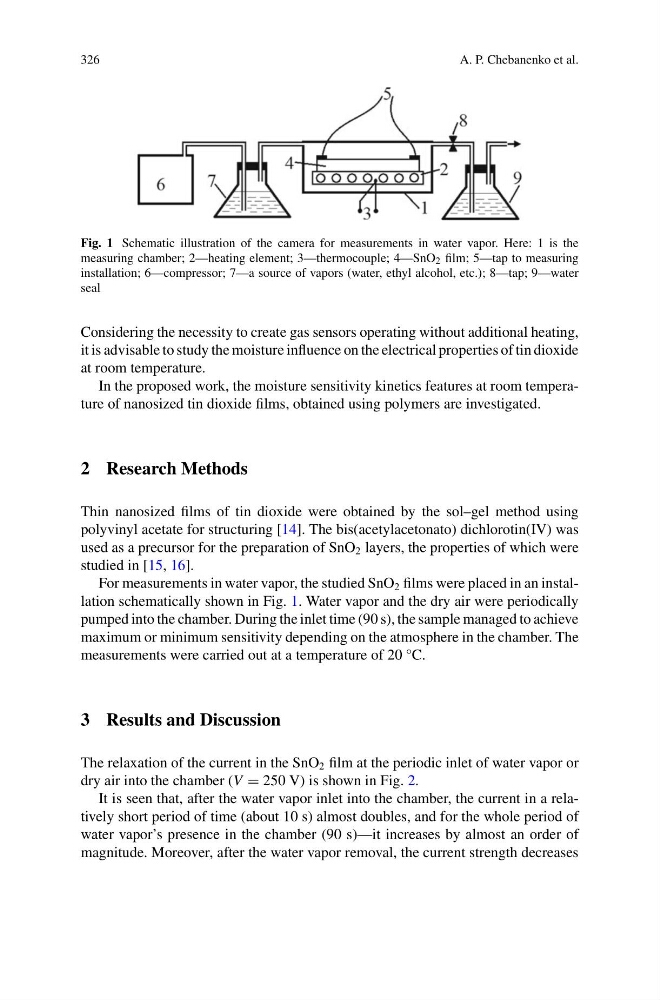
Fig. 1 Schematic illustration of the camera for measurements in water vapor. Here: 1 is the
measuring chamber; 2—heating element; 3—thermocouple; 4—SnO 2 film; 5—tap to measuring
installation; 6—compressor; 7—a source of vapors (water, ethyl alcohol, etc.); 8—tap; 9—water
seal
Considering the necessity to create gas sensors operating without additional heating,
it is advisable to study the moisture influence on the electrical properties of tin dioxide
at room temperature.
In the proposed work, the moisture sensitivity kinetics features at room temperature of nanosized tin dioxide films, obtained using polymers are investigated.
2 Research Methods
Thin nanosized films of tin dioxide were obtained by the sol–gel method using
polyvinyl acetate for structuring [14]. The bis(acetylacetonato) dichlorotin(IV) was
used as a precursor for the preparation of SnO 2 layers, the properties of which were
studied in [15, 16].
For measurements in water vapor, the studied SnO 2 films were placed in an installation schematically shown in Fig. 1. Water vapor and the dry air were periodically
pumped into the chamber. During the inlet time (90 s), the sample managed to achieve
maximum or minimum sensitivity depending on the atmosphere in the chamber. The
measurements were carried out at a temperature of 20 °C.
3 Results and Discussion
The relaxation of the current in the SnO 2 film at the periodic inlet of water vapor or
dry air into the chamber (V = 250 V) is shown in Fig. 2.
It is seen that, after the water vapor inlet into the chamber, the current in a relatively short period of time (about 10 s) almost doubles, and for the whole period of
water vapor’s presence in the chamber (90 s)—it increases by almost an order of
magnitude. Moreover, after the water vapor removal, the current strength decreases
A. P. Chebanenko et al.
Fig. 1 Schematic illustration of the camera for measurements in water vapor. Here: 1 is the
measuring chamber; 2—heating element; 3—thermocouple; 4—SnO 2 film; 5—tap to measuring
installation; 6—compressor; 7—a source of vapors (water, ethyl alcohol, etc.); 8—tap; 9—water
seal
Considering the necessity to create gas sensors operating without additional heating,
it is advisable to study the moisture influence on the electrical properties of tin dioxide
at room temperature.
In the proposed work, the moisture sensitivity kinetics features at room temperature of nanosized tin dioxide films, obtained using polymers are investigated.
2 Research Methods
Thin nanosized films of tin dioxide were obtained by the sol–gel method using
polyvinyl acetate for structuring [14]. The bis(acetylacetonato) dichlorotin(IV) was
used as a precursor for the preparation of SnO 2 layers, the properties of which were
studied in [15, 16].
For measurements in water vapor, the studied SnO 2 films were placed in an installation schematically shown in Fig. 1. Water vapor and the dry air were periodically
pumped into the chamber. During the inlet time (90 s), the sample managed to achieve
maximum or minimum sensitivity depending on the atmosphere in the chamber. The
measurements were carried out at a temperature of 20 °C.
3 Results and Discussion
The relaxation of the current in the SnO 2 film at the periodic inlet of water vapor or
dry air into the chamber (V = 250 V) is shown in Fig. 2.
It is seen that, after the water vapor inlet into the chamber, the current in a relatively short period of time (about 10 s) almost doubles, and for the whole period of
water vapor’s presence in the chamber (90 s)—it increases by almost an order of
magnitude. Moreover, after the water vapor removal, the current strength decreases