

Ballistic Transmission of the Relativistic Quasielectrons …
163
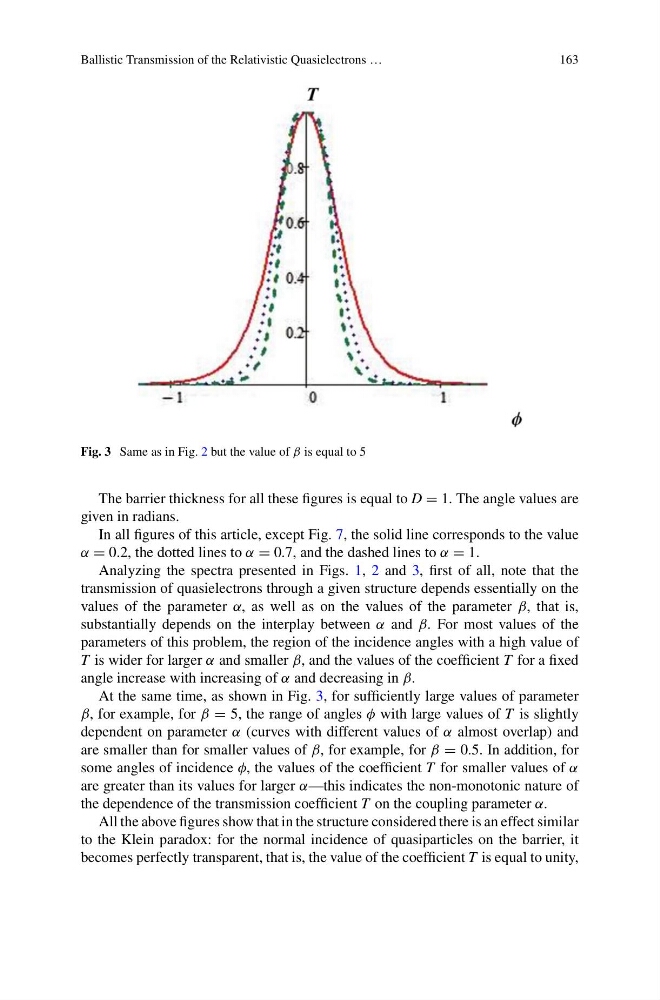
Fig. 3 Same as in Fig. 2 but the value of β is equal to 5
The barrier thickness for all these figures is equal to D = 1. The angle values are
given in radians.
In all figures of this article, except Fig. 7, the solid line corresponds to the value
α = 0.2, the dotted lines to α = 0.7, and the dashed lines to α = 1.
Analyzing the spectra presented in Figs. 1, 2 and 3, first of all, note that the
transmission of quasielectrons through a given structure depends essentially on the
values of the parameter α, as well as on the values of the parameter β, that is,
substantially depends on the interplay between α and β. For most values of the
parameters of this problem, the region of the incidence angles with a high value of
T is wider for larger α and smaller β, and the values of the coefficient T for a fixed
angle increase with increasing of α and decreasing in β.
At the same time, as shown in Fig. 3, for sufficiently large values of parameter
β, for example, for β = 5, the range of angles φ with large values of T is slightly
dependent on parameter α (curves with different values of α almost overlap) and
are smaller than for smaller values of β, for example, for β = 0.5. In addition, for
some angles of incidence φ, the values of the coefficient T for smaller values of α
are greater than its values for larger α—this indicates the non-monotonic nature of
the dependence of the transmission coefficient T on the coupling parameter α.
All the above figures show that in the structure considered there is an effect similar
to the Klein paradox: for the normal incidence of quasiparticles on the barrier, it
becomes perfectly transparent, that is, the value of the coefficient T is equal to unity,
163
Fig. 3 Same as in Fig. 2 but the value of β is equal to 5
The barrier thickness for all these figures is equal to D = 1. The angle values are
given in radians.
In all figures of this article, except Fig. 7, the solid line corresponds to the value
α = 0.2, the dotted lines to α = 0.7, and the dashed lines to α = 1.
Analyzing the spectra presented in Figs. 1, 2 and 3, first of all, note that the
transmission of quasielectrons through a given structure depends essentially on the
values of the parameter α, as well as on the values of the parameter β, that is,
substantially depends on the interplay between α and β. For most values of the
parameters of this problem, the region of the incidence angles with a high value of
T is wider for larger α and smaller β, and the values of the coefficient T for a fixed
angle increase with increasing of α and decreasing in β.
At the same time, as shown in Fig. 3, for sufficiently large values of parameter
β, for example, for β = 5, the range of angles φ with large values of T is slightly
dependent on parameter α (curves with different values of α almost overlap) and
are smaller than for smaller values of β, for example, for β = 0.5. In addition, for
some angles of incidence φ, the values of the coefficient T for smaller values of α
are greater than its values for larger α—this indicates the non-monotonic nature of
the dependence of the transmission coefficient T on the coupling parameter α.
All the above figures show that in the structure considered there is an effect similar
to the Klein paradox: for the normal incidence of quasiparticles on the barrier, it
becomes perfectly transparent, that is, the value of the coefficient T is equal to unity,