

Polyacrylamide Soil Conditioners: The Impact …
115
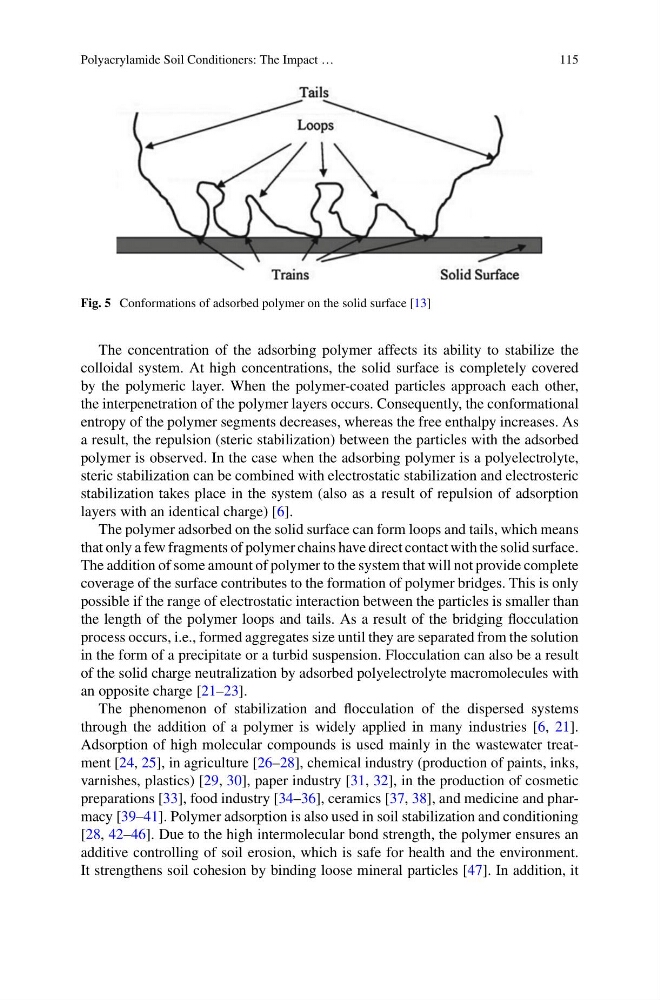
Fig. 5 Conformations of adsorbed polymer on the solid surface [13]
The concentration of the adsorbing polymer affects its ability to stabilize the
colloidal system. At high concentrations, the solid surface is completely covered
by the polymeric layer. When the polymer-coated particles approach each other,
the interpenetration of the polymer layers occurs. Consequently, the conformational
entropy of the polymer segments decreases, whereas the free enthalpy increases. As
a result, the repulsion (steric stabilization) between the particles with the adsorbed
polymer is observed. In the case when the adsorbing polymer is a polyelectrolyte,
steric stabilization can be combined with electrostatic stabilization and electrosteric
stabilization takes place in the system (also as a result of repulsion of adsorption
layers with an identical charge) [6].
The polymer adsorbed on the solid surface can form loops and tails, which means
that only a few fragments of polymer chains have direct contact with the solid surface.
The addition of some amount of polymer to the system that will not provide complete
coverage of the surface contributes to the formation of polymer bridges. This is only
possible if the range of electrostatic interaction between the particles is smaller than
the length of the polymer loops and tails. As a result of the bridging flocculation
process occurs, i.e., formed aggregates size until they are separated from the solution
in the form of a precipitate or a turbid suspension. Flocculation can also be a result
of the solid charge neutralization by adsorbed polyelectrolyte macromolecules with
an opposite charge [21–23].
The phenomenon of stabilization and flocculation of the dispersed systems
through the addition of a polymer is widely applied in many industries [6, 21].
Adsorption of high molecular compounds is used mainly in the wastewater treatment [24, 25], in agriculture [26–28], chemical industry (production of paints, inks,
varnishes, plastics) [29, 30], paper industry [31, 32], in the production of cosmetic
preparations [33], food industry [34–36], ceramics [37, 38], and medicine and pharmacy [39–41]. Polymer adsorption is also used in soil stabilization and conditioning
[28, 42–46]. Due to the high intermolecular bond strength, the polymer ensures an
additive controlling of soil erosion, which is safe for health and the environment.
It strengthens soil cohesion by binding loose mineral particles [47]. In addition, it
115
Fig. 5 Conformations of adsorbed polymer on the solid surface [13]
The concentration of the adsorbing polymer affects its ability to stabilize the
colloidal system. At high concentrations, the solid surface is completely covered
by the polymeric layer. When the polymer-coated particles approach each other,
the interpenetration of the polymer layers occurs. Consequently, the conformational
entropy of the polymer segments decreases, whereas the free enthalpy increases. As
a result, the repulsion (steric stabilization) between the particles with the adsorbed
polymer is observed. In the case when the adsorbing polymer is a polyelectrolyte,
steric stabilization can be combined with electrostatic stabilization and electrosteric
stabilization takes place in the system (also as a result of repulsion of adsorption
layers with an identical charge) [6].
The polymer adsorbed on the solid surface can form loops and tails, which means
that only a few fragments of polymer chains have direct contact with the solid surface.
The addition of some amount of polymer to the system that will not provide complete
coverage of the surface contributes to the formation of polymer bridges. This is only
possible if the range of electrostatic interaction between the particles is smaller than
the length of the polymer loops and tails. As a result of the bridging flocculation
process occurs, i.e., formed aggregates size until they are separated from the solution
in the form of a precipitate or a turbid suspension. Flocculation can also be a result
of the solid charge neutralization by adsorbed polyelectrolyte macromolecules with
an opposite charge [21–23].
The phenomenon of stabilization and flocculation of the dispersed systems
through the addition of a polymer is widely applied in many industries [6, 21].
Adsorption of high molecular compounds is used mainly in the wastewater treatment [24, 25], in agriculture [26–28], chemical industry (production of paints, inks,
varnishes, plastics) [29, 30], paper industry [31, 32], in the production of cosmetic
preparations [33], food industry [34–36], ceramics [37, 38], and medicine and pharmacy [39–41]. Polymer adsorption is also used in soil stabilization and conditioning
[28, 42–46]. Due to the high intermolecular bond strength, the polymer ensures an
additive controlling of soil erosion, which is safe for health and the environment.
It strengthens soil cohesion by binding loose mineral particles [47]. In addition, it