

98
Y. S. Dzyazko et al.
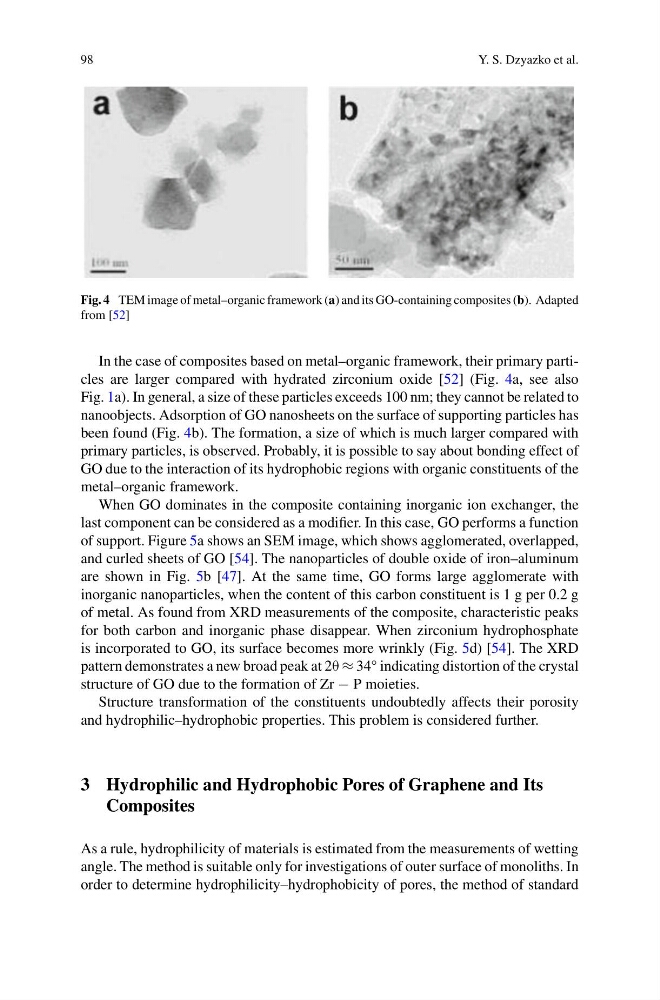
Fig. 4 TEM image of metal–organic framework (a) and its GO-containing composites (b). Adapted
from [52]
In the case of composites based on metal–organic framework, their primary particles are larger compared with hydrated zirconium oxide [52] (Fig. 4a, see also
Fig. 1a). In general, a size of these particles exceeds 100 nm; they cannot be related to
nanoobjects. Adsorption of GO nanosheets on the surface of supporting particles has
been found (Fig. 4b). The formation, a size of which is much larger compared with
primary particles, is observed. Probably, it is possible to say about bonding effect of
GO due to the interaction of its hydrophobic regions with organic constituents of the
metal–organic framework.
When GO dominates in the composite containing inorganic ion exchanger, the
last component can be considered as a modifier. In this case, GO performs a function
of support. Figure 5a shows an SEM image, which shows agglomerated, overlapped,
and curled sheets of GO [54]. The nanoparticles of double oxide of iron–aluminum
are shown in Fig. 5b [47]. At the same time, GO forms large agglomerate with
inorganic nanoparticles, when the content of this carbon constituent is 1 g per 0.2 g
of metal. As found from XRD measurements of the composite, characteristic peaks
for both carbon and inorganic phase disappear. When zirconium hydrophosphate
is incorporated to GO, its surface becomes more wrinkly (Fig. 5d) [54]. The XRD
pattern demonstrates a new broad peak at 2θ ≈ 34° indicating distortion of the crystal
structure of GO due to the formation of Zr − P moieties.
Structure transformation of the constituents undoubtedly affects their porosity
and hydrophilic–hydrophobic properties. This problem is considered further.
3 Hydrophilic and Hydrophobic Pores of Graphene and Its
Composites
As a rule, hydrophilicity of materials is estimated from the measurements of wetting
angle. The method is suitable only for investigations of outer surface of monoliths. In
order to determine hydrophilicity–hydrophobicity of pores, the method of standard
Y. S. Dzyazko et al.
Fig. 4 TEM image of metal–organic framework (a) and its GO-containing composites (b). Adapted
from [52]
In the case of composites based on metal–organic framework, their primary particles are larger compared with hydrated zirconium oxide [52] (Fig. 4a, see also
Fig. 1a). In general, a size of these particles exceeds 100 nm; they cannot be related to
nanoobjects. Adsorption of GO nanosheets on the surface of supporting particles has
been found (Fig. 4b). The formation, a size of which is much larger compared with
primary particles, is observed. Probably, it is possible to say about bonding effect of
GO due to the interaction of its hydrophobic regions with organic constituents of the
metal–organic framework.
When GO dominates in the composite containing inorganic ion exchanger, the
last component can be considered as a modifier. In this case, GO performs a function
of support. Figure 5a shows an SEM image, which shows agglomerated, overlapped,
and curled sheets of GO [54]. The nanoparticles of double oxide of iron–aluminum
are shown in Fig. 5b [47]. At the same time, GO forms large agglomerate with
inorganic nanoparticles, when the content of this carbon constituent is 1 g per 0.2 g
of metal. As found from XRD measurements of the composite, characteristic peaks
for both carbon and inorganic phase disappear. When zirconium hydrophosphate
is incorporated to GO, its surface becomes more wrinkly (Fig. 5d) [54]. The XRD
pattern demonstrates a new broad peak at 2θ ≈ 34° indicating distortion of the crystal
structure of GO due to the formation of Zr − P moieties.
Structure transformation of the constituents undoubtedly affects their porosity
and hydrophilic–hydrophobic properties. This problem is considered further.
3 Hydrophilic and Hydrophobic Pores of Graphene and Its
Composites
As a rule, hydrophilicity of materials is estimated from the measurements of wetting
angle. The method is suitable only for investigations of outer surface of monoliths. In
order to determine hydrophilicity–hydrophobicity of pores, the method of standard