

16
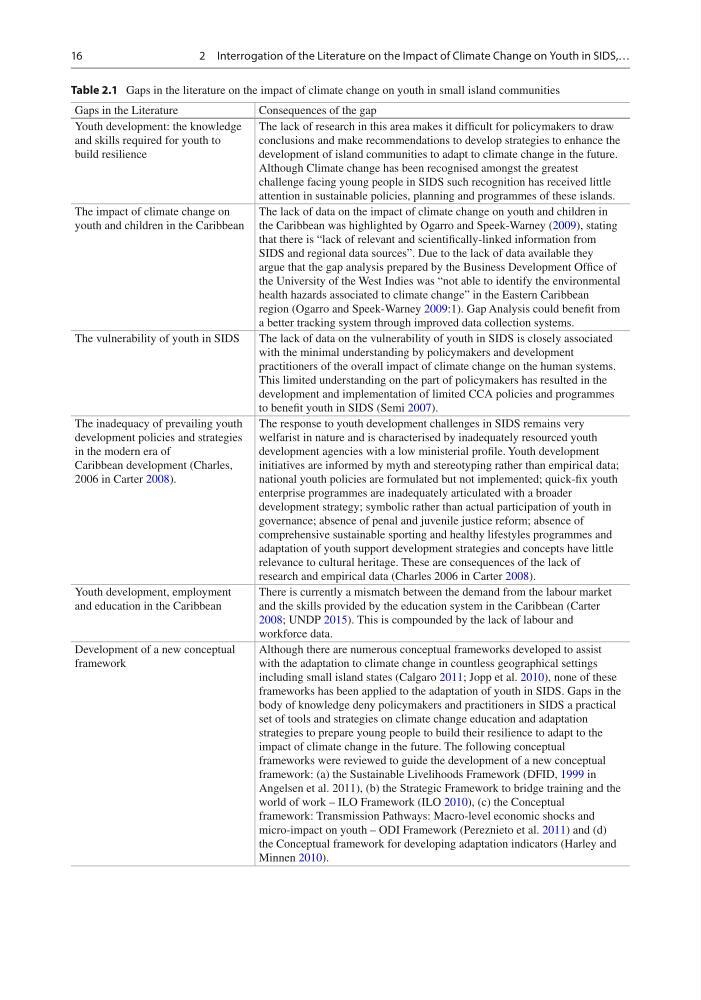
Table 2.1 Gaps in the literature on the impact of climate change on youth in small island communities
Gaps in the Literature
Consequences of the gap
Youth development: the knowledge
and skills required for youth to
build resilience
The lack of research in this area makes it difficult for policymakers to draw
conclusions and make recommendations to develop strategies to enhance the
development of island communities to adapt to climate change in the future.
Although Climate change has been recognised amongst the greatest
challenge facing young people in SIDS such recognition has received little
attention in sustainable policies, planning and programmes of these islands.
The impact of climate change on
youth and children in the Caribbean
The lack of data on the impact of climate change on youth and children in
the Caribbean was highlighted by Ogarro and Speek-Warney (2009), stating
that there is “lack of relevant and scientifically-linked information from
SIDS and regional data sources”. Due to the lack of data available they
argue that the gap analysis prepared by the Business Development Office of
the University of the West Indies was “not able to identify the environmental
health hazards associated to climate change” in the Eastern Caribbean
region (Ogarro and Speek-Warney 2009:1). Gap Analysis could benefit from
a better tracking system through improved data collection systems.
The vulnerability of youth in SIDS
The lack of data on the vulnerability of youth in SIDS is closely associated
with the minimal understanding by policymakers and development
practitioners of the overall impact of climate change on the human systems.
This limited understanding on the part of policymakers has resulted in the
development and implementation of limited CCA policies and programmes
to benefit youth in SIDS (Semi 2007).
The inadequacy of prevailing youth
development policies and strategies
in the modern era of
Caribbean development (Charles,
2006 in Carter 2008).
The response to youth development challenges in SIDS remains very
welfarist in nature and is characterised by inadequately resourced youth
development agencies with a low ministerial profile. Youth development
initiatives are informed by myth and stereotyping rather than empirical data;
national youth policies are formulated but not implemented; quick-fix youth
enterprise programmes are inadequately articulated with a broader
development strategy; symbolic rather than actual participation of youth in
governance; absence of penal and juvenile justice reform; absence of
comprehensive sustainable sporting and healthy lifestyles programmes and
adaptation of youth support development strategies and concepts have little
relevance to cultural heritage. These are consequences of the lack of
research and empirical data (Charles 2006 in Carter 2008).
Youth development, employment
and education in the Caribbean
There is currently a mismatch between the demand from the labour market
and the skills provided by the education system in the Caribbean (Carter
2008; UNDP 2015). This is compounded by the lack of labour and
workforce data.
Development of a new conceptual
framework
Although there are numerous conceptual frameworks developed to assist
with the adaptation to climate change in countless geographical settings
including small island states (Calgaro 2011; Jopp et al. 2010), none of these
frameworks has been applied to the adaptation of youth in SIDS. Gaps in the
body of knowledge deny policymakers and practitioners in SIDS a practical
set of tools and strategies on climate change education and adaptation
strategies to prepare young people to build their resilience to adapt to the
impact of climate change in the future. The following conceptual
frameworks were reviewed to guide the development of a new conceptual
framework: (a) the Sustainable Livelihoods Framework (DFID, 1999 in
Angelsen et al. 2011), (b) the Strategic Framework to bridge training and the
world of work – ILO Framework (ILO 2010), (c) the Conceptual
framework: Transmission Pathways: Macro- level economic shocks and
micro-impact on youth – ODI Framework (Pereznieto et al. 2011) and (d)
the Conceptual framework for developing adaptation indicators (Harley and
Minnen 2010).
2 Interrogation of the Literature on the Impact of Climate Change on Youth in SIDS,…
Table 2.1 Gaps in the literature on the impact of climate change on youth in small island communities
Gaps in the Literature
Consequences of the gap
Youth development: the knowledge
and skills required for youth to
build resilience
The lack of research in this area makes it difficult for policymakers to draw
conclusions and make recommendations to develop strategies to enhance the
development of island communities to adapt to climate change in the future.
Although Climate change has been recognised amongst the greatest
challenge facing young people in SIDS such recognition has received little
attention in sustainable policies, planning and programmes of these islands.
The impact of climate change on
youth and children in the Caribbean
The lack of data on the impact of climate change on youth and children in
the Caribbean was highlighted by Ogarro and Speek-Warney (2009), stating
that there is “lack of relevant and scientifically-linked information from
SIDS and regional data sources”. Due to the lack of data available they
argue that the gap analysis prepared by the Business Development Office of
the University of the West Indies was “not able to identify the environmental
health hazards associated to climate change” in the Eastern Caribbean
region (Ogarro and Speek-Warney 2009:1). Gap Analysis could benefit from
a better tracking system through improved data collection systems.
The vulnerability of youth in SIDS
The lack of data on the vulnerability of youth in SIDS is closely associated
with the minimal understanding by policymakers and development
practitioners of the overall impact of climate change on the human systems.
This limited understanding on the part of policymakers has resulted in the
development and implementation of limited CCA policies and programmes
to benefit youth in SIDS (Semi 2007).
The inadequacy of prevailing youth
development policies and strategies
in the modern era of
Caribbean development (Charles,
2006 in Carter 2008).
The response to youth development challenges in SIDS remains very
welfarist in nature and is characterised by inadequately resourced youth
development agencies with a low ministerial profile. Youth development
initiatives are informed by myth and stereotyping rather than empirical data;
national youth policies are formulated but not implemented; quick-fix youth
enterprise programmes are inadequately articulated with a broader
development strategy; symbolic rather than actual participation of youth in
governance; absence of penal and juvenile justice reform; absence of
comprehensive sustainable sporting and healthy lifestyles programmes and
adaptation of youth support development strategies and concepts have little
relevance to cultural heritage. These are consequences of the lack of
research and empirical data (Charles 2006 in Carter 2008).
Youth development, employment
and education in the Caribbean
There is currently a mismatch between the demand from the labour market
and the skills provided by the education system in the Caribbean (Carter
2008; UNDP 2015). This is compounded by the lack of labour and
workforce data.
Development of a new conceptual
framework
Although there are numerous conceptual frameworks developed to assist
with the adaptation to climate change in countless geographical settings
including small island states (Calgaro 2011; Jopp et al. 2010), none of these
frameworks has been applied to the adaptation of youth in SIDS. Gaps in the
body of knowledge deny policymakers and practitioners in SIDS a practical
set of tools and strategies on climate change education and adaptation
strategies to prepare young people to build their resilience to adapt to the
impact of climate change in the future. The following conceptual
frameworks were reviewed to guide the development of a new conceptual
framework: (a) the Sustainable Livelihoods Framework (DFID, 1999 in
Angelsen et al. 2011), (b) the Strategic Framework to bridge training and the
world of work – ILO Framework (ILO 2010), (c) the Conceptual
framework: Transmission Pathways: Macro- level economic shocks and
micro-impact on youth – ODI Framework (Pereznieto et al. 2011) and (d)
the Conceptual framework for developing adaptation indicators (Harley and
Minnen 2010).
2 Interrogation of the Literature on the Impact of Climate Change on Youth in SIDS,…