

30 Effect of a Hydrogen Sulfide-Containing Atmosphere on the Physical. . .
477
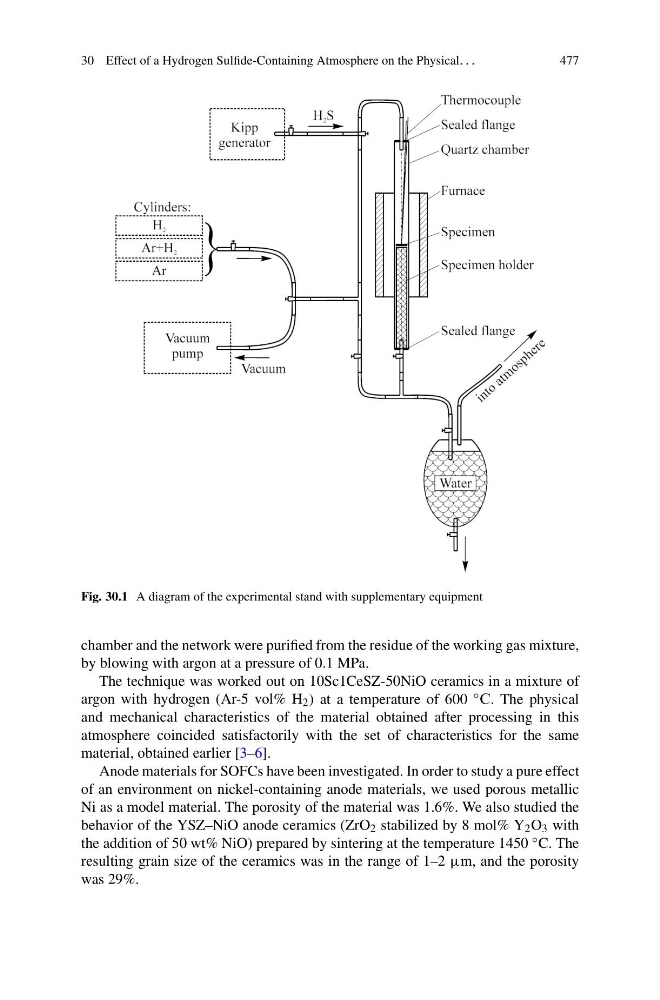
Fig. 30.1 A diagram of the experimental stand with supplementary equipment
chamber and the network were purified from the residue of the working gas mixture,
by blowing with argon at a pressure of 0.1 MPa.
The technique was worked out on 10Sc1CeSZ-50NiO ceramics in a mixture of
argon with hydrogen (Ar-5 vol% H 2 ) at a temperature of 600 ◦ ´. The physical
and mechanical characteristics of the material obtained after processing in this
atmosphere coincided satisfactorily with the set of characteristics for the same
material, obtained earlier [3–6].
Anode materials for SOFCs have been investigated. In order to study a pure effect
of an environment on nickel-containing anode materials, we used porous metallic
Ni as a model material. The porosity of the material was 1.6%. We also studied the
behavior of the YSZ–NiO anode ceramics (ZrO 2 stabilized by 8 mol% Y 2 O 3 with
the addition of 50 wt% NiO) prepared by sintering at the temperature 1450 ◦ C. The
resulting grain size of the ceramics was in the range of 1–2 μm, and the porosity
was 29%.
477
Fig. 30.1 A diagram of the experimental stand with supplementary equipment
chamber and the network were purified from the residue of the working gas mixture,
by blowing with argon at a pressure of 0.1 MPa.
The technique was worked out on 10Sc1CeSZ-50NiO ceramics in a mixture of
argon with hydrogen (Ar-5 vol% H 2 ) at a temperature of 600 ◦ ´. The physical
and mechanical characteristics of the material obtained after processing in this
atmosphere coincided satisfactorily with the set of characteristics for the same
material, obtained earlier [3–6].
Anode materials for SOFCs have been investigated. In order to study a pure effect
of an environment on nickel-containing anode materials, we used porous metallic
Ni as a model material. The porosity of the material was 1.6%. We also studied the
behavior of the YSZ–NiO anode ceramics (ZrO 2 stabilized by 8 mol% Y 2 O 3 with
the addition of 50 wt% NiO) prepared by sintering at the temperature 1450 ◦ C. The
resulting grain size of the ceramics was in the range of 1–2 μm, and the porosity
was 29%.