

19 High-Temperature Electrochemical Synthesis of Nanopowders. . .
315
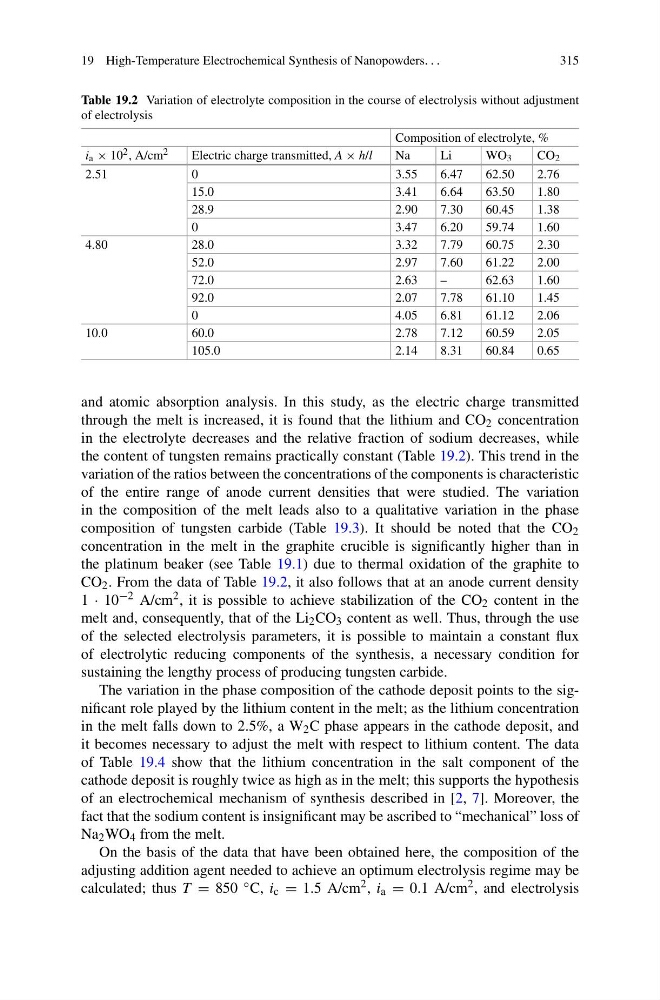
Table 19.2 Variation of electrolyte composition in the course of electrolysis without adjustment
of electrolysis
Composition of electrolyte, %
i a × 10 2 , A/cm 2
Electric charge transmitted, A × h/l
Na
Li
WO 3
CO 2
2.51
0
3.55
6.47
62.50
2.76
15.0
3.41
6.64
63.50
1.80
28.9
2.90
7.30
60.45
1.38
0
3.47
6.20
59.74
1.60
4.80
28.0
3.32
7.79
60.75
2.30
52.0
2.97
7.60
61.22
2.00
72.0
2.63
–
62.63
1.60
92.0
2.07
7.78
61.10
1.45
0
4.05
6.81
61.12
2.06
10.0
60.0
2.78
7.12
60.59
2.05
105.0
2.14
8.31
60.84
0.65
and atomic absorption analysis. In this study, as the electric charge transmitted
through the melt is increased, it is found that the lithium and CO 2 concentration
in the electrolyte decreases and the relative fraction of sodium decreases, while
the content of tungsten remains practically constant (Table 19.2). This trend in the
variation of the ratios between the concentrations of the components is characteristic
of the entire range of anode current densities that were studied. The variation
in the composition of the melt leads also to a qualitative variation in the phase
composition of tungsten carbide (Table 19.3). It should be noted that the CO 2
concentration in the melt in the graphite crucible is significantly higher than in
the platinum beaker (see Table 19.1) due to thermal oxidation of the graphite to
CO 2 . From the data of Table 19.2, it also follows that at an anode current density
1 · 10 −2 A/cm 2 , it is possible to achieve stabilization of the CO 2 content in the
melt and, consequently, that of the Li 2 CO 3 content as well. Thus, through the use
of the selected electrolysis parameters, it is possible to maintain a constant flux
of electrolytic reducing components of the synthesis, a necessary condition for
sustaining the lengthy process of producing tungsten carbide.
The variation in the phase composition of the cathode deposit points to the significant role played by the lithium content in the melt; as the lithium concentration
in the melt falls down to 2.5%, a W 2 C phase appears in the cathode deposit, and
it becomes necessary to adjust the melt with respect to lithium content. The data
of Table 19.4 show that the lithium concentration in the salt component of the
cathode deposit is roughly twice as high as in the melt; this supports the hypothesis
of an electrochemical mechanism of synthesis described in [2, 7]. Moreover, the
fact that the sodium content is insignificant may be ascribed to “mechanical” loss of
Na 2 WO 4 from the melt.
On the basis of the data that have been obtained here, the composition of the
adjusting addition agent needed to achieve an optimum electrolysis regime may be
calculated; thus T = 850 ◦ C, i c = 1.5 A/cm 2 , i a = 0.1 A/cm 2 , and electrolysis
315
Table 19.2 Variation of electrolyte composition in the course of electrolysis without adjustment
of electrolysis
Composition of electrolyte, %
i a × 10 2 , A/cm 2
Electric charge transmitted, A × h/l
Na
Li
WO 3
CO 2
2.51
0
3.55
6.47
62.50
2.76
15.0
3.41
6.64
63.50
1.80
28.9
2.90
7.30
60.45
1.38
0
3.47
6.20
59.74
1.60
4.80
28.0
3.32
7.79
60.75
2.30
52.0
2.97
7.60
61.22
2.00
72.0
2.63
–
62.63
1.60
92.0
2.07
7.78
61.10
1.45
0
4.05
6.81
61.12
2.06
10.0
60.0
2.78
7.12
60.59
2.05
105.0
2.14
8.31
60.84
0.65
and atomic absorption analysis. In this study, as the electric charge transmitted
through the melt is increased, it is found that the lithium and CO 2 concentration
in the electrolyte decreases and the relative fraction of sodium decreases, while
the content of tungsten remains practically constant (Table 19.2). This trend in the
variation of the ratios between the concentrations of the components is characteristic
of the entire range of anode current densities that were studied. The variation
in the composition of the melt leads also to a qualitative variation in the phase
composition of tungsten carbide (Table 19.3). It should be noted that the CO 2
concentration in the melt in the graphite crucible is significantly higher than in
the platinum beaker (see Table 19.1) due to thermal oxidation of the graphite to
CO 2 . From the data of Table 19.2, it also follows that at an anode current density
1 · 10 −2 A/cm 2 , it is possible to achieve stabilization of the CO 2 content in the
melt and, consequently, that of the Li 2 CO 3 content as well. Thus, through the use
of the selected electrolysis parameters, it is possible to maintain a constant flux
of electrolytic reducing components of the synthesis, a necessary condition for
sustaining the lengthy process of producing tungsten carbide.
The variation in the phase composition of the cathode deposit points to the significant role played by the lithium content in the melt; as the lithium concentration
in the melt falls down to 2.5%, a W 2 C phase appears in the cathode deposit, and
it becomes necessary to adjust the melt with respect to lithium content. The data
of Table 19.4 show that the lithium concentration in the salt component of the
cathode deposit is roughly twice as high as in the melt; this supports the hypothesis
of an electrochemical mechanism of synthesis described in [2, 7]. Moreover, the
fact that the sodium content is insignificant may be ascribed to “mechanical” loss of
Na 2 WO 4 from the melt.
On the basis of the data that have been obtained here, the composition of the
adjusting addition agent needed to achieve an optimum electrolysis regime may be
calculated; thus T = 850 ◦ C, i c = 1.5 A/cm 2 , i a = 0.1 A/cm 2 , and electrolysis