

16 Interactions Between Carbon-Based Nanostructures and Biomembranes. . .
281
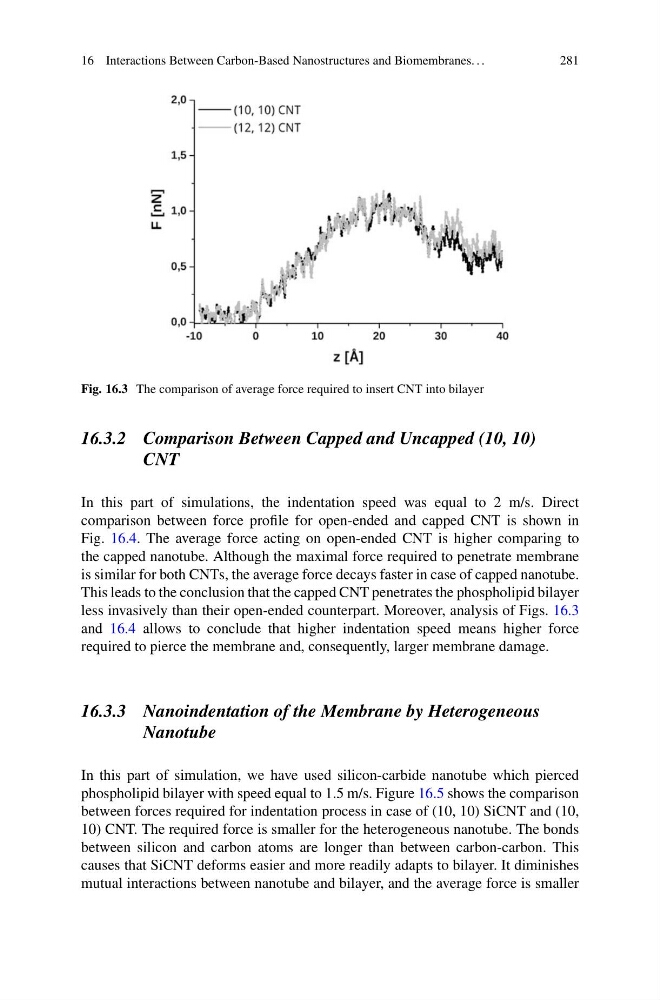
Fig. 16.3 The comparison of average force required to insert CNT into bilayer
16.3.2 Comparison Between Capped and Uncapped (10, 10)
CNT
In this part of simulations, the indentation speed was equal to 2 m/s. Direct
comparison between force profile for open-ended and capped CNT is shown in
Fig. 16.4. The average force acting on open-ended CNT is higher comparing to
the capped nanotube. Although the maximal force required to penetrate membrane
is similar for both CNTs, the average force decays faster in case of capped nanotube.
This leads to the conclusion that the capped CNT penetrates the phospholipid bilayer
less invasively than their open-ended counterpart. Moreover, analysis of Figs. 16.3
and 16.4 allows to conclude that higher indentation speed means higher force
required to pierce the membrane and, consequently, larger membrane damage.
16.3.3 Nanoindentation of the Membrane by Heterogeneous
Nanotube
In this part of simulation, we have used silicon-carbide nanotube which pierced
phospholipid bilayer with speed equal to 1.5 m/s. Figure 16.5 shows the comparison
between forces required for indentation process in case of (10, 10) SiCNT and (10,
10) CNT. The required force is smaller for the heterogeneous nanotube. The bonds
between silicon and carbon atoms are longer than between carbon-carbon. This
causes that SiCNT deforms easier and more readily adapts to bilayer. It diminishes
mutual interactions between nanotube and bilayer, and the average force is smaller
281
Fig. 16.3 The comparison of average force required to insert CNT into bilayer
16.3.2 Comparison Between Capped and Uncapped (10, 10)
CNT
In this part of simulations, the indentation speed was equal to 2 m/s. Direct
comparison between force profile for open-ended and capped CNT is shown in
Fig. 16.4. The average force acting on open-ended CNT is higher comparing to
the capped nanotube. Although the maximal force required to penetrate membrane
is similar for both CNTs, the average force decays faster in case of capped nanotube.
This leads to the conclusion that the capped CNT penetrates the phospholipid bilayer
less invasively than their open-ended counterpart. Moreover, analysis of Figs. 16.3
and 16.4 allows to conclude that higher indentation speed means higher force
required to pierce the membrane and, consequently, larger membrane damage.
16.3.3 Nanoindentation of the Membrane by Heterogeneous
Nanotube
In this part of simulation, we have used silicon-carbide nanotube which pierced
phospholipid bilayer with speed equal to 1.5 m/s. Figure 16.5 shows the comparison
between forces required for indentation process in case of (10, 10) SiCNT and (10,
10) CNT. The required force is smaller for the heterogeneous nanotube. The bonds
between silicon and carbon atoms are longer than between carbon-carbon. This
causes that SiCNT deforms easier and more readily adapts to bilayer. It diminishes
mutual interactions between nanotube and bilayer, and the average force is smaller