

242
S. Nahirniak et al.
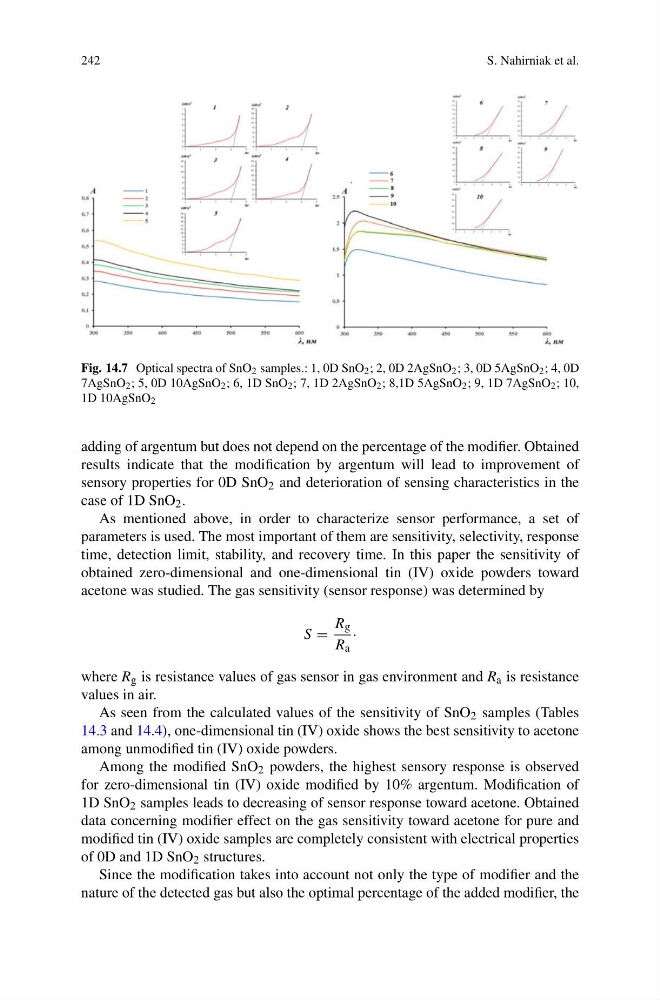
Fig. 14.7 Optical spectra of SnO 2 samples.: 1, 0D SnO 2 ; 2, 0D 2AgSnO 2 ; 3, 0D 5AgSnO 2 ; 4, 0D
7AgSnO 2 ; 5, 0D 10AgSnO 2 ; 6, 1D SnO 2 ; 7, 1D 2AgSnO 2 ; 8,1D 5AgSnO 2 ; 9, 1D 7AgSnO 2 ; 10,
1D 10AgSnO 2
adding of argentum but does not depend on the percentage of the modifier. Obtained
results indicate that the modification by argentum will lead to improvement of
sensory properties for 0D SnO 2 and deterioration of sensing characteristics in the
case of 1D SnO 2 .
As mentioned above, in order to characterize sensor performance, a set of
parameters is used. The most important of them are sensitivity, selectivity, response
time, detection limit, stability, and recovery time. In this paper the sensitivity of
obtained zero-dimensional and one-dimensional tin (IV) oxide powders toward
acetone was studied. The gas sensitivity (sensor response) was determined by
S =
R g
R a
·
where R g is resistance values of gas sensor in gas environment and R a is resistance
values in air.
As seen from the calculated values of the sensitivity of SnO 2 samples (Tables
14.3 and 14.4), one-dimensional tin (IV) oxide shows the best sensitivity to acetone
among unmodified tin (IV) oxide powders.
Among the modified SnO 2 powders, the highest sensory response is observed
for zero-dimensional tin (IV) oxide modified by 10% argentum. Modification of
1D SnO 2 samples leads to decreasing of sensor response toward acetone. Obtained
data concerning modifier effect on the gas sensitivity toward acetone for pure and
modified tin (IV) oxide samples are completely consistent with electrical properties
of 0D and 1D SnO 2 structures.
Since the modification takes into account not only the type of modifier and the
nature of the detected gas but also the optimal percentage of the added modifier, the
S. Nahirniak et al.
Fig. 14.7 Optical spectra of SnO 2 samples.: 1, 0D SnO 2 ; 2, 0D 2AgSnO 2 ; 3, 0D 5AgSnO 2 ; 4, 0D
7AgSnO 2 ; 5, 0D 10AgSnO 2 ; 6, 1D SnO 2 ; 7, 1D 2AgSnO 2 ; 8,1D 5AgSnO 2 ; 9, 1D 7AgSnO 2 ; 10,
1D 10AgSnO 2
adding of argentum but does not depend on the percentage of the modifier. Obtained
results indicate that the modification by argentum will lead to improvement of
sensory properties for 0D SnO 2 and deterioration of sensing characteristics in the
case of 1D SnO 2 .
As mentioned above, in order to characterize sensor performance, a set of
parameters is used. The most important of them are sensitivity, selectivity, response
time, detection limit, stability, and recovery time. In this paper the sensitivity of
obtained zero-dimensional and one-dimensional tin (IV) oxide powders toward
acetone was studied. The gas sensitivity (sensor response) was determined by
S =
R g
R a
·
where R g is resistance values of gas sensor in gas environment and R a is resistance
values in air.
As seen from the calculated values of the sensitivity of SnO 2 samples (Tables
14.3 and 14.4), one-dimensional tin (IV) oxide shows the best sensitivity to acetone
among unmodified tin (IV) oxide powders.
Among the modified SnO 2 powders, the highest sensory response is observed
for zero-dimensional tin (IV) oxide modified by 10% argentum. Modification of
1D SnO 2 samples leads to decreasing of sensor response toward acetone. Obtained
data concerning modifier effect on the gas sensitivity toward acetone for pure and
modified tin (IV) oxide samples are completely consistent with electrical properties
of 0D and 1D SnO 2 structures.
Since the modification takes into account not only the type of modifier and the
nature of the detected gas but also the optimal percentage of the added modifier, the