

11 Structure and Electrical/Dielectric Properties of Ion-Conductive Polymer. . .
199
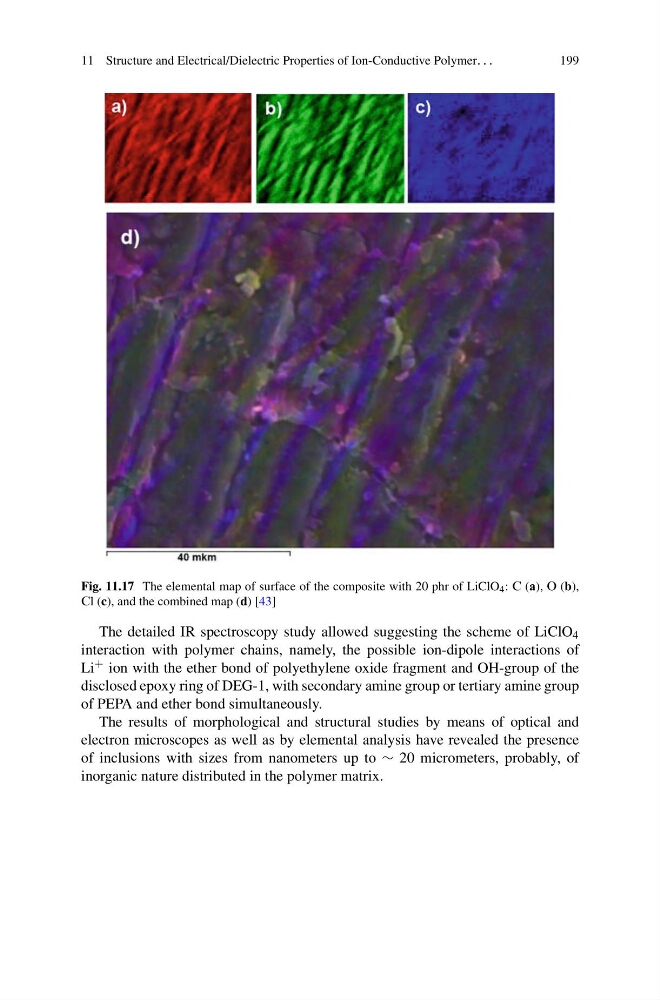
Fig. 11.17 The elemental map of surface of the composite with 20 phr of LiClO 4 : ´ (Ã), ± (b),
´l (c), and the combined map (d) [43]
The detailed IR spectroscopy study allowed suggesting the scheme of LiClO 4
interaction with polymer chains, namely, the possible ion-dipole interactions of
Li + ion with the ether bond of polyethylene oxide fragment and OH-group of the
disclosed epoxy ring of DEG-1, with secondary amine group or tertiary amine group
of PEPA and ether bond simultaneously.
The results of morphological and structural studies by means of optical and
electron microscopes as well as by elemental analysis have revealed the presence
of inclusions with sizes from nanometers up to ∼ 20 micrometers, probably, of
inorganic nature distributed in the polymer matrix.
199
Fig. 11.17 The elemental map of surface of the composite with 20 phr of LiClO 4 : ´ (Ã), ± (b),
´l (c), and the combined map (d) [43]
The detailed IR spectroscopy study allowed suggesting the scheme of LiClO 4
interaction with polymer chains, namely, the possible ion-dipole interactions of
Li + ion with the ether bond of polyethylene oxide fragment and OH-group of the
disclosed epoxy ring of DEG-1, with secondary amine group or tertiary amine group
of PEPA and ether bond simultaneously.
The results of morphological and structural studies by means of optical and
electron microscopes as well as by elemental analysis have revealed the presence
of inclusions with sizes from nanometers up to ∼ 20 micrometers, probably, of
inorganic nature distributed in the polymer matrix.