

198
L. K. Matkovska et al.
Table 11.5 The mass
distribution (% wt ) of elements
in different areas of the
composite surface with 50
phr of LiClO 4 [43]
Spectrum
C
O
Cl
Total
Spectrum1 68.8 25.2
6.0 100.0
Spectrum2 34.9 62.9
2.2 100.0
Spectrum3 52.8 36.9 10.3 100.0
Spectrum4 61.6 29.8
8.6 100.0
Spectrum5 55.2 39.8
5.0 100.0
Spectrum6 40.9 56.2
2.9 100.0
Spectrum7 55.1 42.9
2.0 100.0
Spectrum8 54.7 41.2
4.1 100.0
Spectrum9 58.8 37.3
3.9 100.0
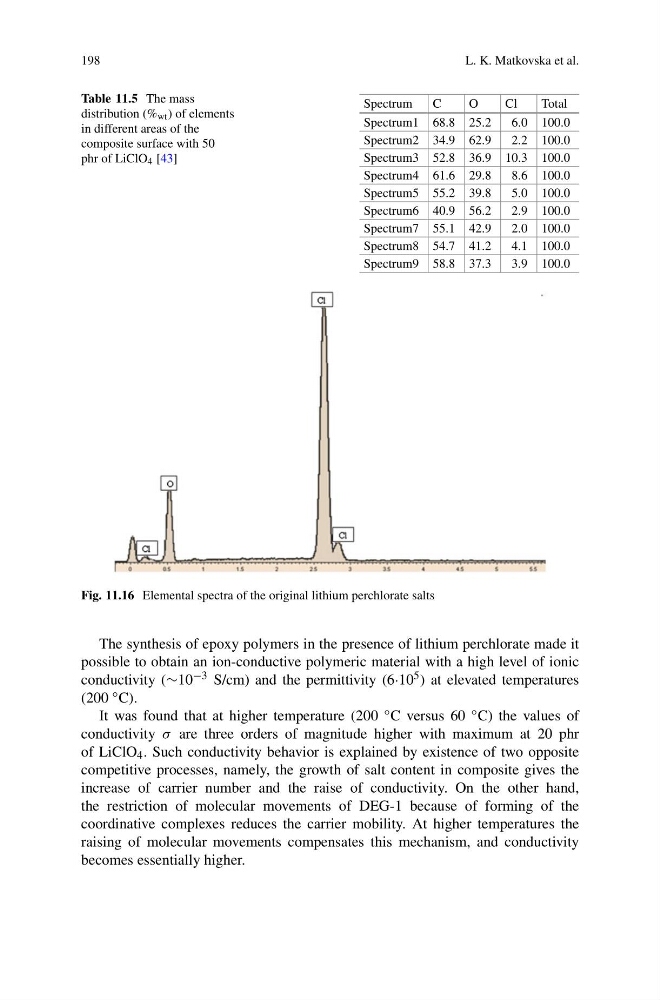
Fig. 11.16 Elemental spectra of the original lithium perchlorate salts
The synthesis of epoxy polymers in the presence of lithium perchlorate made it
possible to obtain an ion-conductive polymeric material with a high level of ionic
conductivity (∼10 −3 S/cm) and the permittivity (6·10 5 ) at elevated temperatures
(200 ◦ C).
It was found that at higher temperature (200 ◦ C versus 60 ◦ C) the values of
conductivity σ are three orders of magnitude higher with maximum at 20 phr
of LiClO 4 . Such conductivity behavior is explained by existence of two opposite
competitive processes, namely, the growth of salt content in composite gives the
increase of carrier number and the raise of conductivity. On the other hand,
the restriction of molecular movements of DEG-1 because of forming of the
coordinative complexes reduces the carrier mobility. At higher temperatures the
raising of molecular movements compensates this mechanism, and conductivity
becomes essentially higher.
L. K. Matkovska et al.
Table 11.5 The mass
distribution (% wt ) of elements
in different areas of the
composite surface with 50
phr of LiClO 4 [43]
Spectrum
C
O
Cl
Total
Spectrum1 68.8 25.2
6.0 100.0
Spectrum2 34.9 62.9
2.2 100.0
Spectrum3 52.8 36.9 10.3 100.0
Spectrum4 61.6 29.8
8.6 100.0
Spectrum5 55.2 39.8
5.0 100.0
Spectrum6 40.9 56.2
2.9 100.0
Spectrum7 55.1 42.9
2.0 100.0
Spectrum8 54.7 41.2
4.1 100.0
Spectrum9 58.8 37.3
3.9 100.0
Fig. 11.16 Elemental spectra of the original lithium perchlorate salts
The synthesis of epoxy polymers in the presence of lithium perchlorate made it
possible to obtain an ion-conductive polymeric material with a high level of ionic
conductivity (∼10 −3 S/cm) and the permittivity (6·10 5 ) at elevated temperatures
(200 ◦ C).
It was found that at higher temperature (200 ◦ C versus 60 ◦ C) the values of
conductivity σ are three orders of magnitude higher with maximum at 20 phr
of LiClO 4 . Such conductivity behavior is explained by existence of two opposite
competitive processes, namely, the growth of salt content in composite gives the
increase of carrier number and the raise of conductivity. On the other hand,
the restriction of molecular movements of DEG-1 because of forming of the
coordinative complexes reduces the carrier mobility. At higher temperatures the
raising of molecular movements compensates this mechanism, and conductivity
becomes essentially higher.