

11 Structure and Electrical/Dielectric Properties of Ion-Conductive Polymer. . .
195
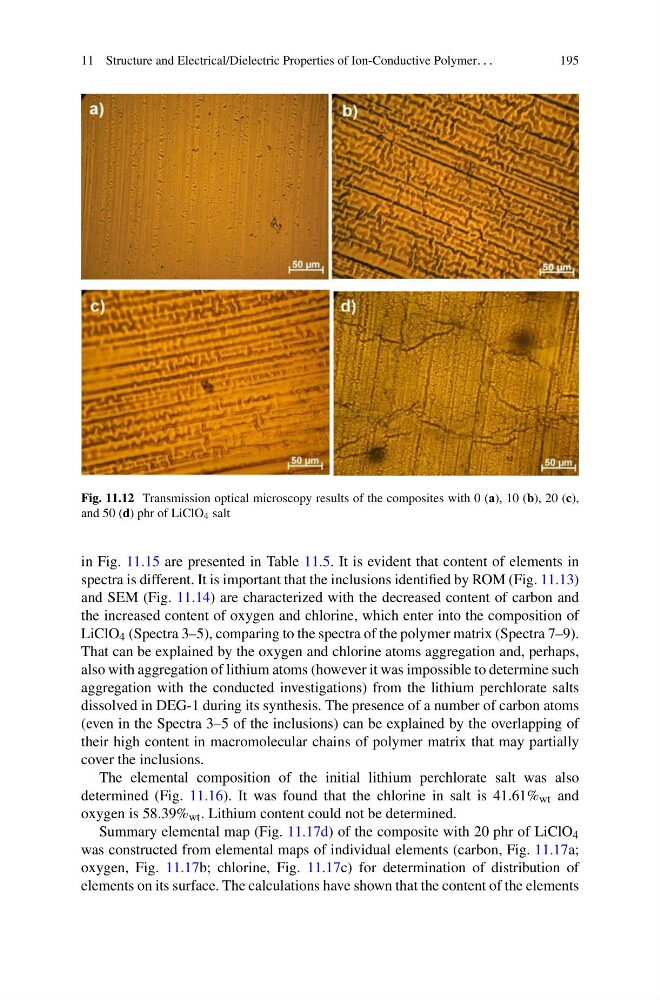
Fig. 11.12 Transmission optical microscopy results of the composites with 0 (Ã), 10 (b), 20 (c),
and 50 (d) phr of LiClO 4 salt
in Fig. 11.15 are presented in Table 11.5. It is evident that content of elements in
spectra is different. It is important that the inclusions identified by ROM (Fig. 11.13)
and SEM (Fig. 11.14) are characterized with the decreased content of carbon and
the increased content of oxygen and chlorine, which enter into the composition of
LiClO 4 (Spectra 3–5), comparing to the spectra of the polymer matrix (Spectra 7–9).
That can be explained by the oxygen and chlorine atoms aggregation and, perhaps,
also with aggregation of lithium atoms (however it was impossible to determine such
aggregation with the conducted investigations) from the lithium perchlorate salts
dissolved in DEG-1 during its synthesis. The presence of a number of carbon atoms
(even in the Spectra 3–5 of the inclusions) can be explained by the overlapping of
their high content in macromolecular chains of polymer matrix that may partially
cover the inclusions.
The elemental composition of the initial lithium perchlorate salt was also
determined (Fig. 11.16). It was found that the chlorine in salt is 41.61% wt and
oxygen is 58.39% wt . Lithium content could not be determined.
Summary elemental map (Fig. 11.17d) of the composite with 20 phr of LiClO 4
was constructed from elemental maps of individual elements (carbon, Fig. 11.17a;
oxygen, Fig. 11.17b; chlorine, Fig. 11.17c) for determination of distribution of
elements on its surface. The calculations have shown that the content of the elements
195
Fig. 11.12 Transmission optical microscopy results of the composites with 0 (Ã), 10 (b), 20 (c),
and 50 (d) phr of LiClO 4 salt
in Fig. 11.15 are presented in Table 11.5. It is evident that content of elements in
spectra is different. It is important that the inclusions identified by ROM (Fig. 11.13)
and SEM (Fig. 11.14) are characterized with the decreased content of carbon and
the increased content of oxygen and chlorine, which enter into the composition of
LiClO 4 (Spectra 3–5), comparing to the spectra of the polymer matrix (Spectra 7–9).
That can be explained by the oxygen and chlorine atoms aggregation and, perhaps,
also with aggregation of lithium atoms (however it was impossible to determine such
aggregation with the conducted investigations) from the lithium perchlorate salts
dissolved in DEG-1 during its synthesis. The presence of a number of carbon atoms
(even in the Spectra 3–5 of the inclusions) can be explained by the overlapping of
their high content in macromolecular chains of polymer matrix that may partially
cover the inclusions.
The elemental composition of the initial lithium perchlorate salt was also
determined (Fig. 11.16). It was found that the chlorine in salt is 41.61% wt and
oxygen is 58.39% wt . Lithium content could not be determined.
Summary elemental map (Fig. 11.17d) of the composite with 20 phr of LiClO 4
was constructed from elemental maps of individual elements (carbon, Fig. 11.17a;
oxygen, Fig. 11.17b; chlorine, Fig. 11.17c) for determination of distribution of
elements on its surface. The calculations have shown that the content of the elements