

110
I. Ivanenko et al.
150
40 mg/L
30 mg/L
20 mg/L
10 mg/L
120
90
60
30
0
0
50
100 150
Time, min
200 250 300
1.0
0.0
0.2
0.4
0.6
0.8
0
50
100 150
a
b
Time, s
C/C
0
q, mg/g
200 250
methylene blue
methylene orange
rodamine B
300
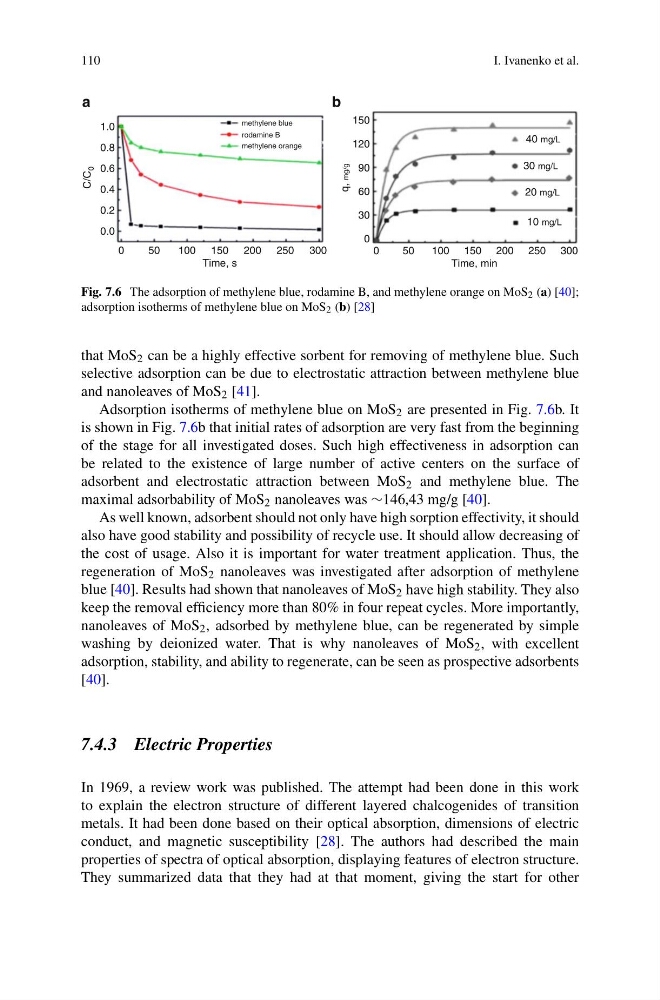
Fig. 7.6 The adsorption of methylene blue, rodamine B, and methylene orange on MoS 2 (a) [40];
adsorption isotherms of methylene blue on MoS 2 (b) [28]
that MoS 2 can be a highly effective sorbent for removing of methylene blue. Such
selective adsorption can be due to electrostatic attraction between methylene blue
and nanoleaves of MoS 2 [41].
Adsorption isotherms of methylene blue on MoS 2 are presented in Fig. 7.6b. It
is shown in Fig. 7.6b that initial rates of adsorption are very fast from the beginning
of the stage for all investigated doses. Such high effectiveness in adsorption can
be related to the existence of large number of active centers on the surface of
adsorbent and electrostatic attraction between MoS 2 and methylene blue. The
maximal adsorbability of MoS 2 nanoleaves was ∼146,43 mg/g [40].
As well known, adsorbent should not only have high sorption effectivity, it should
also have good stability and possibility of recycle use. It should allow decreasing of
the cost of usage. Also it is important for water treatment application. Thus, the
regeneration of MoS 2 nanoleaves was investigated after adsorption of methylene
blue [40]. Results had shown that nanoleaves of MoS 2 have high stability. They also
keep the removal efficiency more than 80% in four repeat cycles. More importantly,
nanoleaves of MoS 2 , adsorbed by methylene blue, can be regenerated by simple
washing by deionized water. That is why nanoleaves of MoS 2 , with excellent
adsorption, stability, and ability to regenerate, can be seen as prospective adsorbents
[40].
7.4.3 Electric Properties
In 1969, a review work was published. The attempt had been done in this work
to explain the electron structure of different layered chalcogenides of transition
metals. It had been done based on their optical absorption, dimensions of electric
conduct, and magnetic susceptibility [28]. The authors had described the main
properties of spectra of optical absorption, displaying features of electron structure.
They summarized data that they had at that moment, giving the start for other
I. Ivanenko et al.
150
40 mg/L
30 mg/L
20 mg/L
10 mg/L
120
90
60
30
0
0
50
100 150
Time, min
200 250 300
1.0
0.0
0.2
0.4
0.6
0.8
0
50
100 150
a
b
Time, s
C/C
0
q, mg/g
200 250
methylene blue
methylene orange
rodamine B
300
Fig. 7.6 The adsorption of methylene blue, rodamine B, and methylene orange on MoS 2 (a) [40];
adsorption isotherms of methylene blue on MoS 2 (b) [28]
that MoS 2 can be a highly effective sorbent for removing of methylene blue. Such
selective adsorption can be due to electrostatic attraction between methylene blue
and nanoleaves of MoS 2 [41].
Adsorption isotherms of methylene blue on MoS 2 are presented in Fig. 7.6b. It
is shown in Fig. 7.6b that initial rates of adsorption are very fast from the beginning
of the stage for all investigated doses. Such high effectiveness in adsorption can
be related to the existence of large number of active centers on the surface of
adsorbent and electrostatic attraction between MoS 2 and methylene blue. The
maximal adsorbability of MoS 2 nanoleaves was ∼146,43 mg/g [40].
As well known, adsorbent should not only have high sorption effectivity, it should
also have good stability and possibility of recycle use. It should allow decreasing of
the cost of usage. Also it is important for water treatment application. Thus, the
regeneration of MoS 2 nanoleaves was investigated after adsorption of methylene
blue [40]. Results had shown that nanoleaves of MoS 2 have high stability. They also
keep the removal efficiency more than 80% in four repeat cycles. More importantly,
nanoleaves of MoS 2 , adsorbed by methylene blue, can be regenerated by simple
washing by deionized water. That is why nanoleaves of MoS 2 , with excellent
adsorption, stability, and ability to regenerate, can be seen as prospective adsorbents
[40].
7.4.3 Electric Properties
In 1969, a review work was published. The attempt had been done in this work
to explain the electron structure of different layered chalcogenides of transition
metals. It had been done based on their optical absorption, dimensions of electric
conduct, and magnetic susceptibility [28]. The authors had described the main
properties of spectra of optical absorption, displaying features of electron structure.
They summarized data that they had at that moment, giving the start for other