

138
7 Reactive μCP on Ultrathin Block Copolymer Films …
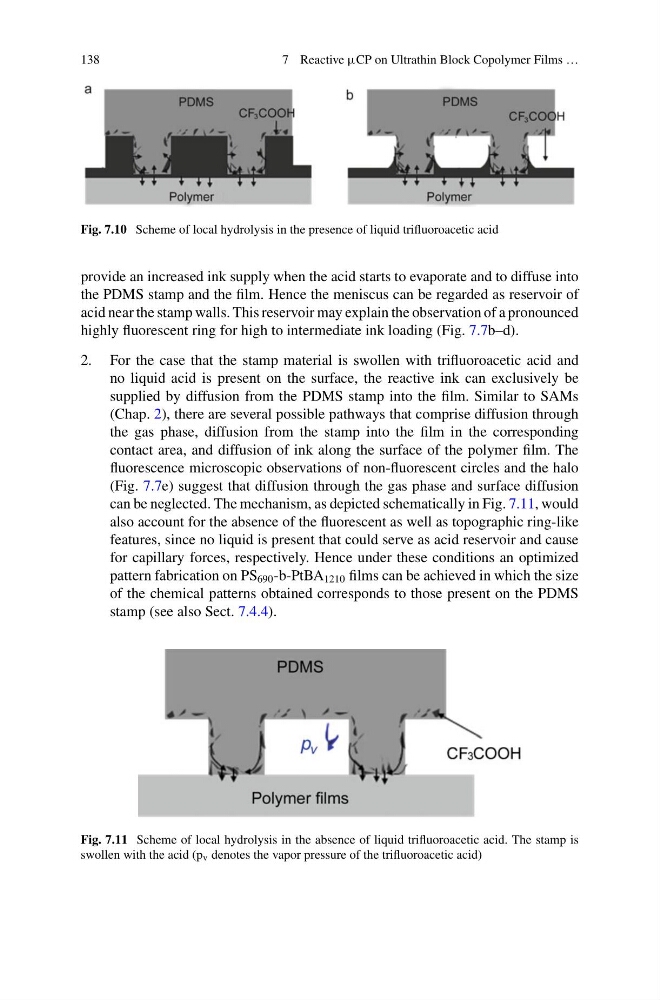
Fig. 7.10 Scheme of local hydrolysis in the presence of liquid trifluoroacetic acid
provide an increased ink supply when the acid starts to evaporate and to diffuse into
the PDMS stamp and the film. Hence the meniscus can be regarded as reservoir of
acid near the stamp walls. This reservoir may explain the observation of a pronounced
highly fluorescent ring for high to intermediate ink loading (Fig. 7.7b–d).
2. For the case that the stamp material is swollen with trifluoroacetic acid and
no liquid acid is present on the surface, the reactive ink can exclusively be
supplied by diffusion from the PDMS stamp into the film. Similar to SAMs
(Chap. 2), there are several possible pathways that comprise diffusion through
the gas phase, diffusion from the stamp into the film in the corresponding
contact area, and diffusion of ink along the surface of the polymer film. The
fluorescence microscopic observations of non-fluorescent circles and the halo
(Fig. 7.7e) suggest that diffusion through the gas phase and surface diffusion
can be neglected. The mechanism, as depicted schematically in Fig. 7.11, would
also account for the absence of the fluorescent as well as topographic ring-like
features, since no liquid is present that could serve as acid reservoir and cause
for capillary forces, respectively. Hence under these conditions an optimized
pattern fabrication on PS 690 -b-PtBA 1210 films can be achieved in which the size
of the chemical patterns obtained corresponds to those present on the PDMS
stamp (see also Sect. 7.4.4).
Fig. 7.11 Scheme of local hydrolysis in the absence of liquid trifluoroacetic acid. The stamp is
swollen with the acid (p v denotes the vapor pressure of the trifluoroacetic acid)
7 Reactive μCP on Ultrathin Block Copolymer Films …
Fig. 7.10 Scheme of local hydrolysis in the presence of liquid trifluoroacetic acid
provide an increased ink supply when the acid starts to evaporate and to diffuse into
the PDMS stamp and the film. Hence the meniscus can be regarded as reservoir of
acid near the stamp walls. This reservoir may explain the observation of a pronounced
highly fluorescent ring for high to intermediate ink loading (Fig. 7.7b–d).
2. For the case that the stamp material is swollen with trifluoroacetic acid and
no liquid acid is present on the surface, the reactive ink can exclusively be
supplied by diffusion from the PDMS stamp into the film. Similar to SAMs
(Chap. 2), there are several possible pathways that comprise diffusion through
the gas phase, diffusion from the stamp into the film in the corresponding
contact area, and diffusion of ink along the surface of the polymer film. The
fluorescence microscopic observations of non-fluorescent circles and the halo
(Fig. 7.7e) suggest that diffusion through the gas phase and surface diffusion
can be neglected. The mechanism, as depicted schematically in Fig. 7.11, would
also account for the absence of the fluorescent as well as topographic ring-like
features, since no liquid is present that could serve as acid reservoir and cause
for capillary forces, respectively. Hence under these conditions an optimized
pattern fabrication on PS 690 -b-PtBA 1210 films can be achieved in which the size
of the chemical patterns obtained corresponds to those present on the PDMS
stamp (see also Sect. 7.4.4).
Fig. 7.11 Scheme of local hydrolysis in the absence of liquid trifluoroacetic acid. The stamp is
swollen with the acid (p v denotes the vapor pressure of the trifluoroacetic acid)