

52
R. Chettri et al.
a
b
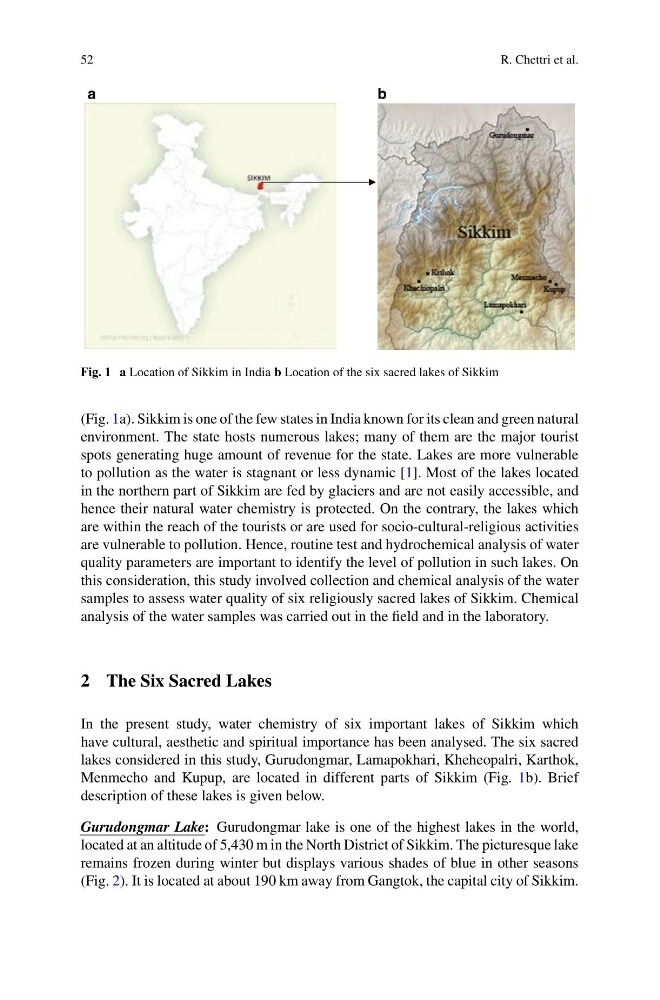
Fig. 1 a Location of Sikkim in India b Location of the six sacred lakes of Sikkim
(Fig. 1a). Sikkim is one of the few states in India known for its clean and green natural
environment. The state hosts numerous lakes; many of them are the major tourist
spots generating huge amount of revenue for the state. Lakes are more vulnerable
to pollution as the water is stagnant or less dynamic [1]. Most of the lakes located
in the northern part of Sikkim are fed by glaciers and are not easily accessible, and
hence their natural water chemistry is protected. On the contrary, the lakes which
are within the reach of the tourists or are used for socio-cultural-religious activities
are vulnerable to pollution. Hence, routine test and hydrochemical analysis of water
quality parameters are important to identify the level of pollution in such lakes. On
this consideration, this study involved collection and chemical analysis of the water
samples to assess water quality of six religiously sacred lakes of Sikkim. Chemical
analysis of the water samples was carried out in the field and in the laboratory.
2 The Six Sacred Lakes
In the present study, water chemistry of six important lakes of Sikkim which
have cultural, aesthetic and spiritual importance has been analysed. The six sacred
lakes considered in this study, Gurudongmar, Lamapokhari, Kheheopalri, Karthok,
Menmecho and Kupup, are located in different parts of Sikkim (Fig. 1b). Brief
description of these lakes is given below.
Gurudongmar Lake: Gurudongmar lake is one of the highest lakes in the world,
located at an altitude of 5,430 m in the North District of Sikkim. The picturesque lake
remains frozen during winter but displays various shades of blue in other seasons
(Fig. 2). It is located at about 190 km away from Gangtok, the capital city of Sikkim.
R. Chettri et al.
a
b
Fig. 1 a Location of Sikkim in India b Location of the six sacred lakes of Sikkim
(Fig. 1a). Sikkim is one of the few states in India known for its clean and green natural
environment. The state hosts numerous lakes; many of them are the major tourist
spots generating huge amount of revenue for the state. Lakes are more vulnerable
to pollution as the water is stagnant or less dynamic [1]. Most of the lakes located
in the northern part of Sikkim are fed by glaciers and are not easily accessible, and
hence their natural water chemistry is protected. On the contrary, the lakes which
are within the reach of the tourists or are used for socio-cultural-religious activities
are vulnerable to pollution. Hence, routine test and hydrochemical analysis of water
quality parameters are important to identify the level of pollution in such lakes. On
this consideration, this study involved collection and chemical analysis of the water
samples to assess water quality of six religiously sacred lakes of Sikkim. Chemical
analysis of the water samples was carried out in the field and in the laboratory.
2 The Six Sacred Lakes
In the present study, water chemistry of six important lakes of Sikkim which
have cultural, aesthetic and spiritual importance has been analysed. The six sacred
lakes considered in this study, Gurudongmar, Lamapokhari, Kheheopalri, Karthok,
Menmecho and Kupup, are located in different parts of Sikkim (Fig. 1b). Brief
description of these lakes is given below.
Gurudongmar Lake: Gurudongmar lake is one of the highest lakes in the world,
located at an altitude of 5,430 m in the North District of Sikkim. The picturesque lake
remains frozen during winter but displays various shades of blue in other seasons
(Fig. 2). It is located at about 190 km away from Gangtok, the capital city of Sikkim.