

Comparative Study of Scouring Around Bridge Piers
265
0.6
0.7
0.8
0.9
1.0
1.1
1.2
0
50 100 150 200 250 300 350 400 450 500 550 600 650 700 750 800 850 900 950 1000
Velocity (m/s)
Main Channel Distance (m)
Velocity profile for all the cases
Without Bridge
Existing (Single) Bridge
Parallel Bridge
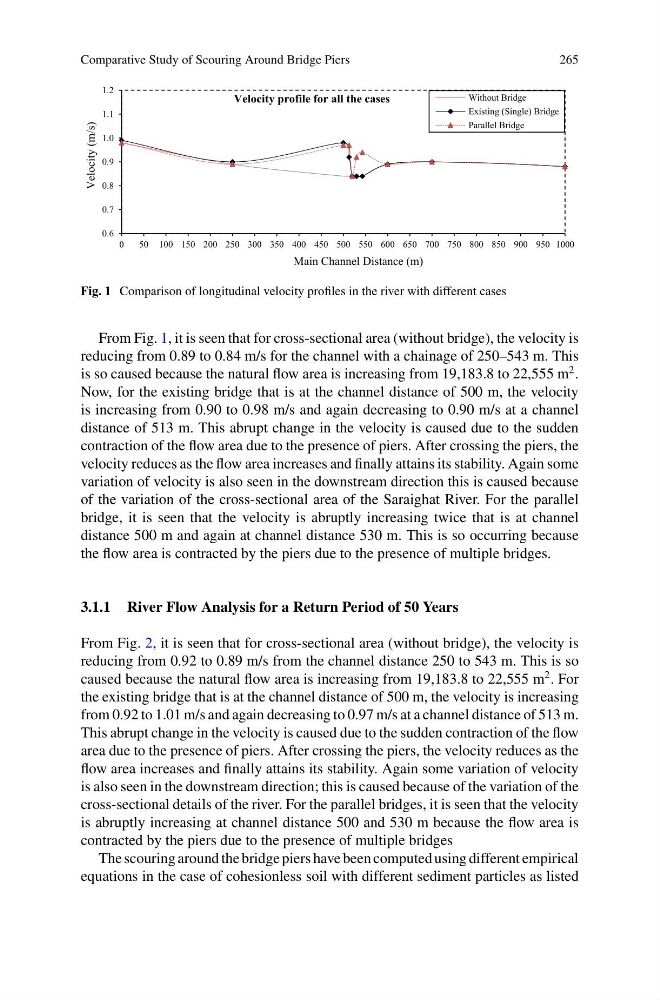
Fig. 1 Comparison of longitudinal velocity profiles in the river with different cases
From Fig. 1, it is seen that for cross-sectional area (without bridge), the velocity is
reducing from 0.89 to 0.84 m/s for the channel with a chainage of 250–543 m. This
is so caused because the natural flow area is increasing from 19,183.8 to 22,555 m
2 .
Now, for the existing bridge that is at the channel distance of 500 m, the velocity
is increasing from 0.90 to 0.98 m/s and again decreasing to 0.90 m/s at a channel
distance of 513 m. This abrupt change in the velocity is caused due to the sudden
contraction of the flow area due to the presence of piers. After crossing the piers, the
velocity reduces as the flow area increases and finally attains its stability. Again some
variation of velocity is also seen in the downstream direction this is caused because
of the variation of the cross-sectional area of the Saraighat River. For the parallel
bridge, it is seen that the velocity is abruptly increasing twice that is at channel
distance 500 m and again at channel distance 530 m. This is so occurring because
the flow area is contracted by the piers due to the presence of multiple bridges.
3.1.1 River Flow Analysis for a Return Period of 50 Years
From Fig. 2, it is seen that for cross-sectional area (without bridge), the velocity is
reducing from 0.92 to 0.89 m/s from the channel distance 250 to 543 m. This is so
caused because the natural flow area is increasing from 19,183.8 to 22,555 m
2 . For
the existing bridge that is at the channel distance of 500 m, the velocity is increasing
from 0.92 to 1.01 m/s and again decreasing to 0.97 m/s at a channel distance of 513 m.
This abrupt change in the velocity is caused due to the sudden contraction of the flow
area due to the presence of piers. After crossing the piers, the velocity reduces as the
flow area increases and finally attains its stability. Again some variation of velocity
is also seen in the downstream direction; this is caused because of the variation of the
cross-sectional details of the river. For the parallel bridges, it is seen that the velocity
is abruptly increasing at channel distance 500 and 530 m because the flow area is
contracted by the piers due to the presence of multiple bridges
The scouring around the bridge piers have been computed using different empirical
equations in the case of cohesionless soil with different sediment particles as listed
265
0.6
0.7
0.8
0.9
1.0
1.1
1.2
0
50 100 150 200 250 300 350 400 450 500 550 600 650 700 750 800 850 900 950 1000
Velocity (m/s)
Main Channel Distance (m)
Velocity profile for all the cases
Without Bridge
Existing (Single) Bridge
Parallel Bridge
Fig. 1 Comparison of longitudinal velocity profiles in the river with different cases
From Fig. 1, it is seen that for cross-sectional area (without bridge), the velocity is
reducing from 0.89 to 0.84 m/s for the channel with a chainage of 250–543 m. This
is so caused because the natural flow area is increasing from 19,183.8 to 22,555 m
2 .
Now, for the existing bridge that is at the channel distance of 500 m, the velocity
is increasing from 0.90 to 0.98 m/s and again decreasing to 0.90 m/s at a channel
distance of 513 m. This abrupt change in the velocity is caused due to the sudden
contraction of the flow area due to the presence of piers. After crossing the piers, the
velocity reduces as the flow area increases and finally attains its stability. Again some
variation of velocity is also seen in the downstream direction this is caused because
of the variation of the cross-sectional area of the Saraighat River. For the parallel
bridge, it is seen that the velocity is abruptly increasing twice that is at channel
distance 500 m and again at channel distance 530 m. This is so occurring because
the flow area is contracted by the piers due to the presence of multiple bridges.
3.1.1 River Flow Analysis for a Return Period of 50 Years
From Fig. 2, it is seen that for cross-sectional area (without bridge), the velocity is
reducing from 0.92 to 0.89 m/s from the channel distance 250 to 543 m. This is so
caused because the natural flow area is increasing from 19,183.8 to 22,555 m
2 . For
the existing bridge that is at the channel distance of 500 m, the velocity is increasing
from 0.92 to 1.01 m/s and again decreasing to 0.97 m/s at a channel distance of 513 m.
This abrupt change in the velocity is caused due to the sudden contraction of the flow
area due to the presence of piers. After crossing the piers, the velocity reduces as the
flow area increases and finally attains its stability. Again some variation of velocity
is also seen in the downstream direction; this is caused because of the variation of the
cross-sectional details of the river. For the parallel bridges, it is seen that the velocity
is abruptly increasing at channel distance 500 and 530 m because the flow area is
contracted by the piers due to the presence of multiple bridges
The scouring around the bridge piers have been computed using different empirical
equations in the case of cohesionless soil with different sediment particles as listed