

222
R. L. Sahu et al.
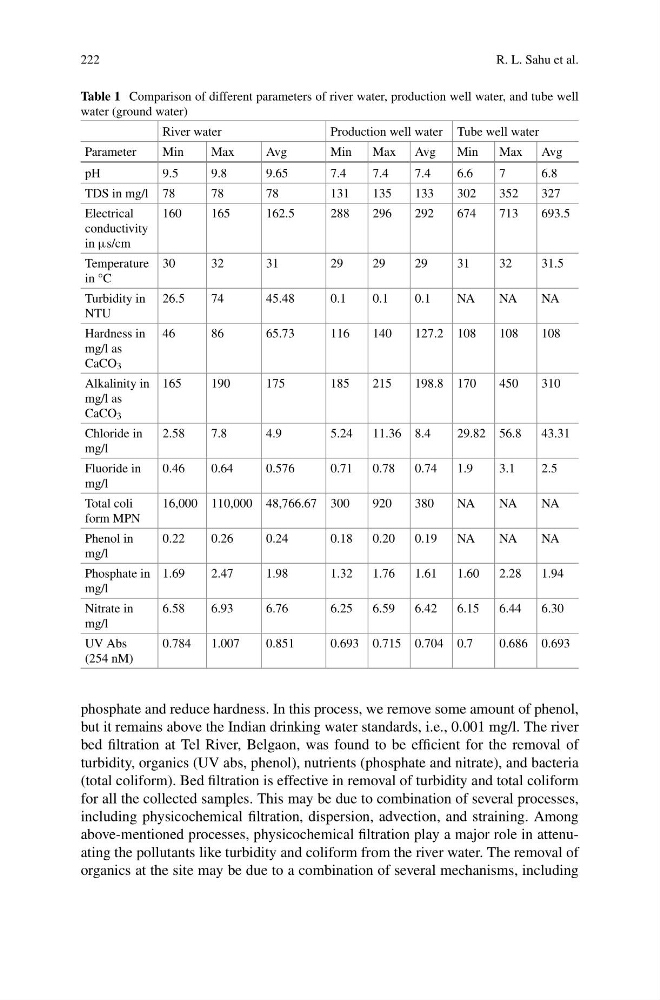
Table 1 Comparison of different parameters of river water, production well water, and tube well
water (ground water)
River water
Production well water Tube well water
Parameter
Min
Max
Avg
Min
Max Avg
Min
Max Avg
pH
9.5
9.8
9.65
7.4
7.4
7.4
6.6
7
6.8
TDS in mg/l 78
78
78
131
135
133
302
352
327
Electrical
conductivity
in µs/cm
160
165
162.5
288
296
292
674
713
693.5
Temperature
in °C
30
32
31
29
29
29
31
32
31.5
Turbidity in
NTU
26.5
74
45.48
0.1
0.1
0.1
NA
NA
NA
Hardness in
mg/l as
CaCO 3
46
86
65.73
116
140
127.2 108
108
108
Alkalinity in
mg/l as
CaCO 3
165
190
175
185
215
198.8 170
450
310
Chloride in
mg/l
2.58
7.8
4.9
5.24
11.36 8.4
29.82 56.8
43.31
Fluoride in
mg/l
0.46
0.64
0.576
0.71
0.78
0.74
1.9
3.1
2.5
Total coli
form MPN
16,000 110,000 48,766.67 300
920
380
NA
NA
NA
Phenol in
mg/l
0.22
0.26
0.24
0.18
0.20
0.19
NA
NA
NA
Phosphate in
mg/l
1.69
2.47
1.98
1.32
1.76
1.61
1.60
2.28
1.94
Nitrate in
mg/l
6.58
6.93
6.76
6.25
6.59
6.42
6.15
6.44
6.30
UV Abs
(254 nM)
0.784
1.007
0.851
0.693 0.715 0.704 0.7
0.686 0.693
phosphate and reduce hardness. In this process, we remove some amount of phenol,
but it remains above the Indian drinking water standards, i.e., 0.001 mg/l. The river
bed filtration at Tel River, Belgaon, was found to be efficient for the removal of
turbidity, organics (UV abs, phenol), nutrients (phosphate and nitrate), and bacteria
(total coliform). Bed filtration is effective in removal of turbidity and total coliform
for all the collected samples. This may be due to combination of several processes,
including physicochemical filtration, dispersion, advection, and straining. Among
above-mentioned processes, physicochemical filtration play a major role in attenuating the pollutants like turbidity and coliform from the river water. The removal of
organics at the site may be due to a combination of several mechanisms, including
R. L. Sahu et al.
Table 1 Comparison of different parameters of river water, production well water, and tube well
water (ground water)
River water
Production well water Tube well water
Parameter
Min
Max
Avg
Min
Max Avg
Min
Max Avg
pH
9.5
9.8
9.65
7.4
7.4
7.4
6.6
7
6.8
TDS in mg/l 78
78
78
131
135
133
302
352
327
Electrical
conductivity
in µs/cm
160
165
162.5
288
296
292
674
713
693.5
Temperature
in °C
30
32
31
29
29
29
31
32
31.5
Turbidity in
NTU
26.5
74
45.48
0.1
0.1
0.1
NA
NA
NA
Hardness in
mg/l as
CaCO 3
46
86
65.73
116
140
127.2 108
108
108
Alkalinity in
mg/l as
CaCO 3
165
190
175
185
215
198.8 170
450
310
Chloride in
mg/l
2.58
7.8
4.9
5.24
11.36 8.4
29.82 56.8
43.31
Fluoride in
mg/l
0.46
0.64
0.576
0.71
0.78
0.74
1.9
3.1
2.5
Total coli
form MPN
16,000 110,000 48,766.67 300
920
380
NA
NA
NA
Phenol in
mg/l
0.22
0.26
0.24
0.18
0.20
0.19
NA
NA
NA
Phosphate in
mg/l
1.69
2.47
1.98
1.32
1.76
1.61
1.60
2.28
1.94
Nitrate in
mg/l
6.58
6.93
6.76
6.25
6.59
6.42
6.15
6.44
6.30
UV Abs
(254 nM)
0.784
1.007
0.851
0.693 0.715 0.704 0.7
0.686 0.693
phosphate and reduce hardness. In this process, we remove some amount of phenol,
but it remains above the Indian drinking water standards, i.e., 0.001 mg/l. The river
bed filtration at Tel River, Belgaon, was found to be efficient for the removal of
turbidity, organics (UV abs, phenol), nutrients (phosphate and nitrate), and bacteria
(total coliform). Bed filtration is effective in removal of turbidity and total coliform
for all the collected samples. This may be due to combination of several processes,
including physicochemical filtration, dispersion, advection, and straining. Among
above-mentioned processes, physicochemical filtration play a major role in attenuating the pollutants like turbidity and coliform from the river water. The removal of
organics at the site may be due to a combination of several mechanisms, including