

713
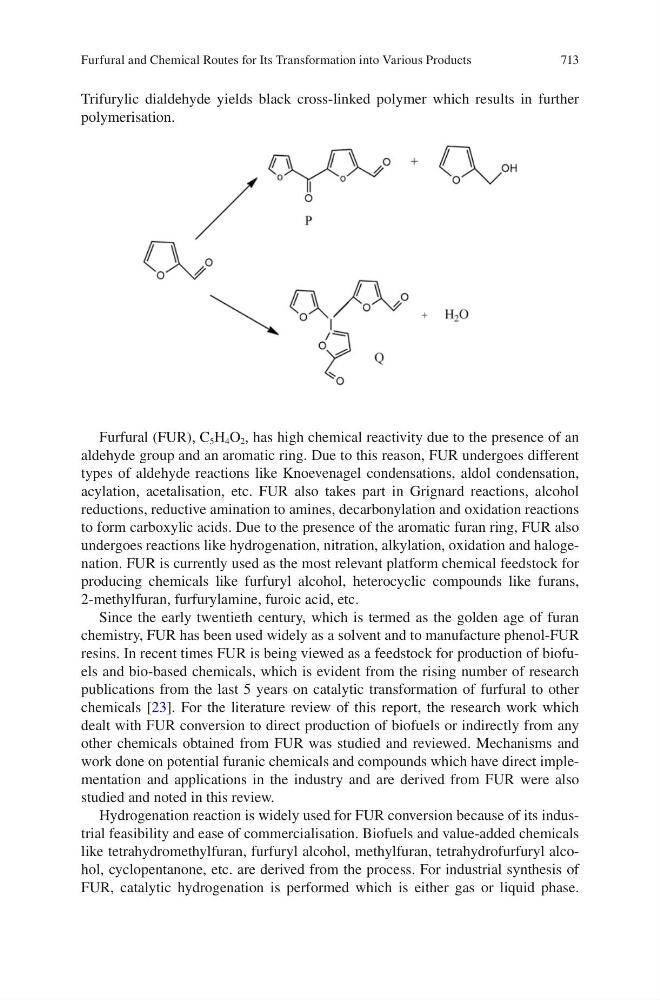
Trifurylic dialdehyde yields black cross-linked polymer which results in further
polymerisation.
Furfural (FUR), C 5 H 4 O 2 , has high chemical reactivity due to the presence of an
aldehyde group and an aromatic ring. Due to this reason, FUR undergoes different
types of aldehyde reactions like Knoevenagel condensations, aldol condensation,
acylation, acetalisation, etc. FUR also takes part in Grignard reactions, alcohol
reductions, reductive amination to amines, decarbonylation and oxidation reactions
to form carboxylic acids. Due to the presence of the aromatic furan ring, FUR also
undergoes reactions like hydrogenation, nitration, alkylation, oxidation and halogenation. FUR is currently used as the most relevant platform chemical feedstock for
producing chemicals like furfuryl alcohol, heterocyclic compounds like furans,
2-methylfuran, furfurylamine, furoic acid, etc.
Since the early twentieth century, which is termed as the golden age of furan
chemistry, FUR has been used widely as a solvent and to manufacture phenol-FUR
resins. In recent times FUR is being viewed as a feedstock for production of biofuels and bio-based chemicals, which is evident from the rising number of research
publications from the last 5 years on catalytic transformation of furfural to other
chemicals [23]. For the literature review of this report, the research work which
dealt with FUR conversion to direct production of biofuels or indirectly from any
other chemicals obtained from FUR was studied and reviewed. Mechanisms and
work done on potential furanic chemicals and compounds which have direct implementation and applications in the industry and are derived from FUR were also
studied and noted in this review.
Hydrogenation reaction is widely used for FUR conversion because of its industrial feasibility and ease of commercialisation. Biofuels and value-added chemicals
like tetrahydromethylfuran, furfuryl alcohol, methylfuran, tetrahydrofurfuryl alcohol, cyclopentanone, etc. are derived from the process. For industrial synthesis of
FUR, catalytic hydrogenation is performed which is either gas or liquid phase.
Furfural and Chemical Routes for Its Transformation into Various Products