

709
used as an extractant to remove aromatics from lubricating oils and diesel [1]. It
forms an azeotropic mixture with H 2 O at 1 atm pressure (65 wt% water and boiling
point 97.85 °C). Table 1 lists the general properties of furfural.
2.1.2 Chemical Properties
Aldehydes react widely to form various by-products by undergoing acylation
reaction, aldol condensations, acetalisation, reduction, amination reactions, oxidation, Knoevenagel condensations and decarbonylation which can be performed with furfural. The furan ring in furfural is less vulnerable to hydrolytic
ring opening due to the presence of the carbonyl group which provides the electron-withdrawing effect of the carbonyl group and also helps in Diels-Alder
reactions.
Alkylation (arylation): Furfural reacts with chlorinated hydrocarbons to undergo
Friedel-Crafts alkylations. The 5-position being the most vulnerable for the alkylation reaction eventually leads furfural to develop resin-like properties [1]. Furfural
also undergoes alkylation via oxidative coupling by usage of Pd acetate as catalyst
which acts as an alkylating driving force. This reaction generates moderate yield
percentage and Pd-based turnover numbers when acrylic esters are used. Using photochemical aryl coupling of furfural and 5-bromofurfural, 5,5-diformyl-2,20-difuran is formed. Synthesis of this reaction in the presence of an acid medium yields
high amount of 5,5-diformyl-2,20-di-furan [10].
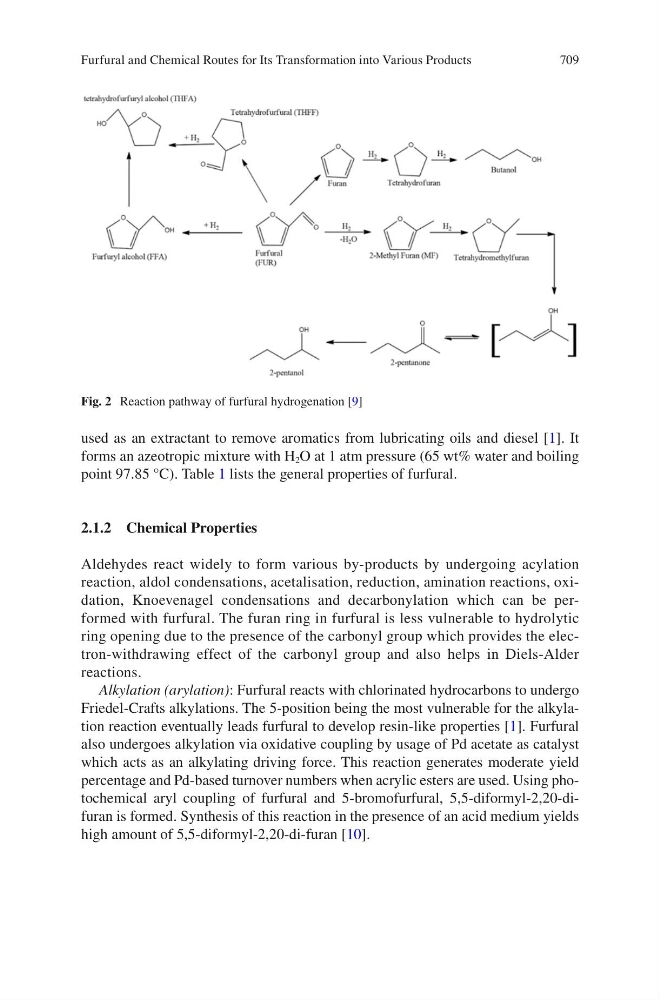
Fig. 2 Reaction pathway of furfural hydrogenation [9]
Furfural and Chemical Routes for Its Transformation into Various Products