

628
1.2 Nanocomposite Materials
Nanocomposites are a broad range of multiphase materials with at least one of the
phases having size in the range between 1 and 100 nm, or structures were in the
nano-scale repeat distances between the various phases that made up the nanocomposite material. The main idea behind it is to use various components with their
dimensions in nm range to develop and create new materials with extraordinary
flexibility and enhancement in their characteristic properties:
• Nanocomposite materials consisting of two different phases like nanocrystalline
phase and matrix phase: the phase might be inorganic-inorganic, inorganicorganic, and organic-organic.
• Nanocomposite means nanosized particles such as metals, metal oxides, semiconductors, dielectric materials, etc. and surrounded in different matrix materials
including ceramics, metal oxides, glass, polymers, etc.
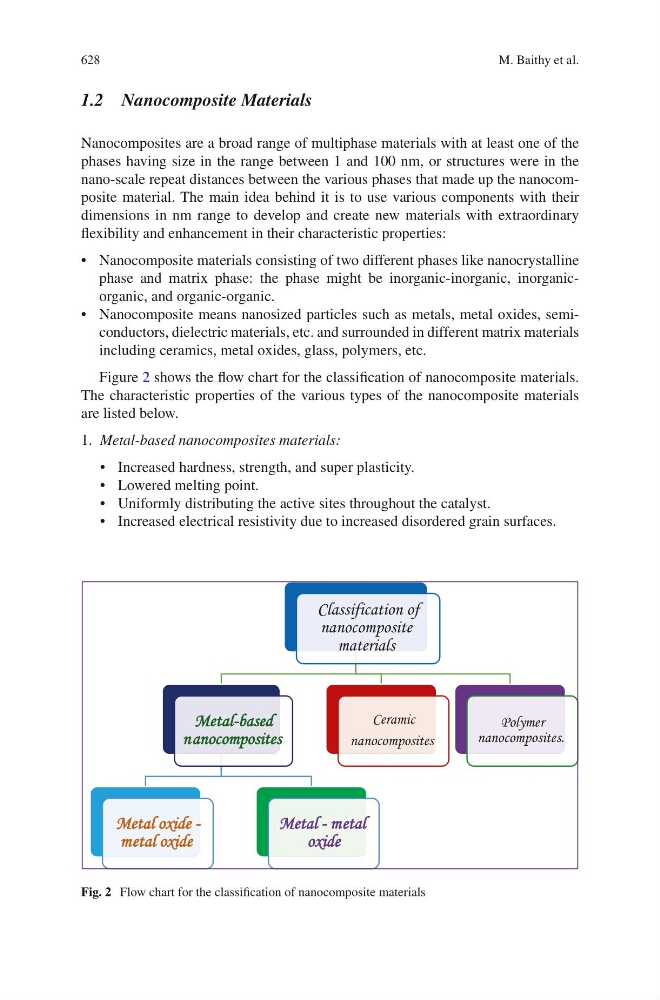
Figure 2 shows the flow chart for the classification of nanocomposite materials.
The characteristic properties of the various types of the nanocomposite materials
are listed below.
1. Metal-based nanocomposites materials:
• Increased hardness, strength, and super plasticity.
• Lowered melting point.
• Uniformly distributing the active sites throughout the catalyst.
• Increased electrical resistivity due to increased disordered grain surfaces.
Classification of
nanocomposite
materials
Metal-based
nanocomposites
Metal oxide -
metal oxide
Metal - metal
oxide
Ceramic
nanocomposites
Polymer
nanocomposites.
Fig. 2 Flow chart for the classification of nanocomposite materials
M. Baithy et al.