

567
• A closely related area of concern is the separation and purification of products.
In many biomass conversions by chemo- as well as bio-catalytic routes, a number of side products are formed, and developing innovative and more efficient
separation and purification technique for maximum recovery of desired product(s)
could boost the process efficiency.
• Though production of acetone, butanol and ethanol (ABE) process has been in
practice for a number of years now, the high cost of hydrolytic enzymes and the
need for expensive pretreatment steps are still the challenges that have to be
addressed. The success and adaptability of ABE and other enzymatic processes
for 1-butanol and other alcohols depend on the choice of microorganism species,
their genetic manipulation and process optimization along with substrate. Recent
developments in these aspects have led to renewed interest in bio-catalytic processes for the production of alcohols [397–399].
• Developing active, selective and stable catalysts for alcohol/biomass conversion
processes has been a challenge, especially to maximize selectivity and retard
deactivation. Amongst the different possible reaction pathways, the desirable one
needs to be catalysed, by incorporation of requisite catalytic functionalities.
Highly reactive molecule like glycerol can undergo several transformations, as
illustrated in Fig. 30. To maximize the yield of a specific product, both metal and
acidic/basic sites need to be fine-tuned, which requires a thorough understanding
of the reaction pathways and generation of appropriate active sites. In-depth
characterization of used/deactivated/spent catalysts could provide vital clues to
understand the process of deactivation and devise means of arresting the same.
Such an approach needs more in-depth studies on the reaction kinetics and mechanism, supported by advanced in situ spectroscopic investigations and computational approaches.
• A number of alcohol conversion processes like ethanol to propylene/isobutene/
aromatics; various conversions of glycerol, sugar alcohols and furanics; and
aqueous phase reforming process require more systematic studies to develop
Methanol
Methane
Diesel
Diesel
Hydrogen
Hydrogen
Glucose
Methanol
Biomass
Gasoline
Gasoline
Value
Renewable
Acetic Acid
Acetic Acid
Ethanol
Ethanol
Ethylene
Ethylene
Benzene
Oil
Coal
Methane
Fossil
Value
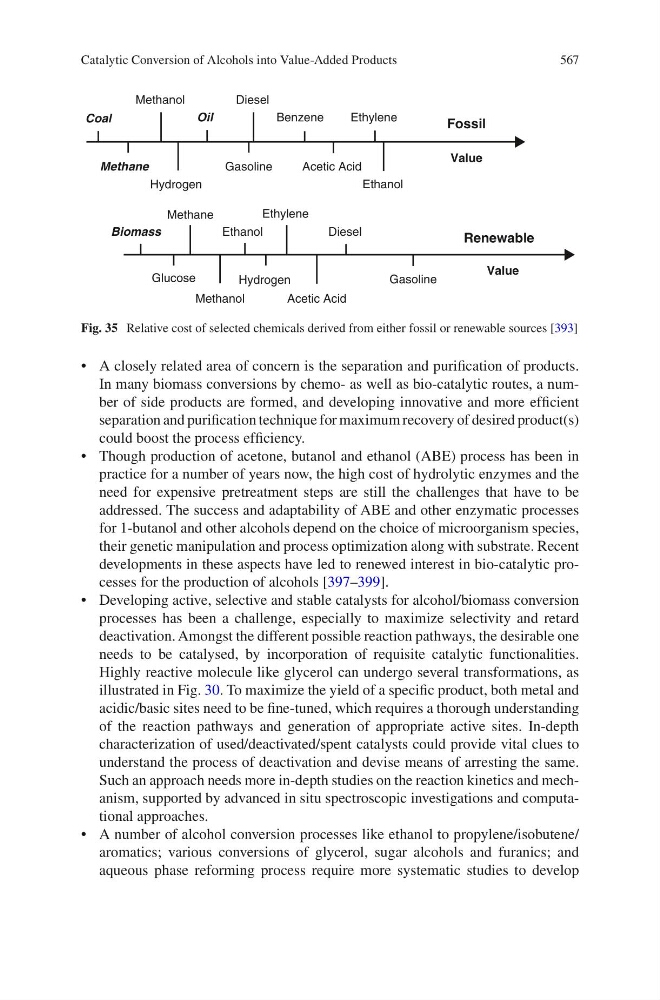
Fig. 35 Relative cost of selected chemicals derived from either fossil or renewable sources [393]
Catalytic Conversion of Alcohols into Value-Added Products