

552
reforming and supercritical water reforming are available for the conversion of glycerol into hydrogen and syngas [322]. Both nickel- and platinum-based catalysts
supported on modified (especially with ceria) alumina have been explored for steam
reforming [322]. 10%Ni/5%CeO 2 -Al 2 O 3 at 650 °C displayed 85.7% selectivity for
hydrogen in continuous-flow packed bed reactor [324]. For APR of glycerol, 71.9%
yield of hydrogen could be obtained on 1.44% Pt/Al 2 O 3 at 225 °C, pressure = 2.3 MPa
time = 3 h, with 100 mg of catalyst [325].
Though glycerol conversion and hydrogen production in APR process are, in
general, less in comparison with steam reforming, utilization of crude glycerol in
APR is less energy-intensive since vaporization is not required. Hence further
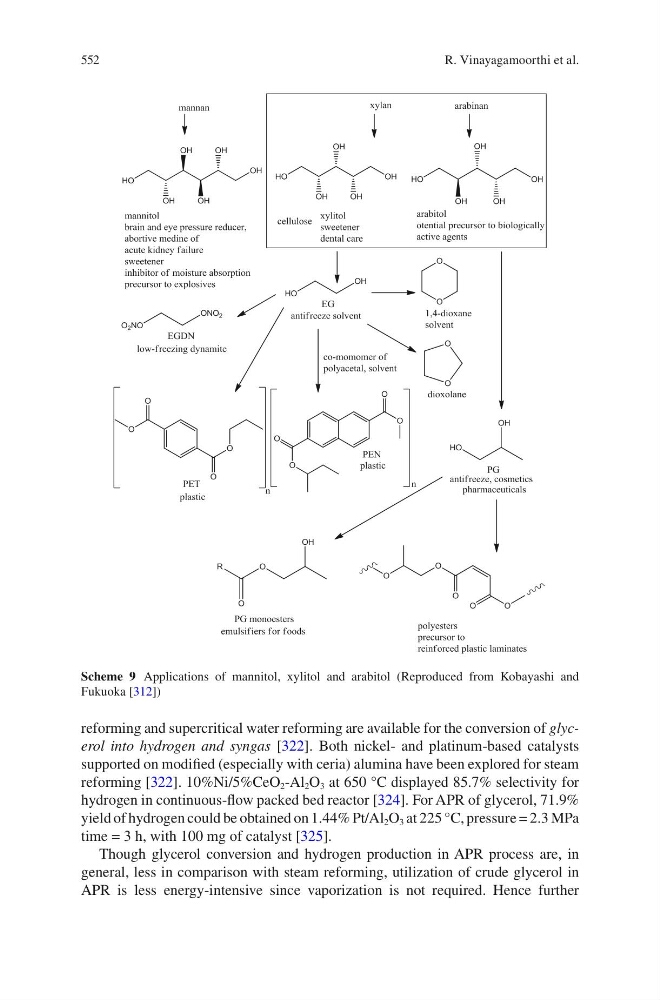
Scheme 9 Applications of mannitol, xylitol and arabitol (Reproduced from Kobayashi and
Fukuoka [312])
R. Vinayagamoorthi et al.