

551
inert nature, it is an active ngredient in several pharmaceutical, dental and oral care
products [136].
Catalytic conversion of xylitol to value-added products, ethylene glycol and propylene glycol, proceeds through dehydrogenation, retro-aldol condensation and rehydrogenation pathways [320, 321]. An illustration of the major applications of
mannitol, xylitol and arabitol, another sugar alcohol, according to Kobayashi and
Fukuoka [312], is presented in Scheme 9.
7 Conversion of Glycerol into Value-Added Products
Applications of glycerol as a versatile platform chemical, capable of undergoing a
variety of sustainable chemical transformations towards a wide range of valueadded chemicals, fuels and fuel additives, have been reviewed comprehensively [91,
95–99]. Some of the unique features of glycerol that make it as the most useful raw
material are:
• Abundance and low cost.
• Utilization as crude glycerol.
• Amenable to chemo- as well as bio-catalytic conversions.
• Highly reactive functional groups.
• Wide spectrum of products based on types of catalysts/reaction conditions.
A summary of value-added products from glycerol (Fig. 30), through different
catalytic processes, types of catalysts and developments therein, reported up to
2009, has been published by Bozell and Petersen [21]. Two recent comprehensive
reviews by Nda-Umar et al. [322] and Cognet and Aroua [323] on this topic cover
the latest developments in the processes, catalysts and other features for the production of many glycerol derivatives indicated in Fig. 30. Non-combustion routes like
steam reforming, partial oxidation, autothermal reforming and aqueous phase
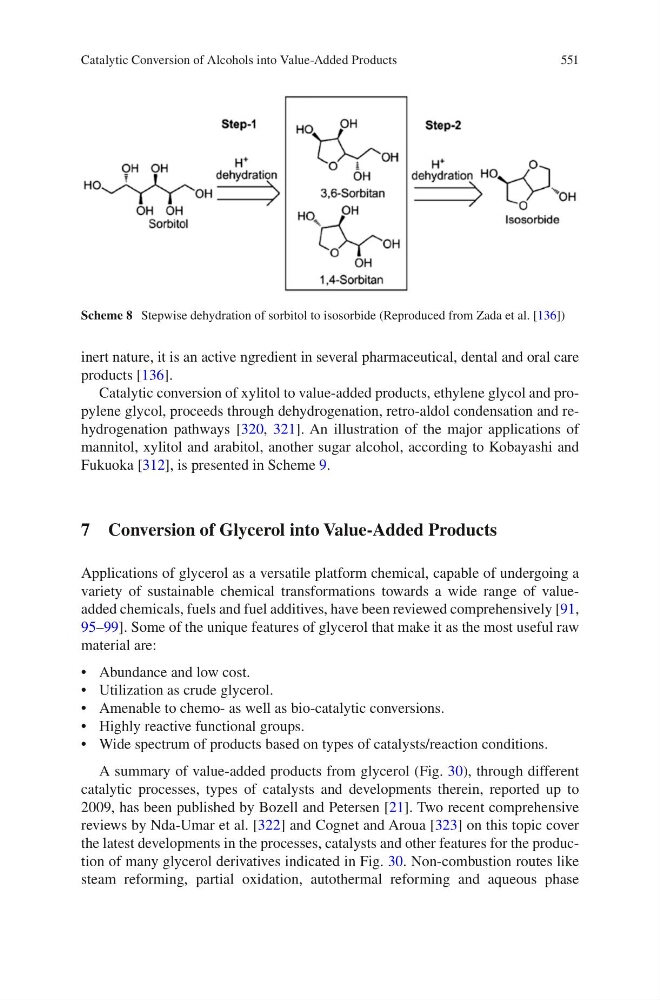
Scheme 8 Stepwise dehydration of sorbitol to isosorbide (Reproduced from Zada et al. [136])
Catalytic Conversion of Alcohols into Value-Added Products