

525
homogeneous catalyst Ti(OBu) 4 with AlEt 3 as the co-catalyst. Metal complexes
based on Ni, Ti, Zr, Cr, Co and Fe with different co-catalysts in homogeneous
medium have been explored for selective dimerization and oligomerization of ethylene [168–171]. Such homogeneous catalyst systems, though highly active and
selective under mild reaction conditions, require the use of aluminoxane activators
or co-catalysts in large amounts and use of solvents/reactants in bulk liquid phase.
Besides, many of the metal complexes are not air stable and undergo structural degradation and deactivation, requiring complex regeneration procedures, thus limiting
their applications in large-scale continuous mode processes. In order to circumvent
such limitations and realize the specific advantages that heterogeneous catalysts
offer on these aspects, several types of catalysts in heterogeneous phase, like (a)
metal complexes immobilized on polymers and oxides, (b) metal-organic framework (MOF) and covalent organic framework (COF) materials and (c) nickel and
palladium supported on inorganic porous materials, have been explored [165].
Nickel metal complexes supported on polymers and inorganic supports like alumina, silica and other zeolites like AlPO 4 and Al-MCM-41 display good activity and
selectivity for ethylene dimerization, but stability of the active phase during the
process and loss of selectivity due to acid-catalysed side reactions on the support
that lead to deactivation are the issues. Similarly, metal complexes supported on
MOF and COF materials with well-defined chemical environments to promote
dimerization and oligomerization are found to be highly active and selective, but the
deactivation due to heavier oligomers/polymer formation is the challenge.
In this context, nickel and palladium supported on inorganic porous materials
exhibit exceptional performance in ethylene dimerization and oligomerization [168,
172, 173].
Zeolites, sulphated alumina, amorphous silica-alumina and mesostructured
MCM-41, MCM-48, SBA-15 and MCM-22 are the supports on which nickel is
incorporated by ion exchange as envisaged in the illustration (Fig. 16). Exchangeable
Na
+
ions are first exchanged with NH 4
+
ions followed by ion exchange with Ni
2+
ions and then calcined in air at 550 °C. On thermal treatment, isolated Ni
+
and dehydrated Ni
2+
species are formed which act as oligomerization sites, and the support
Biomass
Dimerization
Dimerization/Metathesis
Oligomerization/Cracking
Aromatization
Bioethylene
Bioethanol
Butenes
Propylene
Aromatics
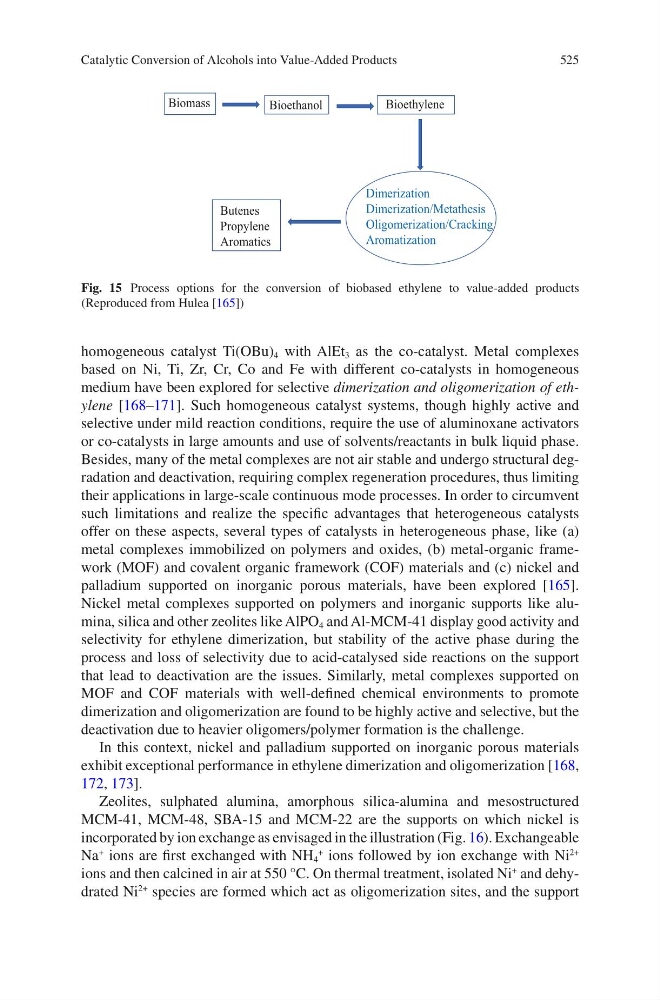
Fig. 15 Process options for the conversion of biobased ethylene to value-added products
(Reproduced from Hulea [165])
Catalytic Conversion of Alcohols into Value-Added Products